A legendary program's playoff heartbreak reveals the growing divide between college football's romantic ideals and its corporate reality.
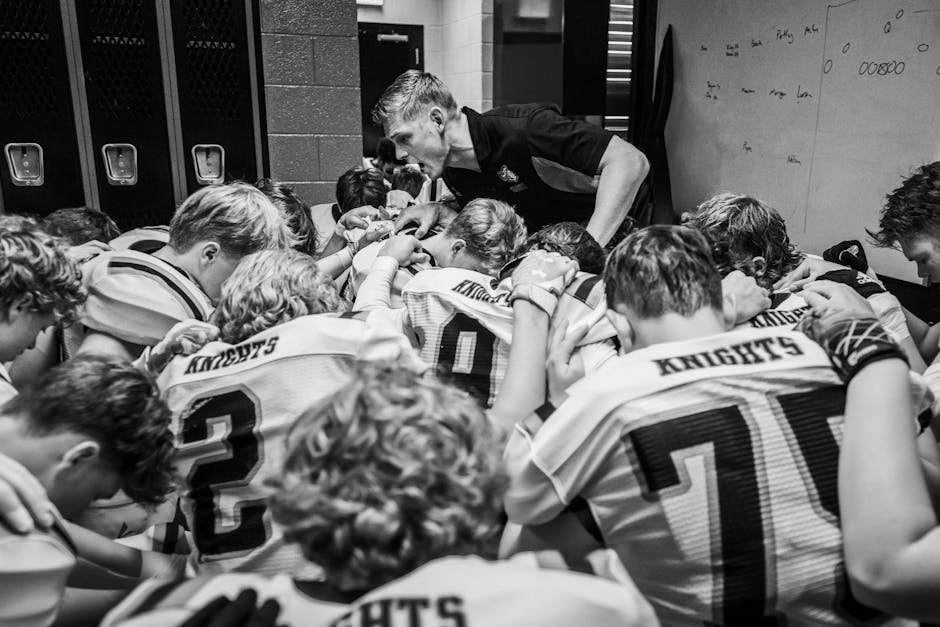
The tears of senior linebacker Jack Kiser told the story computers could not quantify. As Notre Dame players gathered Sunday afternoon to learn their postseason fate, the fifth year captain wept openly when the College Football Playoff committee's final rankings slid onto screens. The Fighting Irish, winners of ten straight games after an opening week stumble, found themselves ranked 11th in a 12 team field. The cruelest kind of almost.
Two days later, athletic director Pete Bevacqua stood before microphones and gave voice to the quiet rage simmering across college football's most unique program. His critique went beyond merely disagreeing with selection criteria. Bevacqua painted a portrait of institutional betrayal, calling Notre Dame's relationship with the Atlantic Coast Conference strained after league social media accounts promoted Miami's playoff credentials over Notre Dame's during November. For a program that maintains football independence while anchoring the ACC in 24 other sports, the sting carried extra resonance.
College football has always been a sport of contradictions, but seldom has the divide between romantic ideals and corporate interests felt so vast. The Fighting Irish occupy a singular space in the American sporting consciousness, simultaneously loved and loathed for their independence, their national following, their golden helmets gleaming under autumn skies. They are college football's last true nomads, wandering from conference affiliation to television contracts without ever fully planting a flag. This freedom long considered their greatest strength now feels increasingly like isolation.
Bevacqua's musical chairs analogy resonated because it distilled the playoff committee's maddening inconsistency into child's play imagery. Notre Dame never dropped below 10th in the committee's weekly rankings until the final reveal. Their resume featured victories over six bowl eligible teams, including road wins at Texas A&M and USC. Committee chair Boo Corrigan cited Notre Dame's lack of a conference championship game appearance as decisive, an explanation that rings hollow considering Oregon (11 2) made the field at No. 8 without playing for the Pac 12 title either.
The deeper hypocrisy lies in how this system rewards financial arrangements over competitive merit. Miami earned the final playoff spot at No. 12 despite weaker computer rankings than Notre Dame across multiple metrics. The Hurricanes benefited from being a full ACC member, enabling conference leadership to advocate for them through official channels. Notre Dame's quasi affiliated status left them politically homeless at the most crucial moment, their 17 million dollar annual media rights deal with NBC suddenly feeling less like a privilege than a scarlet letter.
This is not simply sour grapes from South Bend. Bevacqua revealed Notre Dame has secured a memorandum guaranteeing playoff access starting next season if ranked 12th or higher, a tacit admission by the CFP that this year's exclusion was unacceptable. Yet no contract can restore what was stolen from Kiser and his teammates, nor from the generations of players who built Notre Dame's tradition without ever considering bowl boycott as legitimate protest.
The decision to skip postseason play entirely marks a philosophical earthquake from college football's most philosophically rigid program. Knute Rockne's boys refused to quit against Army in 1928 despite playing with eleven injured starters. The Four Horsemen never surrendered. But modern reality forced athletic department leadership into an impossible choice accepting participation trophies or making principled statements at players' expense. They chose the latter, sparking debates about whether Notre Dame prioritized branding over student athlete welfare.
Lost in this calculus are the walk ons who will never wear pads again, the graduate transfers who bet their final seasons on Notre Dame's playoff push, the strength coaches who gutted themselves through winter conditioning. College football's beauty has always been its finite nature. Each game contains multitudes of meaning precisely because there are so few. When institutions strip players of their finale over political grievances, everyone loses.
Historical perspective tempers the outrage. Notre Dame has navigated exclusion before. The program famously declined bowl invitations for 45 years after Rockne's death, believing postseason play distracted from academic missions. Their return to the Cotton Bowl in 1970 sparked nationwide celebration, signaling college football's postwar evolution into national spectacle. Current players now find themselves unwitting participants in another transitional era, where twelve team playoffs officially kill the notion that regular seasons possess inherent meaning.
The ACC's role in this drama deserves scrutiny. Commissioner Jim Phillips released a tepid statement supporting Miami while acknowledging Notre Dame's disappointment, a diplomatic tightrope walk that satisfied nobody. Conference social media accounts sharing anti Notre Dame graphics during critical voting weeks reveals either administrative malpractice or calculated messaging. Neither reflects well on a league financially dependent on Notre Dame's partial membership. When Bevacqua noted the ACC attacked an important business partner, he articulated what many athletic directors privately believe conference loyalty means less than conference revenue.
Notre Dame's predicament exemplifies college sports' wider identity crisis. Player empowerment via NIL deals collides with antiquated notions of amateurism. Streaming platforms splinter traditional viewership bases while conference realignment obliterates regional rivalries. In this maelstrom, the Fighting Irish's football independence feels increasingly like nostalgia. Their beloved NBC home games now compete against SEC showcases on ABC, Big Ten spectacles on CBS. Without conference championship game access, Notre Dame must navigate twelve team schedules knowing their margin for error vanished with playoff expansion.
Perhaps the greatest casualty here is trust. Players trusted the committee valued resume strength over branding. Fans trusted conferences wouldn't sabotage affiliate members. Administrators trusted the system would self correct. Notre Dame trusted they'd built a playoff worthy season. All these assumptions lie fractured in South Bend.
History may judge this moment as the tipping point where Notre Dame finally surrendered its football independence. Or perhaps as the rebellion that forced playoff reform. But for now, there are only bittersweet memories of Kiser's relentless tackling, quarterback Sam Hartman rewriting record books, and a community left wondering why ten victories somehow weren't enough. College football's soul has always resided in its ability to break hearts while somehow making you believe harder next season. Notre Dame's 2025 campaign did both, magnificently.
 By William Brooks