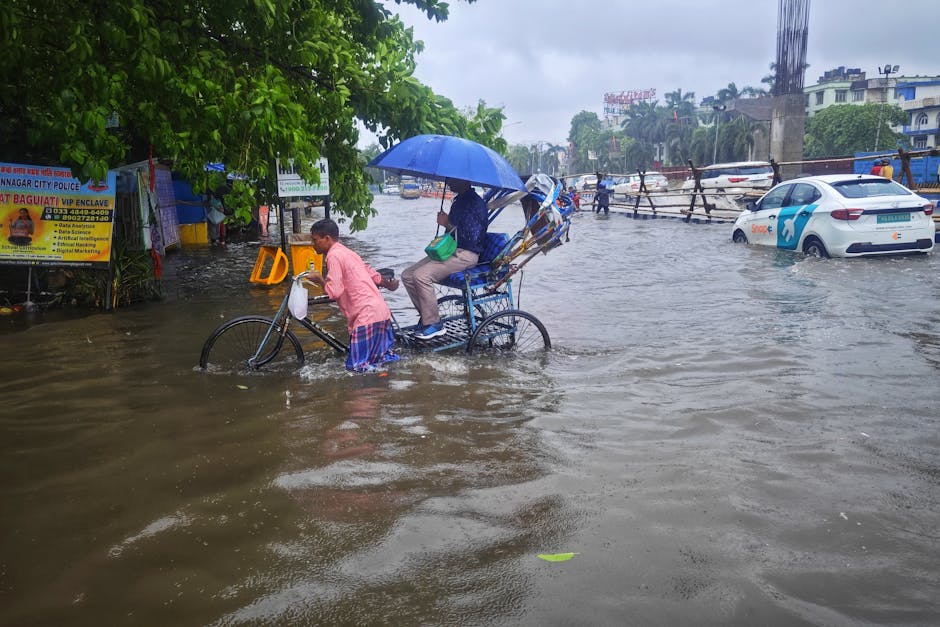
Rivers reclaim streets, hospitals turn into arks, climate math gets personal.
In southern Thailand, a city known for its markets and monsoons braced for the usual waterlogged streets. Instead, relentless downpours delivered a deluge officials labeled a one in 300 year event. Water climbed walls, submerged homes up to second floors, and left residents paddling for higher ground. Families huddled on rooftops, hospitals shifted patients amid rising tides, and emergency declarations echoed through sodden provinces. This was not some distant anomaly. It unfolded alongside a cascade of storms battering Indonesia, Vietnam, and the Philippines, claiming lives by the hundreds and stranding millions.
Consider the mechanics. Tropical regions like this rely on seasonal rains, but recent patterns push boundaries. Air warmed by rising global temperatures acts like a sponge, soaking up extra moisture from oceans that have absorbed heat for decades. When those clouds burst, rainfall intensifies. A three day barrage in that Thai city measured over 630 millimeters, equivalent to stacking nearly two thirds of a meter of water from sky. Probabilities shift too. Statisticians define a one in 300 year flood as an event with a 0.33 percent annual chance, based on historical data. Yet climate models show return periods compressing under greenhouse influence. What was once a tricentennial surprise now risks annual encore.
Southeast Asia sits in the crosshairs. The Malacca Strait spawned a rare cyclone that lingered over Indonesia, then looped back as a rainmaker through Malaysia. Sumatra endured floods and slides killing over 400. Java faced its own torrent, erasing dozens more. Vietnam tallied billions in storm damage, central floods claiming over 90 souls fresh off a typhoon that ravaged the Philippines first. Each event feeds a narrative of escalation. Warmer seas fuel stronger cyclones, altered jet streams steer storms into prolonged stalls, and deforestation strips land of its soak up capacity. Urban sprawl paves paradise, channeling water into destructive surges rather than gentle infiltration.
Humans bear the brunt, naturally. Commerce hubs grind to halt, tourism evaporates under gray skies, shelves empty as supplies wash away. Electricity flickers out, connectivity snaps, isolating the vulnerable. Elderly patients miss dialysis, toddlers cling to family in attics, rescuers boat through boulevards turned canals. Shelters sprout in stores and schools, tens of thousands displaced. Economic ripples extend far, hitting small businesses hardest, while governments tally repair bills in the billions. Workers lose wages, investors watch assets submerge, consumers scramble for basics. Stability frays when nature reasserts dominance so viscerally.
Disbelief stirs because preparations hinged on past norms. Cities engineered drains for yesterday's rains, not tomorrow's monsoons. Warnings flashed, families stocked sandbags, yet scale overwhelmed. Frustration builds at the gap between forecast and fury. Vindication arrives for scientists long flagging intensified extremes, their models vindicated in real time tragedy. Hope flickers in resilience tales, communities banding to evacuate neighbors, authorities mobilizing despite chaos. Outrage simmers over underinvestment, regions rich in warnings but poor in upgrades.
Sarcasm aside, positive paths exist. Start with data. Enhanced monitoring satellites track moisture buildup, AI predicts flash flood paths with eerie accuracy. Early warnings save lives, as seen in refined systems cutting cyclone deaths elsewhere. Infrastructure demands rethink. Sponge cities, inspired by Chinese pilots, weave parks and permeable pavements to swallow storms. Elevated homes, flood barriers, green roofs turn vulnerabilities into virtues. Thailand's south could lead, retrofitting markets with sump pumps, hospitals with backup generators on high ground.
Broader science underscores urgency. Greenhouse gases trap heat, oceans warm by 0.88 degrees Celsius since preindustrial times per IPCC tallies. Each degree amplifies moisture capacity by seven percent via Clausius Clapeyron scaling. Storms intensify, droughts parch between, ecosystems strain. Coral reefs bleach, mangroves erode, fisheries falter. Adaptation alone insufficient, mitigation essential. Cutting emissions bends the curve, nations like Thailand pushing solar, wind, reforestation. Regional pacts coordinate, sharing radar data, joint response teams.
Financial discrepancies nag. Aid flows post disaster, yet prevention starves. Insurers hike premiums, governments borrow for rebuilds, taxpayers foot endless cycles. Corporate spin paints greenwashing, oil giants fund denial while seas rise. Regulatory lapses abound, building codes lax in floodplains, enforcement spotty. Expose these, demand accountability. Investors pivot to climate resilient assets, consumers back sustainable supply chains. Economic stability hinges on it, disasters shaving GDP points annually.
Workers face front lines. Day laborers wade to sites, farmers watch crops drown, tourism staff idle. Training programs build skills in resilient construction, jobs in green retrofits. Consumers adapt too, stockpiling wisely, voting with wallets for eco policies. Stability rebuilds through collective smarts.
Solution minded means scaling successes. Netherlands mastered polders, dikes taming seas. Singapore tunnels rainwater underground. Thailand borrows these, tailoring to tropics. Community drills, school curricula on climate literacy foster readiness. Tech blooms, apps alert in local tongues, drones scout safe routes.
Logic chains clear. Ignore trends, pay steeper later. Embrace science, engineer ahead. Facts stack against complacency, warmer world wetter in subtropics, drier in subtropics poles. Projections grim without action, wet bulbs hitting lethal thresholds, floods displacing by millions yearly.
Positive sarcasm shines here. Nature tests, humans improvise. From arks of corrugated tin to policy pivots, progress emerges. Understated win, floods force upgrade.
Expand horizons. Link floods to global webs. Mekong dams upstream alter flows, La Nina swings amplify. Holistic views integrate, basin management trumps silos.
Technical depth reveals nuances. Return level analysis uses extreme value theory, Gumbel distributions fitting tails. Climate attribution studies, like World Weather Attribution, peg recent events to human forcing with high confidence. Rapid intensification, storms strengthening en route, fingerprints clear.
Human impact layers deep. Mental tolls mount, PTSD shadows survivors. Children miss school, futures dim. Economies pivot, resilient sectors thrive.
Solutions proliferate. Floating solar on reservoirs, agroforestry buffering fields. Policy wise, carbon pricing incentivizes cuts, subsidies shift to clean.
Relaxed view, over coffee, this is solvable. Science equips, will follows.
And for the signature closer, in a world where one in 300 year floods strike thrice a decade, it's like the probabilist who predicted his own drowning with perfect confidence, only to find the river rose just enough to make him statistically soaked.
 By Tracey Curl