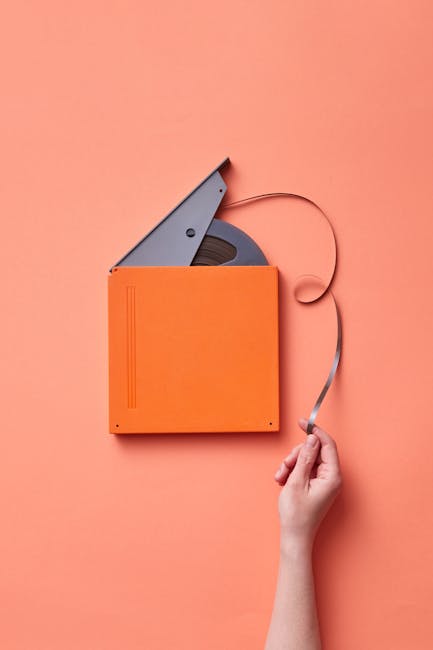
Magnetic tape and existential dread join forces to warehouse secrets of the cosmos.
Picture this: a machine so brilliant that it unravels the fabric of reality, so precise that it tracks particles smaller than a gnat’s eyebrow, and so overwhelmed by its own genius that it’s practically drowning in cosmic paperwork. Ladies and gentlemen, meet the world’s smartest hoarder: the Large Hadron Collider.
After 15 years of atom smashing adventures, the particle accelerator has generated an exabyte of experimental data. To grasp this number, imagine wrapping the Earth in DVDs like a shiny aluminum Christmas ornament. Now cover it 25 times over. Then apologize to the dolphins for the environmental impact.
This achievement is the scientific equivalent of carefully documenting every thought a bumblebee has ever had about aerospace engineering. The LHC smashes protons together like overenthusiastic billiard balls at cosmic speeds, creating more data per second than all the love letters ever written during wartime. The detectors alone could drown Switzerland in binary code if CERN’s water cooler broke.
Here’s where the story takes an unexpected turn in the quantum mechanics breakroom. The unlikely hero emerging from this chaos isn’t some silicon valley whiz kid with holographic glasses, but rather the unlikeliest candidate since socks became sandals: magnetic tape. That’s right, the same technology that brought you mix tapes and the cinematic masterpiece of Ghostbusters on VHS is now housing the secrets of the universe.
While tech giants chase cloud storage solutions that disappear faster than office snacks, physicists are stacking tape reels like diligent librarians guarding Alexandria’s secrets. These aren’t your grandfather’s cassettes tickling a Walkman, but a space age wonder capable of outlasting every hard drive in human history. The tapes sleep in climate controlled vaults, dreaming of the day humans finally understand why particles have mass.
The real cosmic joke here is scale. Storing one exabyte currently requires 60,000 tapes stacked higher than the Eiffel Tower would be if it moonlit as a skyscraper. Yet even this Brobdingnagian archive stores less than ten percent of what future experiments will generate. The upcoming High Luminosity LHC threatens to unleash a data monsoon that’ll make our current storage woes look like forgetting where you parked at the mall.
Jakub Moscicki, CERN’s storage guru who clearly never sleeps, points out the delicious irony: all the data from earlier experiments now fits in a storage corner smaller than a studio apartment closet. It’s like finding your entire elementary school artwork portfolio compressed into a single thumbnail drive. This revelation sparks hope that in 50 years, today’s exabyte avalanche might fit inside, say, a novelty keychain.
The true marvel isn’t astronomical data, but human stubbornness. Imagine explaining to a caveyesterday person chipping stone tablets that future humans would need warehouses just to store light patterns from invisible particle demotions. They’d probably trade you extra mammoth steaks to stop talking.
Every byte stored represents physicists practicing the ultimate optimism: that someday, someone will find meaning in collisions that lasted less time than a mayfly’s sneeze. They’re packing cosmic lunches for scientists not yet born who’ll analyze these atom sandwiches decades from now, possibly while commuting via personal jetpacks.
There’s poetry in science’s ugliest workhorse saving our cosmic curiosities. While flashy startups promise quantum storage crystalline dimension hopping solution platforms (patent pending), humble tape endures with the tenacity of that leftover mystery Tupperware in the office fridge. It doesn’t care about trends. It just sits there, reliably containing multitudes.
Consider the sheer comedic potential: physicists who ponder higher dimensions and parallel universes still rely on technology that stores data by magnetizing long noodle strips. It’s like discovering Michelangelo kept his paint receipts in a stone wheel driven filing cabinet.
The looming data flood gives this tale its dramatic tension. How do you prepare for a future tsunami of cosmic information when storage tech evolves at plaid wearing snail speed? CERN’s answer: vertical thinking. Literally. Build taller shelves.
Yet history’s lesson offers comfort. When the Large Electron Positron collider was CERN’s main event in the 90s, its data output seemed unreal by floppy disk standards. Today that entire corpus fits in what Moscicki calls “a handful” of modern tapes. The future always shrinks the past, like how your angst ridden teenage poetry becomes a single embarrassing text file.
This timeline suggests our descendants might store today’s exabyte mountain inside a device smaller than a postage stamp, possibly based on mutated tardigrade DNA or being spit out by genetically modified silkworms. The takeaway? Never bet against human ingenuity when faced with an impossible organizational challenge.
The story isn’t really about storage anyway. It’s about curation. The LHC’s triggering system acts like the universe’s snootiest nightclub doorman, rejecting 99.9999% of potential data points before they reach the VIP section. What makes the cut represents petabytes of unanswered questions stored with tender care.
Perhaps this mirrors our everyday digital lives writ Planck scale. Maybe squirreling away particle snapshots reflects humanity’s eternal urge to preserve memories against time’s indifferent march. Or maybe it’s just scientists being excessively thorough about making sure nobody has to say oops and rebuild a multibillion dollar machine because someone misplaced some antimatter observations.
Either way, the swirling data maelstrom paints CERN as part temple, part office supply store. While philosophers ask why we exist, particle physicists make copies just in case. Lots and lots of copies.
The punchline serves up humble pie for digital age arrogance. All our NFTs, metaverse real estate deeds, and cryptocurrency ledgers could evaporate tomorrow, yet the magnetic tape reels in a Swiss bunker will outlive us all. Future civilizations might decode the Standard Model from our archaic storage while shrugging at what we considered enlightened tweets.
So here’s to the unsung heroes: the data wranglers battling unfathomable scales, the engineers who looked at complex cosmology and said “sure, let’s put this on spinning plastic,” and the humble iron oxide particles dutifully clinging to polyester film like microscopic mountain climbers. Together they’re writing cosmic history, one reel at a time.
After all, preserving knowledge about the building blocks of reality deserves better than ephemeral cloud vapor. It demands something properly grounded. Something physical. Something with the storage equivalent of old man strength. Something you could potentially scratch a grocery list onto in an emergency.
Maybe soon we’ll store everything in laser etched diamonds or neutron soup. For now, resting assured that somewhere under Geneva, the universe’s secrets remain safely squirreled away in the scientific equivalent of grandma’s Tupperware collection: not glamorous, but gloriously eternal.
 By Nancy Reynolds