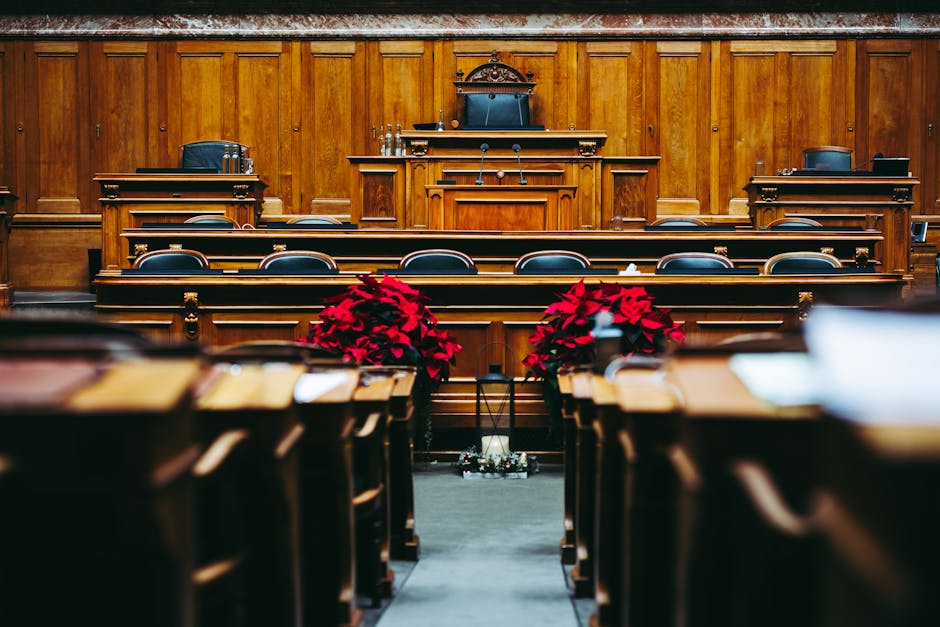
The delicate dance between presidential power and agency independence reaches a constitutional tipping point
A friend once told me there are two types of board games in this world. Ones where you elect a referee, and ones where you agree not to flip the table mid play. Welcome to Washington D.C.'s favorite pastime, where the current debate isnt about the rules of the game but who gets to pocket the referee.
This week brought us another riveting installment in America's longest running administrative law drama as the Supreme Court considered whether presidents should have unfettered power to fire commissioners of supposedly independent agencies like the Federal Trade Commission. The existential question being debated isnt merely about personnel policy. Its about whether agencies designed by Congress to operate at arms length from political winds can survive direct exposure to presidential gales.
The passion play unfolding around the FTC's 1914 founding statute feels familiar to anyone who has watched Washington's tug of war between branches. Congress, in its eternal wisdom, crafted independent agencies as curious hybrids. They combine executive functions with congressional oversight and judicial style adjudication, creating entities meant to focus on stubborn technical problems immune from daily political theater. The FTC's fixed terms and for cause removal protections were intentional features, not bugs, meant to let commissioners make unpopular calls on everything from monopoly busting to data privacy without glancing over their shoulders at the Oval Office.
The current debate turns on whether such insulation serves the public or merely insulates bureaucrats. Conservative justices seemed ready to embrace a vision of unitary executive power where no part of the federal bureaucracy escapes presidential supervision. Justice Gorsuch's quip about rejecting a 'fourth branch' of government articulates a clean, almost nostalgic view of constitutional order. If only modern governance were so simple.
Proponents of strong presidential oversight argue it enhances democratic accountability. If voters dislike how agencies behave, they can hold the president responsible through elections. This theory has undeniable appeal in an era where public frustration with unresponsive bureaucracy runs high. Agencies wielding vast power over industries and individuals should answer to someone elected, the thinking goes. The counterargument whispers that some decisions involving complex trade offs between corporate interests and public welfare need protection from political expediency. Safety regulations, antitrust enforcement, and truth in advertising oversight often require saying no to powerful constituencies. Asking politicians to absorb those blows in real time might be akin to asking foxes to supervise chicken coop construction.
Historical context helps here. The FTC's independence was solidified in 1935's Humphrey's Executor ruling, which drew clear lines between purely executive agencies and those exercising quasi legislative and judicial powers. That decision reflected a recognition that some regulatory functions need stability beyond electoral cycles. Science based agencies establishing drug safety protocols, financial watchdogs monitoring systemic risks, and consumer protection bodies dont operate on two year political timetables.
But the world has changed since the New Deal era. Agencies now tackle climate algorithms instead of railroad monopolies. Conservative critics rightly note that granting lifetime style protections to commissioners risks creating unaccountable fiefdoms. Chief Justice Roberts' observation that modern agencies wield vastly more power than their 1935 predecessors bears consideration. Its reasonable to ask whether abdicating presidential authority over such entities surrenders too much democratic control.
The real tension here lies between two competing visions of accountability. One contends that concentrated presidential power creates clear electoral responsibility. The other worries that subjecting technical decisions to political discipline could undermine agency effectiveness. Both views contain truth, which suggests the solution lies somewhere between the poles.
Perhaps the path forward goes beyond all or nothing approaches. Congress could refine removal standards balancing presidential oversight with meaningful cause requirements to prevent capricious firings. Term limits for commissioners might address stagnation concerns without surrendering independence. Enhanced congressional review procedures could force deliberate consideration before upending agency leadership. Such compromises might preserve institutional knowledge while introducing healthier accountability mechanisms.
The human impacts of this debate are often overshadowed by constitutional esoterica. For every high profile commissioner caught in political crossfire like Rebecca Slaughter, there are thousands of career staffers implementing food safety protocols, reviewing drug trial data, and monitoring financial disclosures. Regulatory stability matters not as an abstract virtue but because supply chains and research investments and pension funds require predictability. Ripple effects from frequent leadership purges could introduce economic uncertainty that hurts workers and consumers most.
The stakes here extend far beyond any single presidency or commission. Americas economic strength has long rested on regulatory predictability that attracts investment. Our consumer protections lead the world precisely because businesses know rules apply consistently. Those advantages could erode if foreign investors view our agencies as increasingly politicized playthings rather than stable institutions. This isnt hypothetical. Countries from France to Singapore have built competitive advantage through technocratic expertise insulated from political volatility. Rejecting that model entirely risks real economic costs.
Beyond economics, theres a philosophical question about what governance model actually serves public trust. Constant attacks on institutional independence may excite political bases but rarely strengthen civic confidence. Healthy democracies require citizens to believe their referees are working from rulebooks, not teleprompters. The challenge is ensuring rulemakers themselves remain answerable to the public will.
There are encouraging signs this debate could yield creative solutions rather than winner takes all outcomes. Justice Barrett'sskepticism about expansive presidential powers over certain agencies suggests even the courts conservative wing recognizes governance is messier than ideological purity tests allow. This modest wariness offers hope for pragmatic adjustments rather than radical upheaval.
Despite apocalyptic rhetoric from some quarters, America's institutions have survived far greater challenges. The delicate dance between presidential authority and agency independence has evolved for over a century through New Deal expansions, Reagan era deregulation, and everything in between. Each adjustment reflected societal needs while preserving core institutional functions. This resilience suggests our system can handle whatever the courts decide without collapsing like a bad souffle.
Ultimately, this quarrel reveals profound strengths baked into our constitutional design. Our messy, often frustrating debates over power balances exist precisely because the Founders built systems requiring constant negotiation. That structural friction prevents any branch from accumulating unchecked authority, however tempting such efficiency might seem in the moment. The Supreme Court's careful deliberation of these issues, however one views their leanings, proves the machinery still works as intended. For all our celebratedgovernment dysfunction, only healthy republics engage so vigorously over who holds the whistle.
Perhaps well look back on this moment not as bureaucratic Armageddon but as another chapter in America's endless project of institutional calibration. After all, the genius of our system lies not in perfect initial design, but in collective commitment to keep testing and adjusting it. That work continues, occasionally awkwardly, often loudly, but always meaningfully. Pass the popcorn, but maybe keep one hand ready to steady the game board. The republic plays on.
 By George Oxley