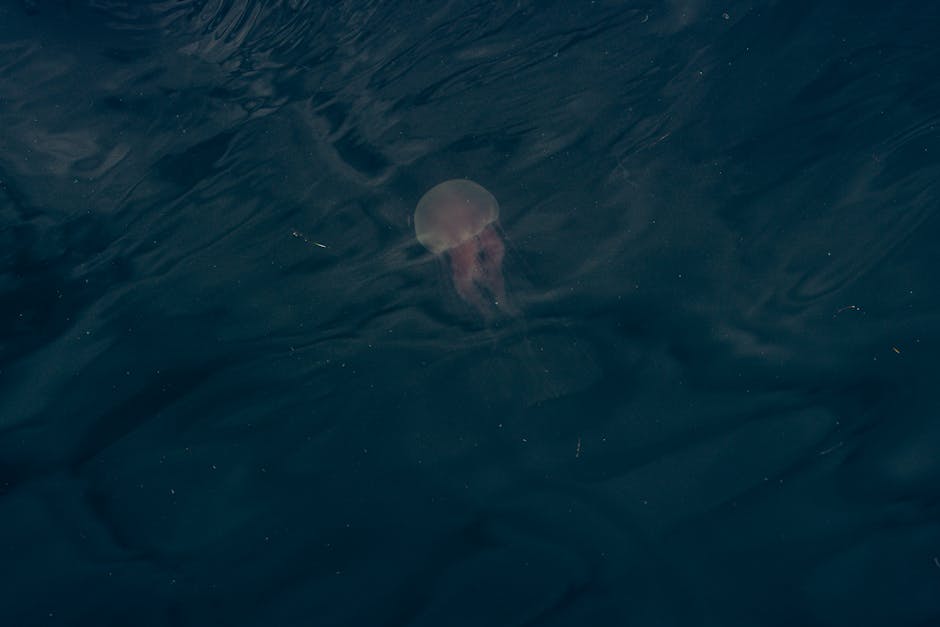
Deep beneath polar ice, nature reveals its most haunting survival strategies.
Imagine a place where darkness is not an absence, but a presence. Where water holds the cold of ancient glaciers and creatures evolve in isolation for millennia. This is not the opening of some gothic novel, but the reality beneath Antarctica’s ice shelves. Recently, explorers found something there that twists our understanding of life’s boundaries, a spherical sponge whose entire existence contradicts everything gentle we associate with its kind.
Most people know sponges as passive beings, filter feeders swaying harmlessly in ocean currents. Not this one. Discovered clutching the seafloor near hydrothermal vents, this species grows hook-lined filaments like a thousand tiny fishing lines. When crustaceans brush against them, escape becomes impossible. The sponge digests its prey alive. Here’s the unsettling twist, such predatory sponges weren’t supposed to thrive here. The Antarctic’s deep sea was imagined as a nutrient poor desert, not a hunting ground. Yet this carnivore ballooned into near perfect roundness, maximizing surface area to catch scarce meals. Nature, it seems, is far more inventive than our textbooks allow.
Another inhabitant haunts nearby volcanic slopes, the bone eating worm Osedax. Females of this species lack mouths entirely, relying instead on symbiotic bacteria to dissolve marine mammal skeletons. Their larvae drift until colliding with bone, then chemically melt their way inside. Yet even stranger, scientists found these worms devouring seal remains on Antarctic slopes previously thought too harsh for specialized bone feeders. Their presence rewrites ecological assumptions. Life doesn’t merely endure in extreme environments, it weaponizes them.
These discoveries share an overlooked truth, energy is the universal currency demanding innovation. Hydrothermal vents release methane and hydrogen sulfide, chemicals lethal to most organisms. But here, chemosynthetic microbes convert poison into possibility, building whole ecosystems separate from sunlight’s influence. Scale worms shimmer under submersible lights, their iridescent armor evolved to withstand pressures that would crush a submarine. Amphipods skitter across volcanic rock heated from below by Earth’s restless mantle. Each species crafts survival from broken rules.
We often measure planetary health through familiar metrics, declining bird populations or coral bleaching. Yet Antarctica’s dark waters offer a counterpoint. Some vent communities thrive despite warming. The bone worms demonstrate rapid colonization of new remains, suggesting nature’s scavengers keep pace with change. But that hopeful whisper meets a chilling contradiction, we know less about these depths than the lunar surface. If threats like deep sea mining encroach here, might we erase species before ever understanding their genius? One Antarctic sponge produces antifreeze proteins stable at minus twenty degrees, a potential medical breakthrough for organ preservation. What other evolutionary miracles lie buried in ice shadowed trenches?
Crucially, these ecosystems challenge human exceptionalism. Our technologies cannot mimic the sponge’s self sustaining hooks, its recyclable digestive enzymes. The worms’ bacterial symbionts outperform industrial solvents in extracting bone lipids. And none of this relies on intelligence as we define it, but millennia of iterative adaptation. Deep sea life doesn’t build solutions, it grows them. Quietly, relentlessly, without needing anyone’s permission.
Perhaps the greatest lesson lies not in biological oddities, but in context. Hydrothermal vents were first explored in 1977 along the Galápagos Rift. Since then, scientists found chemosynthetic communities across global ridges, yet Antarctica’s vents differ profoundly. With isolation tighter than any island chain, evolution pursued divergent blueprints here. Tube worms common elsewhere are absent. In their place, blind white crabs farm bacterial gardens on sulfurous plumes. Antarctic barnacles deposit metal rich shells as armor, an elemental recycling system tailored to local geology. Every vent field becomes its own miniature cosmos.
Yet for all their resilience, these creatures inhabit fragile equilibriums. Vent systems are ephemeral, shutting off when geological activity shifts. Species survival demands precise timing, larvae must locate new vents before their birthplace goes cold. Now introduce warming oceans altering current patterns, and dispersal becomes riskier. The bone worms face their own paradox, relying on whale migrations to supply remains, while shifting temperatures disrupt whale breeding. Populations of predators evolve slowly in stable environments. What happens when change outpaces adaptation?
Some research suggests Antarctic deep seas could shelter refugees from warming shallows. As species migrate deeper, these hidden valleys might preserve biodiversity that surfaces lose. But this hopeful thought collides with reality, Antarctica’s seabed lacks legal protections granted to tropical reefs. Fisheries already probe deeper waters, risking bycatch in nets dragged across unstudied habitats. Conservation depends on maps we don’t yet have, knowledge not yet gathered. Here lies civilization’s recurring folly, valuing only what we’ve named.
Another thread connects these Antarctic organisms to celestial horizons. Scientists now suspect Jupiter’s moon Europa hides a subsurface ocean, heated volcanically like Antarctic vents. If life exists there, it might resemble the chemosynthetic clans huddled beneath Earth’s ice. Studying Antarctic extremophiles isn’t mere curiosity, it’s rehearsal for understanding life beyond our planet. Could evolution elsewhere follow similar paths, favoring predation in resource poor darkness? The killer sponge, with its brutal efficiency, hints at universal biological principles wherever liquid water persists.
Ultimately, these discoveries humble us. Humans have traversed deserts, rainforests, mountains, yet Earth’s largest biome remains largely unseen. Each deep sea expedition challenges assumptions, from sponges that hunt to worms thriving inside skeletons. They need no sunlight, no plants, just chemistry pressed into service of life. What other astonishments wait under drifting bergs we’ll never visit? Perhaps it’s enough to know such strange magnificence exists, that even in gloom forgotten by seasons, creatures carve beauty from the impossible. That wonder still lives where no light ever will.
 By David Coleman