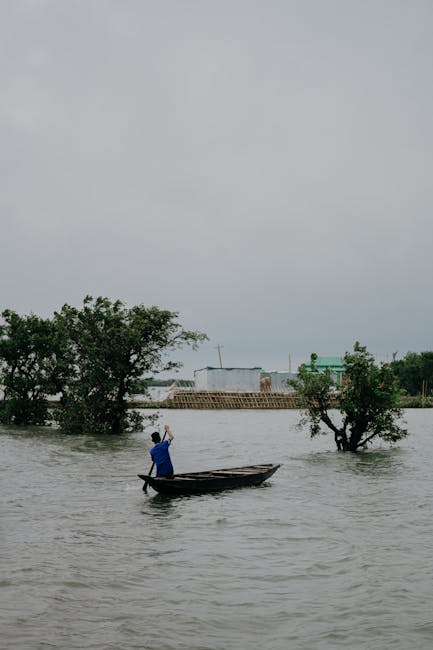
A deluge descends on the Pacific Northwest, revealing nature's might and humanity's fragile balance
The rain begins softly, almost politely, as if apologizing for the violence to come. Outside my window here in Oregon, droplets bead on cedar needles with deceptive delicacy. But we know what this is. The weather models have spoken with unusual clarity these past days, their computational vision piercing through clouds thousands of miles away to diagnose the illness headed our way. A meteorological doctor might call it an atmospheric river event. Those of us who live here know it more intimately as the wet breath of the Pacific gathering itself into something immense.
This is not merely a storm. What approaches now is a conveyor belt of moisture stretching all the way to Hawaii, a liquid thousand mile highway suspended where the ocean meets the sky. Scientists tell us a single mature atmospheric river can carry water vapor equivalent to twenty seven Mississippi Rivers flowing in concert. The term itself only entered our lexicon in 1994, coined by researchers Reginald Newell and Yong Zhu at MIT, though Indigenous communities along this coast have known these patterns for millennia through different names and stories. Western science often arrives late to truths etched deep in the land.
As I watch the maple leaves tremble under the first true onslaught, I wonder at the paradox unfolding. These rivers in the sky bring both destruction and renewal in the same downpour. The same systems that may flood Carnation, Washington and drown valley roads will replenish snowpacks that quench summer droughts. Reservoir managers hundreds of miles south already calculate how much of this deluge might be captured for parched farmlands. There’s a quiet desperation to our modern water calculus, measuring flood against famine in algorithms few understand.
The predictive power we wield today would have seemed miraculous just decades ago. Our satellites trace the invisible through infrared eyes, modeling vapor flows with hundred mile precision. We’ve mapped storms into grids of colored pixels, assigning probabilities to each raindrop’s destination. Yet for all this technological majesty, we still build homes where waters have risen before and will rise again. The Snoqualmie Valley’s floodplains hold stories older than settlement maps, written in sedimentary layers that whisper warnings we’ve chosen to ignore. Our science predicts the flood, but our politics refuse to move the furniture.
Perhaps this is the hidden lesson beneath each weather alert. Our ancestors along these coasts developed flood architecture, cedar longhouses raised on stilts that laughed at high water. Modern engineers counter with concrete walls and storm drains, a battle of attrition against forces that shaped continents. I think of the great flood of 1862 that drowned California’s Central Valley under ten feet of water, creating a temporary inland sea three hundred miles long. That disaster reshaped landscapes and laws. Will ours?
As the wind begins its earnest work tonight, peeling blackberry vines from fences, I take comfort in small human things. The weather radio crackling its monotone updates. Neighbors sharing sandbags like loaves of bread. The way rain transforms streetlights into liquid halos, beautiful even as they illuminate danger. There’s an ache in loving a place that periodically tries to wash itself clean of our presence. Our instruments grow more precise, yet our vulnerability remains fundamentally unchanged. We still huddle beneath roofs listening to the drumming sky, waiting to see what morning brings.
In this tension between prediction and helplessness lies something essential about our relationship with nature. We’ve grown adept at reading the symptoms but remain poor at treating the disease. Climate models agree these atmospheric rivers will intensify as oceans warm, becoming both wetter and more erratic. The same science letting us map next week’s storm warns that next decade’s may break all records. Data flows faster than wisdom sometimes.
Tomorrow, when the rivers rise in earnest, we’ll see community transcend spreadsheets. Fishermen whose boats become rescue vessels. Teachers transforming schools into shelters. The visceral understanding that science charts the storm, but humanity weathers it. As my flashlight beam catches silver sheets of rain, I think of how hope persists in these moments not despite the science, but alongside it. Our forecasts grow sharper not to frighten us, but to give us time to gather and remember what to protect. The rest is rain and rivers and time, flowing where they will.
 By David Coleman