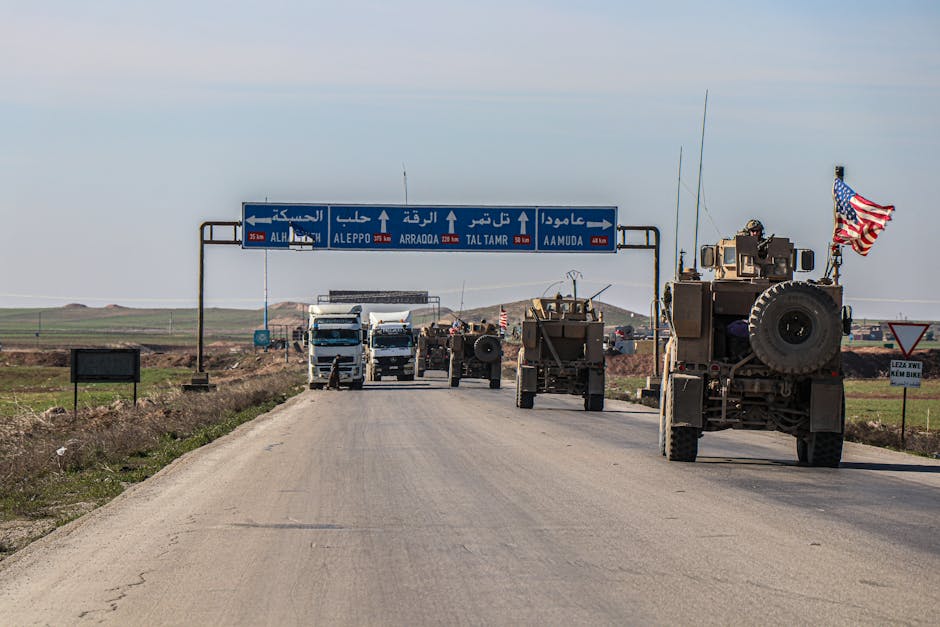
When old enemies and new allies dance in the desert, the sand gets everywhere except the victory lap.
There's something almost quaint about watching American foreign policy unfold in the Syrian desert these days. It brings to mind a Hollywood producer remaking a 90s action flick with better special effects but the same basic plot. The latest installment features President Trump channeling his inner action hero, authorizing strikes on over 70 ISIS targets faster than you can say 'mission accomplished redux.'
The operation came dressed in all the military jargon one could want more than 100 precision munitions, fighter jets dropping by uninvited, attack helicopters buzzing like angry hornets. One might call it Washington's version of spring cleaning, except instead of dust bunnies, they're eliminating terrorists nesting in mountain hideouts near Palmyra. The ancient ruins have seen empires rise and fall, but even Ozymandias never had to dodge Hellfire missiles.
What makes this sequel different from the original Desert Storm era isn't just the improved drone cinematography. It's the unexpected cameo from Jordan, a neighbor who suddenly remembered that sharing borders with failed states makes for terrible property values. Their air force joined the festivities, citing concerns about extremist organizations getting too cozy near their backyard. One imagines Jordanian generals clearing their throats and announcing, We're here to help, but mainly to ensure these lunatics don't start using our golf resorts for target practice.
The strategic cooperation reveals an open secret in Middle Eastern geopolitics nothing makes former rivals play nice faster than a common enemy resurrecting itself like a B movie zombie. ISIS's alleged comeback tour in southern Syria apparently convinced Amman that the world doesn't need a repeat of 2014's caliphate karaoke night. Their participation adds that special regional flavor to the operation, like za'atar seasoning on your standard issue military-industrial complex sandwich.
Meanwhile in Washington, the response carried all the subtlety of a sledgehammer wrapped in an American flag. President Trump's Truth Social post promising very serious retaliation read like a restaurant owner vowing to sue Yelp reviewers, except with significantly higher stakes. The administration's approach continues its tradition of treating foreign policy like a New York real estate negotiation louder, faster, and adorned with gold lettering assuring everyone they're winning.
The human chess pieces in this drama span surprising distances. From the two fallen soldiers and civilian contractor whose deaths triggered this response to the handful of ISIS members now permanently retired from jihadism. From Syrian officials suddenly remembering they too oppose ISIS between Russian cocktail parties to Israeli troops casually detaining suspects across UN buffer zones like overzealous mall cops. Everyone's grabbing their slice of the counterterrorism pie, though the recipe keeps changing each time someone opens the oven.
Financial observers might chuckle at ISIS's attempted rebranding effort. Trying to rebuild capacities sounds less like terror networks and more like a startup pivoting after disastrous third quarter results. Perhaps they missed the memo that venture capital firms aren't funding caliphates these days, especially not those operating out of desert caves with outdated weaponry. Their crowdfunding campaigns must be truly dire to warrant such desperate measures.
Regional analysts note the strikes occurred far from population centers, meaning fewer civilian casualties and happier NATO press briefings. It reflects the Pentagon's evolution toward what one might call surgical strike chic minimizing collateral damage while maximizing explosive impact. The approach carries all the precision of a master chef deboning a fish, if that fish were hidden terrorist cells and the knife were multimillion dollar missiles.
On the cultural front, Palmyra's UNESCO heritage status presents intriguing questions. Do ancient Roman columns provide better cover for drone strikes than modern buildings? Can terrorists claim historical preservation tax breaks if they occupy archaeological sites? UNESCO remains silent on whether beheading videos qualify as performance art.
The operation's timing proves equally fascinating, coming exactly one year after Bashar al Assad's ouster by Islamist rebels. Anniversary gifts in Syria apparently involve less chocolate and more explosives these days. Observers wonder if future December celebrations might feature less regime change and more regime adjacent target practice.
Drone warfare merits special attention in this production. The technology allows operators in Nevada to vaporize militants in Deir Ezzor between coffee breaks, creating warfare's version of telecommuting. While some debate the ethics of remote control assassination, pilots probably appreciate not having to explain Middle Eastern sand in their boots to TSA agents.
Meanwhile Jordan's involvement signals shifting regional priorities. They seem to have calculated that occasional joint operations beat dealing with refugee caravans at the border. The Hashemite Kingdom's participation amounts to preventive landscaping ensuring ISIS doesn't turn southern Syria into another noxious weed choking their security perimeter.
Final assessments remain tricky. Terrorism experts debate whether these strikes cripple ISIS or merely encourage rebranding their southern affiliate to something catchy like Desert Storm Survivors LLC. Economists grimace thinking about missiles costing more than some nation's GDP obliterating tents housing radicals with fewer assets than a Brooklyn subway musician. Moral philosophers ponder whether erasing evil requires erasing landscapes, or vice versa.
But hey, at least Palmyra gets a break from starring in ISIS recruitment videos. The ancient city played unwilling backdrop to enough horrific theater to last millennia. Perhaps someday children will scamper through its ruins marveling at how the world's great powers once played whack a mole with extremists across the desert. And somewhere in Texas, a retired commander in chief will add another chapter to his memoirs titled How I Made the Sand Glow. The end.
 By Margaret Sullivan