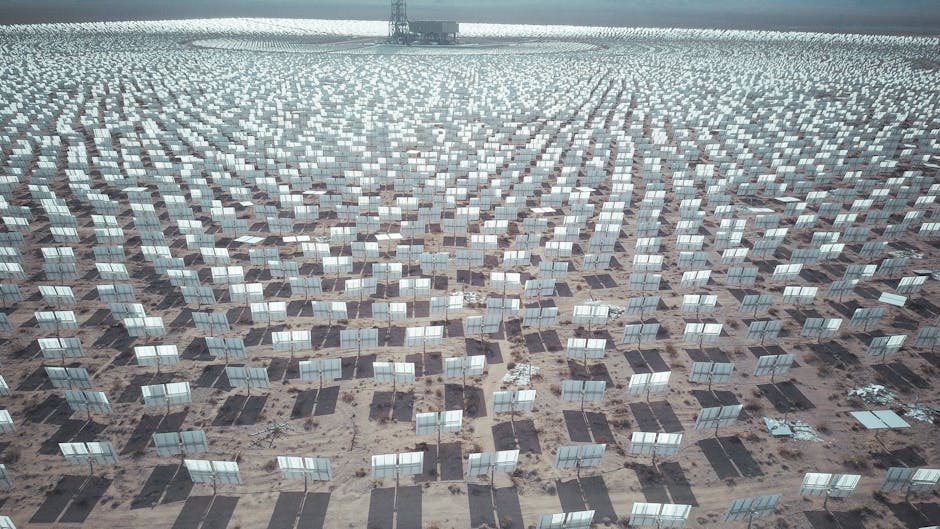
The unsexy shipping containers quietly eating utility profits while keeping your lights on.
I first heard the whispers about grid scale batteries fifteen years ago from an engineer who smelled like sunscreen and regret. We were standing on a windblown patch of Chilean desert where his team had just installed a shipping container sized lithium ion experiment. The locals thought he was insane, power companies called it a boondoggle, and even his wife questioned his life choices. Today, that same desolate site anchors a global energy storage revolution proving why dismissing boring metal boxes remains a multibillion dollar mistake.
What fascinates me isn't just how lithium ion storage went from laughingstock to linchpin, but who fought hardest against the transition. The same utility executives who now trumpet storage investments spent the 2010s commissioning reports proving why batteries would never work. I distinctly recall a 2013 industry conference where a Midwest utility CEO told me storage was quote useless for anything bigger than a flashlight unquote. His company now operates seven battery farms.
Of course corporations flip flopping on innovation is hardly news, a trend I've documented from DVD rentals to crypto bros. What makes the battery story uniquely hypocritical lies in our selective memory of energy history. Storage obsessives like Thomas Edison understood its necessity 140 years ago when building battery backups for his Manhattan generators. Modern utilities conveniently ignored those lessons while raking in guaranteed returns on fossil fuel plants. Only when renewables forced their hand did batteries suddenly become strategic priority number one.
The price collapse fueling this transition still stupefies veteran analysts. Lithium ion costs dropped 90% since 2013 not through lab breakthroughs, but ruthless manufacturing scale perfected by Chinese firms like CATL while Western rivals slept. I saw this playbook before with solar panels, where provincial subsidies and vertical integration allowed China to dominate. Battery makers applied that template with brutal efficiency, adding extra twists like cobalt recycling and mining investments from Chile to Congo. The result? Storage projects now pencil out financially better than most natural gas peaker plants utilities spend billions constructing.
Human impacts range from subtle to seismic. Consumers enjoy marginally fewer blackouts despite climate chaos, though the benefit remains easier to overlook than higher grocery bills. Utility workers face unsettling job transitions as batteries replace combustion turbine specialists. Early battery investors like Goldman Sachs and Brookfield Asset Management quietly made multiples on their bets with little fanfare. Meanwhile retirement fund managers now chase storage deals once marketed exclusively to crypto speculators and Saudi oil sheiks.
The truly delicious tension unfolds where innovation smashes into regulatory inertia. Most public utility commissions still mandate grid planning processes designed when coal ruled supreme. Their lumbering approval cycles can’t match storage projects deployed in months versus years for traditional plants. I met a developer in Texas last August who bypassed this bottleneck by classifying 600 megawatts of batteries as an industrial park renovation. They’re earning double digit returns while regulators scramble to update thirty year old rulebooks.
Personal experience provides useful perspective here. Visiting Tesla’s Nevada Gigafactory in its open jawed early phase, I watched semi trailers dump raw lithium like gravel into construction sites. Musk promised batteries cheaper than anyone thought possible, drawing snickers from Detroit and Tokyo. Yet every executive’s parking lot filled with Teslas by 2022, an unspoken admission of who won that war. Similarly, watching South Australia gamble its grid stability on battery tenders in 2017 felt reckless until their stored electrons bailed out the entire region during record heatwaves. Industries transform when necessity meets audacity.
Current market dynamics verge on surreal. Investors now evaluate storage farms using models ripped from mining ventures where commodities are dug up and sold at peak prices. Except here electricity replaces gold, and your drills are Pittsburgh built inverters. Corporations increasingly view storage not as backup but profit centers, arbitraging Californian midday solar gluts against evening shortages. BlackRock expects over $100 billion poured into the sector by 2030, exceeding wind or solar allocations. Not bad for a solution dismissed as fantasy when first displayed in that Chilean sandbox.
What’s unmistakable is how profoundly cheap storage reshapes energy economics everywhere. Power prices stay lower and stabler even through pipeline explosions or Russian invasions because batteries cushion those shocks. Renewables projects once canceled over intermittency fears now pencil out with storage attached. Most nuclear plants face existential threats from batteries paired with solar wind combos offering electrons at one third the cost. Everyone sees this coming except, oddly enough, many utilities still approving new multi decade fossil fuel investments.
The cautionary tale lies not in battery development, but institutional reluctance to acknowledge its ascendence. Utility annual reports now extol storage programs that leadership mocked as fishtank experiments a decade prior. State regulators approving new gas pipelines resemble Soviet apparatchiks planning grain quotas while farmers privatize fields around them. Such dissonance continues until it cannot, usually when angry customers learn how storage could’ve avoided their latest grid failure storm surcharge debacle.
Here’s what I’m telling pension fund managers these days after watching storage’s improbable journey. The battery gold rush supersedes solar’s breakout because storage transforms everything, not just one slice of the grid. It allows renewable excess to undermine fossil fuel baseload economics and empowers consumers historically powerless against monopoly utilities. Most projections about storage hitting cost plateaus have proven comically wrong due to manufacturing tricks we’ll only understand years later. And nobody designing that first Chilean desert project expected their boxes to birth a $100 billion market rewriting energy rules for good.
My advice? Stop listening to utility executives still downplaying storage potential like they’re trying to save face over missed signals. Start tracking AI driven battery analytics firms and Chinese raw materials plays infiltrating South America. Recognize that cheap storage democratizes energy in ways both economically terrifying and profoundly hopeful. And if you meet any skeptical engineers lately, maybe thank them for ideas that seemed crazy right until the desert experiments became industrial inevitability.
 By Daniel Hart