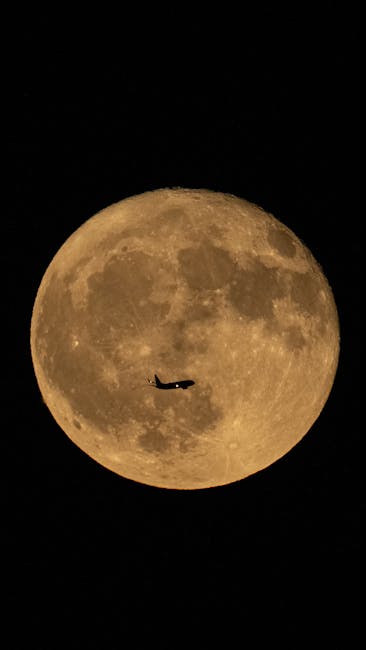
Stardust whispers through microchips, demanding we reimagine humanity's place in the cosmic web
Imagine hurtling through clouds at 500 miles per hour inside a metal tube when suddenly the machines keeping you aloft forget their purpose. This happened recently aboard a commercial jetliner, where unseen forces from beyond our solar system reportedly plunged passengers toward Earth before pilots regained control. Initial explanations pointed to solar flares, those familiar eruptions from our local star. Then came the more haunting possibility particles from dead stars millions of years gone might have interfered with the aircraft.
We build walls against nature. Biosphere controlled cabins shield us from thin atmosphere. Navigation systems compensate for Earth's curvature. Automated fly by wire systems prevent human error. Yet cosmic radiation laughs at such petty human defenses. No metal hull blocks these subatomic bullets born when massive stars explode light years away.
The statistics feel chilling. A single high energy particle smaller than an atom can flip digital switches inside modern microprocessors. We call these events single event upsets, a gentle technical term for cosmic vandalism. These particles pack enough punch to reverse binary codes, turning ones into zeros and zeros into ones in the blink of an eye.
Here lies technology's exquisite fragility. Our digital civilization runs on silicon wafers thinner than tissue paper. Meanwhile, the cosmos bombards every square meter of Earth's surface with about one secondary particle every second from cosmic ray impacts alone. We exist under constant invisible rain.
But this story isn't just about airplanes. It's about everything. Forgotten history reminds us this celestial interference once changed American democracy itself. In 2003, cosmic radiation allegedly flipped votes from one candidate to another in a touchscreen voting machine during a local election. We stand on foundations far less stable than we imagine.
The biological implications fascinate equally. Space radiation makes astronauts see phantom flashes with eyes closed, particles literally triggering optic nerves. European scientists discovered prolonged cosmic ray exposure rewires rodent brains, worsening anxiety. How these forces shape consciousness remains among science's greatest unanswered questions.
Modern geology reveals stranger truths. Small mountain flowers mutate differently depending on elevation's radiation levels. Tree rings tell stories of ancient supernovae detected through carbon isotope spikes. Even mutation rates in deep sea creatures suggest cosmic variability influences terrestrial evolution.
Perhaps we should rethink our divisions between astronomy and ecology. Just as poisoned rivers kill fish, could altered solar winds trigger stock market crashes through satellite malfunctions? Might ancient stardust influence pandemic mutations through atmospheric chemistry changes? The lines blur when cosmic weather becomes terrestrial biosphere.
Human history itself is written in stardust signatures. Ice core samples from 1300 AD reveal radioactive beryllium generated when cosmic rays struck nitrogen atoms, coinciding with historical descriptions of blood red skies. Our ancestors saw omens. Today we know it as particulate physics with atmospheric optics.
Corporate responses to these forces often feel laughably human sized. After the airline incident, engineers distributed software patches as digital raincoats against the galaxy's particle storms. We upgrade avionics code while ignoring solar storm possibilities a thousand times more powerful than this event.
Remember the Carrington Event. In 1859, electromagnetic fury from the sun fried telegraph systems and sparked auroras visible near the equator. A similar event today could produce aviation chaos beyond imagining. Yet funding to prepare remains microscopic compared to other transportation safety initiatives.
The philosophical implications keep me awake. Humanity grew up believing ground solid, blue sky protective. Now we learn cosmic rays pass constantly through our bodies. Your morning coffee contains potassium atoms rendered slightly radioactive from cosmic bombardment. We inhale ancient supernova remnants with every breath.
Where then lies security? In thicker metal? Better software? Or humility recognizing we float through an ocean whose currents remain largely uncharted. When jets require cosmic weather forecasts before takeoff, we must renegotiate our relationship with space itself.
Outrage mixes with wonder here. Airlines ground thousands of aircraft for software fixes after one incident, yet society ignores schools beneath power grids vulnerable to solar storms. We fear falling planes more than collapsing power infrastructure possibly crippling hospitals. Priorities warp through familiarity neglect.
Aviation regulation provides poignant metaphors. Cosmic radiation protections focus almost exclusively on flight crew exposure limits, ignoring potential electronics failures affecting hundreds simultaneously. Protecting pilots biologically while passengers face digital uncertainty feels philosophically disjointed.
The path forward demands poetic engineering. Imagine spacecraft coated in algae to turn radiation into biofuel. Or microchips with self healing circuitry mimicking human DNA repair mechanisms. Solutions exist where biology meets astrophysics, if we dare cross disciplinary streams.
There's beauty in this vulnerability. Just as ancient humans charted ocean currents to navigate unknown seas, today's spacecraft map the solar system's electromagnetic rapids. We discover helical magnetic fields shielding the solar system like woven baskets. Learning cosmic river flows may let us sail better through them.
Passengers aboard that troubled flight experienced cosmic horror and corporate reassurance in equal measure. Yet beyond fear lies breathtaking connection. Light from those same distant supernovae fuel photosynthesis in the oak trees outside hospitals where injured travelers recovered. Stardust in the crash and in the cure.
This changes everything. That plane's computers may have momentarily failed under stellar assault. But who designed those computers? Species whose very existence relied on supernovae creating carbon in ancient stars which then exploded to form our solar system. Cosmic violence created both problem and solver.
Perhaps technology isn't humanity versus nature, but rather stardust rediscovering itself through circuit boards. Silicon born inside red giant stars later harvested to create memory chips now analyzing gamma ray bursts. The universe observing its own wonders through invented eyes.
We're not just passengers on this rock. We're participants in a galactic cycle so vast it makes lifetimes look like fallen eyelashes. The next software update shielding planes from cosmic rays won't just protect travelers. It represents consciousness rearranging stardust to dance better with itself.
 By David Coleman