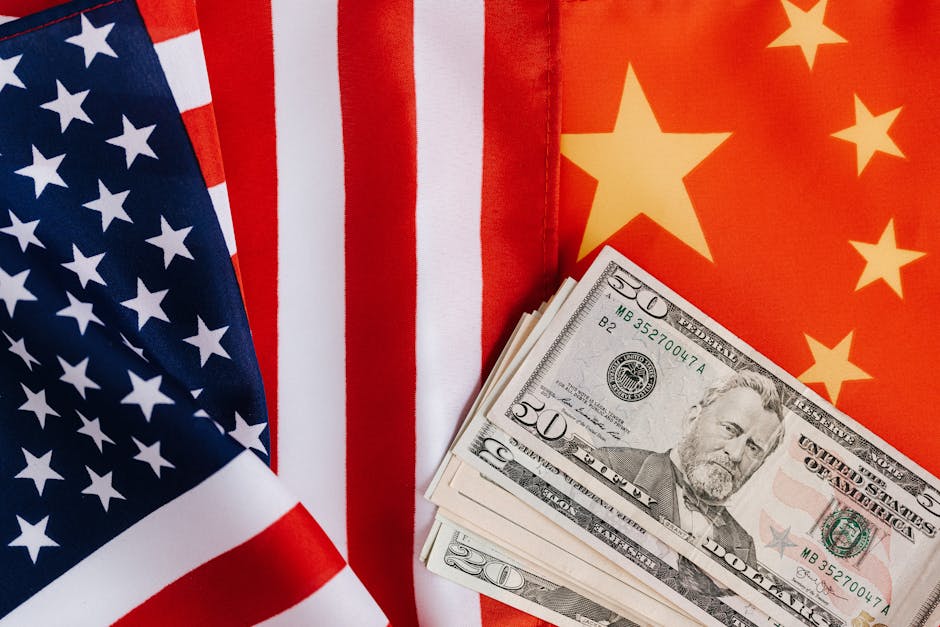
Two superpowers, one kopitiam table, and a whole lot of trade tension to unpack over teh tarik.
You know how sometimes you see two uncles at the kopitiam arguing about politics, one waving his roti prata for emphasis while the other calmly sips his kopi? That's kinda what's happening this week in Kuala Lumpur, except the uncles are US Senator Marco Rubio and China's top diplomat Wang Yi, and the roti prata is the multibillion dollar US China trade relationship that everyone keeps flipping but never seems fully cooked.
The meeting comes at a spicy time in US China relations. Washington has been tightening the screws on Beijing with export controls on advanced semiconductors, investment restrictions in key tech sectors, and vocal concerns about everything from South China Sea tensions to human rights issues. Not to be outdone, Beijing has been playing its own game of policy jiujitsu with rules targeting rare earth minerals and making life difficult for American firms operating in China.
Now enter Malaysia, that classic neutral ground where everyone can pretend the aircon is just cold enough to keep tempers from boiling over. Our Malaysian friends have long perfected the art of hosting difficult conversations, whether between rival political factions or now between the world's two biggest economies. Smart move having the talks in KL lah, where the teh tarik is sweet enough to smooth over awkward moments.
The human angle here often gets lost in all the high politics. For every semiconductor executive worrying about supply chains, there are factory workers in Penang wondering if their jobs might get caught in the crossfire. For every bureaucrat in Beijing calculating tariffs, there are small business owners in Shenzhen trying to figure out if they should still label their goods "Made for US Market." These meetings matter because real people's rice bowls are at stake.
What's fascinating is watching both sides use Malaysia as this strategic middle ground. China has been courting Southeast Asian nations hard through trade deals and infrastructure projects. America meanwhile is trying to show it's still engaged in the region despite all the domestic distractions. KL makes sense as neutral territory, far enough from Washington's election cycle noise and Beijing's party congress preparations.
Now the million ringgit question: will anything concrete come from this meeting or is it just wayang kulit? Probably a bit of both. Rubio isn't officially part of the Biden administration, but as a senior senator he carries weight. Wang represents the Chinese foreign policy establishment. If they can identify some small areas of agreement, it might create space for more formal talks later. But let's not expect them to solve all the issues over one round of satay.
The optimistic take? At least they're talking. In an era where great power competition could easily slip into full blown confrontation, maintaining these channels matters. Malaysia gets to play host and remind everyone it remains an important player in regional diplomacy. And who knows, maybe the kopi culture will work its magic. After all, it's harder to demonize someone after sharing nasi lemak together.
For Southeast Asia watching nervously from the sidelines, these talks confirm what many already know. The region is becoming the chessboard where US China tensions play out. But unlike actual chess, this game has no clear rules and the pieces keep changing sides. Smart countries like Malaysia are learning to navigate this by hosting the game rather than becoming pawns.
Nobody expects miracles from this meeting, but in diplomacy sometimes just keeping the conversation going is half the battle won. If Rubio and Wang leave KL with slightly better understanding of each other's red lines, that's progress. And if not, well, at least Malaysia's food scene gains two new admirers. In the end, even great power politics can't resist the charms of a good char kway teow.
 By Jun Wei Tan