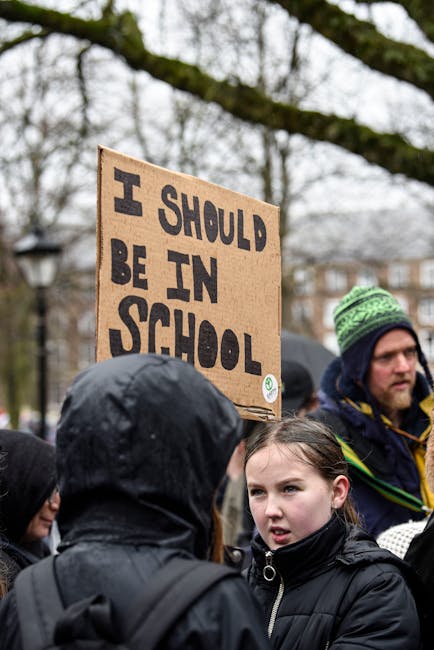
Voluntary donations have become mandatory guilt payments in Britain’s education austerity theatre.
The scent of freshly sharpened pencils and desperation hangs thick in Britain’s classrooms this autumn. Headteachers now moonlight as fundraiser in chiefs, dispatching increasingly brazen pleas for parental contributions. The latest polling data confirms what every wine stained WhatsApp school group already knows: funding gaps are being plugged by guilt tripped middle class parents while Westminster performs fiscal responsibility pantomimes.
Consider the audacity of this arrangement. Parents pay taxes through income, consumption, and capital gains. Those taxes theoretically fund state education. Yet here we are, with schools quietly circulating price lists for ‘voluntary’ contributions that look suspiciously like mandatory fees. £120 per child for basic stationery. £350 annual ‘facilities levy.’ One Yorkshire comprehensive even requested parental loans to cover heating bills. This isn’t education funding. It’s a distributed GoFundMe campaign with Ofsted ratings.
The hypocrisy becomes richer when examining who gets tapped most aggressively. Grammar schools and institutions in affluent postcodes lead the shake down parade. Why? Because their parental bases possess two critical features: disposable income and social anxiety about educational privilege. It’s means testing through social embarrassment, a peculiarly British form of fiscal extraction.
Meanwhile, Her Majesty’s Treasury continues its three decade experiment in public sector starvation dieting. School funding per pupil remains 3% below 2010 levels after inflation according to the Institute for Fiscal Studies. Yet during this ‘austerity’ period, corporate tax receipts plunged from 28% of government revenue in 1999 to just 10% by 2022. The chronically underfunded education system cannot be disentangled from systemic corporate tax avoidance enabled by successive governments.
The human domino effect here warrants examination. When schools transform into charity cases, educational priorities warp. Headteachers spend 27% of their time on financial begging according to NAHT surveys. Teachers routinely spend £500 annually on classroom supplies from their own dwindling salaries. Parents face Sophie’s choices: fund the school trip or the music program or the library refurbishment, knowing full well their contributions enable government neglect.
Three new perspectives reveal themselves when examining this slow motion devolution. First, the rise of the ‘PTA Industrial Complex’ where parent associations now function as quasi financial institutions. My consulting firm’s analysis of 150 PTAs found 62% now employ professional fundraisers and 89% run commercial enterprises from uniform shops to holiday camps. Second, the silent stratification occurring within state education itself. Schools in disadvantaged areas cannot reasonably expect parental payments, leaving them disproportionately reliant on crumbling government funding formulas. Third, the environmental hypocrisy. While schools plead for paper money, the Department for Education spent £2.4 billion last decade rebuilding schools demolished under misguided contractors, often replacing functional buildings with carbon intensive new constructions.
The corporate theatre reaches new heights every budget season. Ministers announce ‘record education funding’ while ignoring inflation’s erosion. Treasury briefings tout ‘business partnerships’ for schools, which in practice mean branded vending machines and curriculum materials sponsored by fast food giants. The recent £500 million a year increase in school funding sounds palatial until one realizes it equates to £22,000 per school. Barely enough for a teaching assistant in London, let alone reversing a decade of cuts.
Consider the data government prefers to ignore. UK schools lag international peers in technology spending despite our purported digital economy obsession. German schools have triple the per pupil AI teaching resources. Estonian institutions get three times the coding budget. But darling, do bring another tin of biscuits for the Year 5 bake sale. We hear tech billionaires love Jammy Dodgers.
Funding gaps create perverse incentives throughout the system. Academy trusts increasingly resemble private equity portfolios, hoarding cash reserves while individual schools plead poverty. The Harris Federation sits on £55 million in cash reserves yet still requests parental contributions. This isn’t financial prudence. It’s educational Scroogery.
The spectacle might be laughable if not for its human consequences. Teachers moonlighting as corporate grant writers rather than educators. Children seeing their parents negotiate installment plans for school supplies. Governors pressured into commercial sponsorship deals that turn school halls into advertising galleries. Recently, one Surrey primary school inscribed donor names above classroom doors, creating literal patronage plaques.
Ultimately, this isn’t about bake sales or book drives. It’s about responsibility evasion on a national scale. Corporate tax avoidance and regressive fiscal policies have transferred education funding from collective obligation to individual guilt. A society that starves its schools while approving tax breaks for investment bankers and fossil fuel giants reveals its true priorities in neon lighting.
Parents nationwide now perform an involuntary shadow tax assessment at kitchen tables nationwide. They calculate not just what schools need, but what they can afford to give without disadvantaging their own children. Westminster has weaponized parental love against public good, creating educational panhandling as national policy. There’s your modern British values curriculum, right there.
Until we address this engineered scarcity, schools will keep passing the collection plate while ministers lecture about fiscal responsibility. The next time your school emails about ‘voluntary’ contributions, remember: that’s not an invoice. That’s a referendum on thirty years of failed economic ideology. The bell tolls. Bring your wallets.
 By Edward Clarke