Nervous systems and seismic systems share one trait: sometimes 1% feels like 99%
Imagine receiving a meteorologist's forecast stating there's a 1% chance your house will be hit by a tornado next week. You'd likely shrug and carry your umbrella. Now replace the tornado with an earthquake 32 times more powerful than one that just shook your city, and replace the meteorologist with scientists who track tectonic grudges older than human civilization. Suddenly that 1% feels heavier than a concrete high rise.
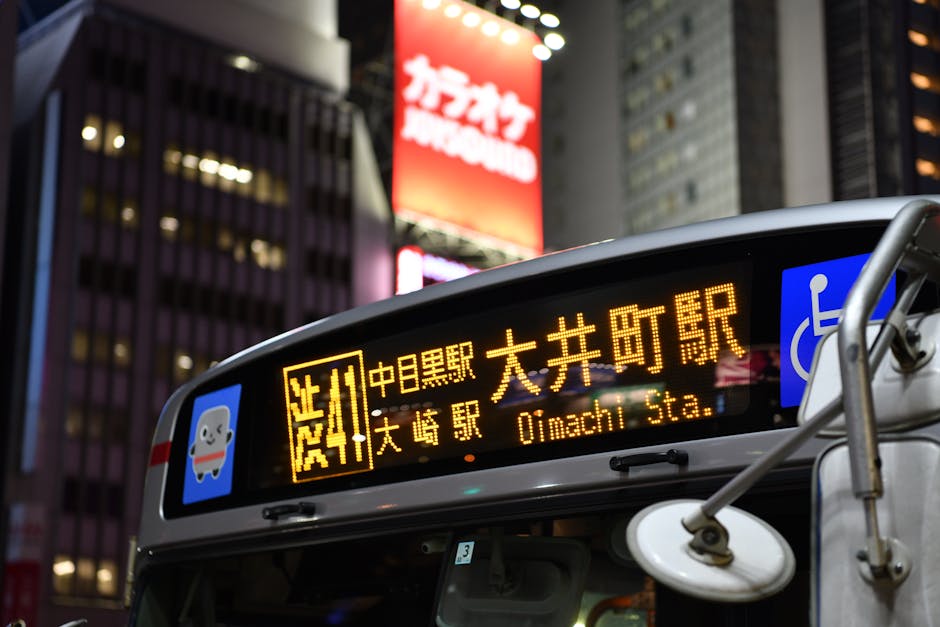
This is Japan's current reality. Following a magnitude 7.6 earthquake near Aomori Prefecture, the government triggered a rare megaquake advisory. Their assessment: the probability of a magnitude 8 event within seven days has risen from the usual 0.01% to 1%. This statistical adjustment might appear insignificant to lottery players or roulette enthusiasts. In seismology, it's equivalent to switching from a gentle warning buzzer to flashing red klaxons.
The Richter scale's logarithmic nature makes these numbers deceptive. A magnitude 8 earthquake releases roughly 32 times more energy than a magnitude 7, and 1,000 times more than a magnitude 6. To visualize this, imagine comparing a campfire to an exploding gas refinery. Japan understands this math acutely. The 2011 Tohoku earthquake, a magnitude 9 monster, triggered tsunami waves that killed nearly 20,000 people and caused the Fukushima nuclear disaster.
Seismologists operate under brutal constraints. Unlike weather forecasters tracking swirling cloud systems, they peer through kilometers of rock at continental plates engaged in slow motion collisions. Prediction remains impossible. Instead, Japan's system relies on probability models informed by historical patterns. When a large quake occurs, statistically speaking, it slightly elevates the chance of another. Like a smoker considering cancer risks, the numbers tell only half the story.
This advisory system, launched just last year, exists in a peculiar space between science and public policy. The inaugural 2024 warning expired uneventfully, inviting questions about bureaucratic risk tolerance. Issuing too many alerts breeds complacency. Issuing too few invites catastrophe. Consider earthquake advisories as tectonic spam filters. False positives annoy everyone. False negatives destroy inboxes permanently.
Human psychology battles the numbers game at every turn. Cognitive biases minimize low probability, high consequence events. Insurance actuaries call this the volcano fallacy. Most people won't pay premiums for volcano insurance unless they live on an active caldera. Yet Japan's entire population essentially lives on geological calderas. Coastal communities face compounded risks, where earthquakes birth tsunamis within minutes.
Preparedness measures reveal another layer. Japan already boasts the world's most sophisticated earthquake infrastructure. Buildings employ base isolation systems letting them sway like metronomes during tremors. Early warning systems give trains and factories precious seconds to shut down. Regular drills ingrain emergency responses into schoolchildren. Against this backdrop, a 1% advisory risks being either unnecessary noise or critical information.
Financial implications ripple outward. Insurance markets monitor these advisories neurotically. A 1% probability shift might trigger re rating of catastrophe bonds. Manufacturing supply chains contemplate contingency plans. Tourism operators brace for cancellations. The advisory's economic footprint expands far beyond its scientific certainty.
Critically, this system avoids boy who cried wolf syndrome through extreme rarity. Only quakes above magnitude 7 trigger the evaluation process. Since 2024's inaugural advisory, Japan experienced several qualifying earthquakes without further warnings. This restraint maintains credibility. When the earthquake council speaks, people should listen, not sigh.
Seismic politics deserve examination. Local governments face pressure both to reassure citizens and maintain vigilance. National agencies balance scientific integrity against public panic risks. Journalists struggle to convey uncertainty without inducing paralysis or complacency. Imagine a weather report stating there's a small chance of either sunshine or your roof flying to Kansas and you grasp the communication challenge.
Technological frontiers offer partial solutions. AI now crunches seismic data in real time, spotting patterns humans miss. Sensor networks have mushroomed across the Pacific Rim. Early warning systems gain precious seconds with each upgrade. Yet these remain defensive measures, not predictive ones. As one seismologist dryly noted, We remain the Mayflies of the geological timescale, trying to comprehend continental courtships lasting millions of years.
Public education remains Japan's unsung weapon. From elementary schools to corporate offices, quake preparedness forms part of cultural muscle memory. Citizens maintain emergency kits with military precision. This societal resilience transforms probabilities into actionable plans. A 1% chance becomes not an abstraction, but a checklist verification moment.
International observers should note Japan's approach differs markedly from American West Coast preparedness. Californian earthquake rhetoric often fixates on The Big One scenarios, Hollywood style catastrophe porn. Japanese advisories emphasize incremental probability shifts, reflecting a cultural comfort with uncertainty perhaps born from centuries confronting volcanic eruptions and typhoons.
The advisory's timing intrigues geopolitically. Northern Japan hosts sensitive military infrastructure and energy facilities. A megaquake would strain regional resources amid ongoing tensions. Disaster response protocols double as national security safeguards.
Scientific humility underpins this entire endeavor. Seismologists openly admit their probability models resemble educated astrology when applied to weeklong timescales. Tectonic stresses accumulate over decades. Predicting when they release remains beyond science's grasp. Japan's system acknowledges this by marrying mathematical honesty with operational pragmatism.
As the seven day window closes, two outcomes exist. Either the advisory becomes another uneventful statistical blip, filed beside 2024's warning. Or it precedes an actual megaquake, becoming a landmark in disaster forecasting. Either way, Japan's approach offers global lessons in living gracefully with uncertainty.
Modern societies obsess over eliminating risk. Japan demonstrates how to manage unavoidable risks intelligently. The 1% advisory isn't about fear mongering. It's about acknowledging that when dancing with tectonic forces, even improbable steps require practiced footwork.
 By Tracey Curl