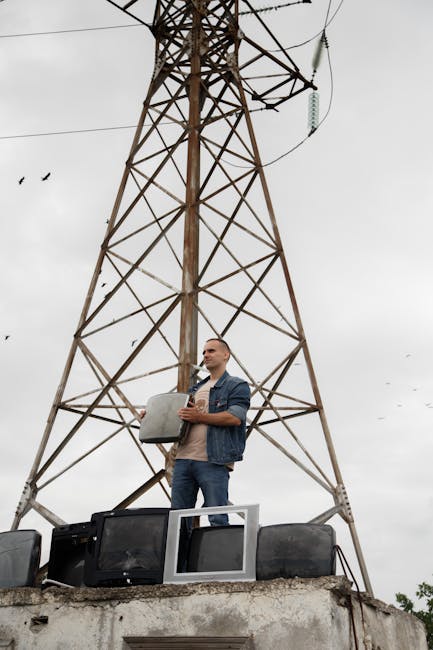
Power outages expose the shaky foundation beneath our digital utopia dreams
I nearly dropped my coffee reading outage reports from San Francisco over the weekend. Not just because 90,000 people lost power, though that alone would warrant concern. What struck me was the dissonance between the city's identity as a global tech capital and its reliance on an electrical grid that behaves like temperamental antique plumbing. As crews scrambled to restore electricity by Monday afternoon, the episode revealed hidden fractures in our technological society that deserve far more attention than they usually receive.
Picture this: traffic lights blinking out across Market Street. Elevators freezing mid journey in towering office buildings. Refrigerators full of groceries slowly warming as families calculate losses. This isn't some dystopian novel's opening chapter. It's last Saturday in one of America's wealthiest, most technologically advanced cities. The official blame falls on malfunctioning equipment at a substation, a mundane explanation that somehow makes the situation more unnerving. Our collective future supposedly rests on cloud computing and AI, yet these system of tubes and wires from the 1950s can still bring everything to a halt.
We shouldn't frame this as simply a utility problem. This outage is a prism revealing three interconnected crises. First, the physical decay of public infrastructure accelerated by decades of deferred maintenance. Second, the explosion of private tech ventures like data centers adding unprecedented strain to these neglected systems. Third, the lack of honest dialogue about who shoulders the costs and risks of upgrading grids built for a different era. These issues extend far beyond San Francisco's boundaries.
Consider the data center construction boom consuming California and other tech hubs. San Jose's plan to nearly triple data center capacity specifically for AI processing could skyrocket electricity demand equivalent to adding 435,000 homes to the grid according to recent reports. Who pays for the substation upgrades and transmission lines required? Who ensures renewable energy sources keep pace with this ravenous consumption? I've noticed a disturbing pattern where tech giants publicly champion sustainability while privately lobbying against utility rate increases that would fund grid modernization. Their innovations run on public infrastructure they fight to underwrite. Someone's counting on ratepayers and taxpayers footing the bill here.
The human impact feels particularly lopsided. Take the small bakery owner I spoke with near Union Square. She lost thousands in inventory while corporate data centers enjoyed uninterrupted operation thanks to private backup generators. A disabled resident tweeted about his terrifying hours without power for medical equipment. Tech workers could seamlessly transition to remote work thanks to generators at corporate campuses, but hospitals rationed emergency power and public schools canceled Monday classes entirely. This isn't equity. It showcases how infrastructure failure magnifies existing societal inequalities.
History provides useful perspective here. Major American cities maintained and expanded their electrical grids with genuine civic pride throughout the mid 20th century. The 1965 Northeast blackout affecting 30 million people sparked nationwide grid modernization efforts. But somewhere between then and now, maintaining the basics lost political sex appeal compared to ribbon cuttings for shiny new tech campuses. We've turned utilities from public goods into profit centers, underfunding maintenance while demanding more capacity. Imagine building swimming pools while neglecting your home's crumbling foundation. That's essentially our current approach to electrical infrastructure.
What comes next concerns me deeply. Climate change stresses grids with extreme heat waves requiring more cooling. Electrification efforts for vehicles rely on charging stations that demand robust power networks. AI and cryptocurrency mining devour electricity with insatiable appetites. Without coordinated action, we face a future where routine power disruptions become the norm, undermining everything from remote work to telemedicine. Alarmist? Perhaps. But I'd argue ignoring these converging pressures is the true recklessness.
Solutions won't come easy. Utilities complain about underfunded mandates and regulatory red tape. Tech companies argue they create jobs and shouldn't be penalized for success. Residents revolt against rate hikes and construction projects. Meanwhile, politicians prefer cutting ribbons on battery factories over fixing century old wiring beneath city streets. Everyone wants the lights to stay on. Nobody wants to pay the bill or endure construction delays. It's a dangerous paralysis.
Here's what gives me guarded optimism. First, solar and battery advancements could decentralize power generation, making neighborhoods less dependent on vulnerable central nodes. Second, artificial intelligence might finally model grid stress points with unprecedented precision, though we must prioritize these applications over novelty chatbots. Third, public frustration over repeat outages could create political will for infrastructure bonds previously deemed impossible.
We stand at an odd crossroads. Our technological ambitions have never been brighter: artificial intelligence, quantum computing, smart cities blanketed with sensors. But these dazzling aspirations rest on a flickering electrical foundation silently crumbling beneath us. The San Francisco outage should stir urgent reflection. Are we building towers in deserts? To maintain progress, we must first secure the literal and figurative power beneath our feet. Otherwise, those grand visions of tomorrow might just short circuit with the next substation fault.
Next time your power goes out, look beyond the inconvenience. That darkness illuminates systemic vulnerabilities threatening our digital future far more profoundly than any hacker. Fixing this isn't glamorous work. No startup founder becomes famous for upgrading electrical transformers. But until we confront this challenge head on, all other technological ambitions risk becoming castles built on sand. Affordable, reliable electricity remains civilization's most underrated invention. Perhaps innovation's next frontier isn't some flashy gadget, but strengthening this invisible lattice that makes modern life possible. Our grandparents built remarkable infrastructure systems. What will our legacy be?
There's poetry in reflecting that while we chase AI sentience, our machines still depend on copper wires originally strung when Eisenhower occupied the White House. Maybe what technology needs most right now isn't more processing power, but more humility about the physical systems enabling its existence. The real innovation frontier might be our willingness to invest in boring infrastructure our grandchildren will thank us for. Without visible progress on that front, even the most advanced cloud computing remains one aged transformer away from evaporation.
 By Emily Saunders