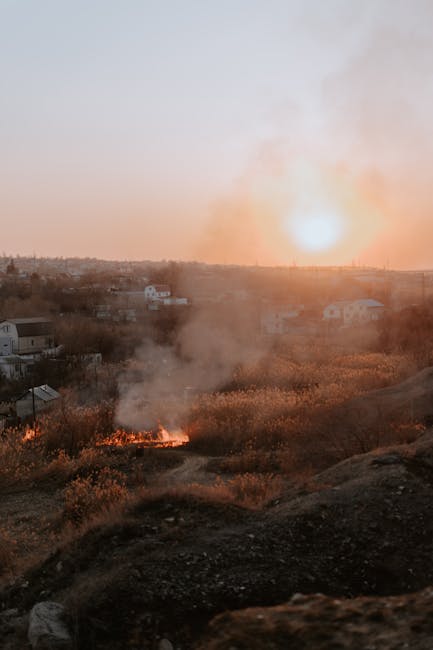
Smoke signals from a planet learning to talk back to its inhabitants.
Picture, if you will, a sunburned continent that can't decide if it wants to be a sauna or an icebox. This week in Victoria, thermometers threw tantrums worthy of toddlers denied dessert. One minute it's hotter than a koala's armpit in a wool sweater, the next they're advising residents to bring jackets to Christmas lunch. The weather, it seems, has developed commitment issues.
Somewhere north of Benalla, a grass fire decided to audition for the lead role in a disaster movie. What began as a spark now stretches across thousands of hectares, traveling eastward with the determination of a commuter late for the last train. Emergency warnings flash across phones. Families pack photo albums and pets into cars. Farmers eye their unharvested fields with the resigned sigh of people who know nature writes checks humanity can't cash.
Our planet appears to be working through some stuff. Record temperatures waltz with unseasonable cold snaps. Rainfall patterns have become as unreliable as a politician's promises. The atmosphere treats weather models like vague suggestions rather than actual plans. Scientists observe these mood swings with expressions usually reserved for toddlers drawing on walls with permanent markers.
Yet beneath the charred earth billowing smoke lies an unexpected silver lining. Modern technology has begun playing matchmaker between humanity and our fickle climate. An orbiting armada of satellites now watches the planet with more attention than a nosy neighbor. Thermal cameras map fire fronts in real time. Artificial intelligence crunches numbers faster than a rat colony crunching through a cereal factory.
Emergency services have upgraded from shouting into megaphones to pinpointing at risk suburbs with smartphone precision. Digital evacuation routes adjust dynamically, like a GPS that actually understands traffic. Thermal drones patrol fire fronts like robotic hummingbirds, spotting flareups before they can belch new smoke into the sky.
The true hero of our story might just be mathematics. Hidden inside supercomputers, algorithms digest decades worth of weather patterns. They cross reference soil moisture with wind forecasts like fussy librarians cross referencing library cards. These number crunching wizards can now predict fire behavior with spooky accuracy, buying precious minutes for evacuation plans. It's like having a crystal ball, except it runs on electricity instead of magic.
Farmers once limited to staring at clouds and licking fingers to test wind direction now receive micro forecasts for individual paddocks. Apps predict not just rain, but which raindrops might land where. Smart tractors receive weather updates like anxious commuters checking train schedules, adjusting harvest times between cloud bursts. Agriculture has become less about gamblers' intuition and more about data driven chess matches against the elements.
Meanwhile, inside meteorology labs across the country, scientists studying climate patterns have become weather translators. They interpret the planet's cryptic signals like codebreakers deciphering an alien language. Ocean temperature quirks, atmospheric pressure hiccups, wind current metaphors each forms part of an enormous planetary conversation we're slowly learning to understand.
Community response has evolved alongside the technology. Neighborhood watch programs now include emergency drill nights alongside bake sales. Kids learn fire safety through augmented reality games where putting out virtual flames earns more points than mindlessly blasting space aliens. Town halls double as climate resilience hubs, swapping disaster horror stories like fishermen comparing catch sizes.
Of course, challenges remain. Budgets strain under the weight of new technology. Skeptics still argue whether climate change is real while sweltering through record heatwaves. Politicians debate infrastructure upgrades with the urgency of sloths competing in slow motion races. Yet progress marches forward with the quiet persistence of ants rebuilding after a picnic.
Perhaps the most encouraging development lies in the quiet moments between emergencies. Solar farms sprout where scorched earth once dominated. Architects design homes that breathe like living organisms. Urban planners weave green corridors through concrete jungles, creating natural firebreaks that double as parks for Sunday picnics. Every small adjustment whispers the same hopeful message: We're learning.
The next chapter of our climate story remains unwritten. Summers will likely grow hotter. Rainfall patterns may continue their erratic dance routines. Fire seasons could extend their residency like overstaying houseguests. But humanity isn't entering this battle unarmed anymore. Should another blaze ignite during heatwave conditions, we'll face it with better tools, smarter systems, and the hard earned wisdom of survivors who've danced this awkward tango with nature before.
So when the next emergency alert buzzes in your pocket, know this: Somewhere above your head, a satellite winks. In a lab across town, a computer crunches numbers like a gourmet chef chopping vegetables. And in between the alarms and adrenaline, human ingenuity continues its slow, steady work of turning panic into preparation, disasters into data points, and fear into foresight.
Our relationship with the planet remains complicated, like a marriage between two stubborn individuals. But with science as our therapist and technology as our translator, maybe this rocky romance still has some delightful plot twists ahead.
 By Nancy Reynolds