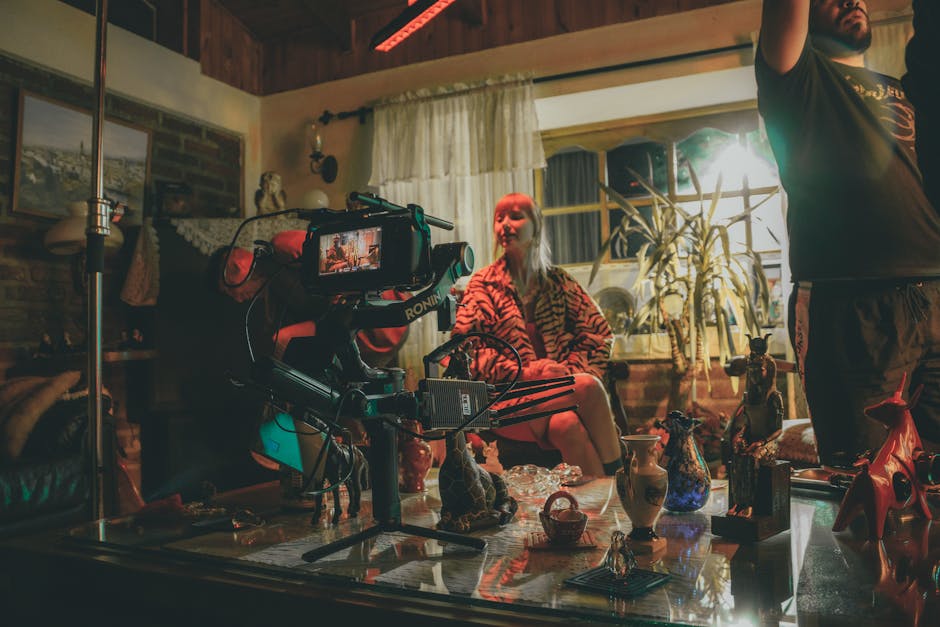
Ari Aster's 'Eddington' is the cinematic mirror we're all afraid to look into.
Let's talk about Ari Aster's upcoming film 'Eddington', because apparently, we can't escape the cultural vortex of division even in our escapism. The director, known for making audiences squirm with 'Hereditary' and 'Midsommar', is now turning his unsettling gaze toward America's polarization. And guess what. It's already polarizing people. The irony is so thick you could cut it with a knife, if knives weren't already a metaphor for, well, everything these days.
Here's the thing about Aster. He doesn't do comfort. His films are like a psychological workout, leaving you emotionally drained and questioning your life choices. 'Hereditary' made us terrified of attic spaces, and 'Midsommar' ruined flower crowns forever. Now, with 'Eddington', he's taking on an even scarier subject. Real life. Or at least, the fractured reality of a country that can't seem to agree on, well, anything.
I'll admit it. I'm a glutton for Aster's brand of punishment. There's something exhilarating about watching a filmmaker refuse to hold the audience's hand. But 'Eddington' feels different. It's not just about personal trauma or cults in the woods. It's about the collective trauma of a nation. And that's where things get messy.
Because let's be real. We're all exhausted. The news cycle is a never ending loop of outrage, and social media is a battleground where nuance goes to die. The idea of sitting in a theater and confronting that on purpose feels like signing up for emotional boot camp. But maybe that's exactly why we need it. Art has always been a mirror, even when we don't like what it reflects.
Here's my first fresh take. Aster's timing is either brilliant or disastrous. On one hand, a movie about polarization in 2024 feels like throwing gasoline on a fire. On the other, it's the perfect moment to force a conversation we've been avoiding. Remember when 'Get Out' came out and suddenly everyone was talking about racism in a way they hadn't before? Maybe 'Eddington' could do the same for division. Or maybe it'll just make people angrier. Aster's probably betting on the latter.
Which brings me to my second angle. The hypocrisy of it all. We claim to want art that challenges us, but when it does, we revolt. Remember the backlash to 'Joker'? People were convinced it would incite violence, as if movies are responsible for the sins of society. Now, with 'Eddington', we're already seeing similar murmurs. Can a film about polarization actually unite people, or will it just deepen the divides? The answer is probably both, and that's what makes it fascinating.
My third take is personal. I saw 'Midsommar' in a packed theater, and the collective gasps during certain scenes were almost as visceral as the film itself. There's something about Aster's work that demands to be experienced in a crowd. But will 'Eddington' have the same effect? Or will audiences be too busy side eyeing each other, wondering if the person next to them is 'on the other side'? The meta implications are enough to make your head spin.
And let's not forget the Hollywood angle. Aster is part of a new wave of filmmakers who refuse to play it safe. In an industry obsessed with superhero movies and franchises, his existential nightmares are a risky bet. But they pay off. 'Hereditary' and 'Midsommar' were both critical and commercial successes. 'Eddington' could cement his status as the king of uncomfortable cinema. Or it could backfire spectacularly. Either way, it'll be a spectacle.
So here's the real question. Are we ready for 'Eddington'? Or have we become so entrenched in our own bubbles that a movie about polarization is destined to be weaponized by both sides? I don't know the answer, but I do know this. Ari Aster isn't here to make friends. He's here to make us think. And if that means rubbing salt in the wound of America's soul, well, maybe that's exactly what we need.
 By Homer Keaton