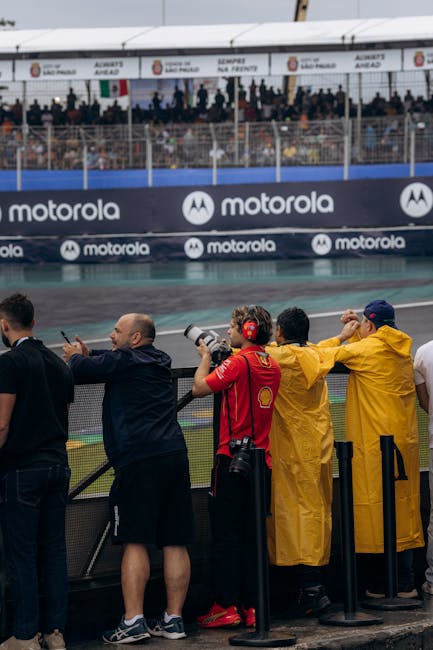
The checkered flag waves for traditional sports broadcasting as Apple accelerates into F1's digital future.
I remember standing trackside at Monaco five seasons ago, the roar of engines vibrating through my ribcage, smelling the burnt rubber and race fuel. Today, that visceral experience has been digitized, repackaged, and sold back to us through glowing rectangles. Apple's newly announced takeover of Formula 1 broadcasting rights in America isn't just another content deal. It's a declaration that the streaming wars have entered their imperial phase, where live sports become territory to be conquered.
What struck me first about Apple's pitch wasn't the promise of seamless streaming or the technical specifications. It was the language framing this acquisition. We're no longer passive viewers being sold advertisements, but “participants” in an “immersive experience.” The sacred communion between driver and machine gets mediated through 4K resolution and latency statistics. Your emotional response to Verstappen's final lap becomes another data point in Apple's engagement analytics.
Let's dissect Apple's real strategy here. This isn't about giving racing fans better camera angles. It's about creating an unassailable fortress for their ecosystem. Think about the mechanics: for around $100 annually, you gain access to every practice session, qualifying round, and Grand Prix through Apple TV. The onboard driver cameras F1 previously monetized separately now come bundled, effectively making Apple TV the mandatory gateway for serious racing enthusiasts. This isn't value creation. It's territorial capture.
We've seen this pattern before in tech, though rarely executed with such precision. Microsoft turned Xbox Live into the de facto platform for online gaming by controlling matchmaking services. Apple now applies that playbook to live sports. By absorbing F1.TV functionality into their subscription, they eliminate competition while appearing magnanimous. Suddenly, the choice isn't between ESPN and F1.TV, but between Apple TV and not watching professional racing at all. This exclusivity gambit should terrify sports leagues everywhere.
The technical promises reveal fascinating contradictions. Multi view functionality lets viewers watch four camera angles simultaneously, including driver perspectives and timing screens. In theory, this liberates fans from broadcasters' editorial choices. In practice, it turns race viewing into a managerial task requiring constant attention. Where once we followed narratives crafted by seasoned directors, now we're expected to become our own live production teams. I wonder how many fans will honestly prefer this self directed chaos over curated storytelling.
Consider the onboard cameras from another perspective. These aren't just entertainment features, but surveillance tools repurposed for mass consumption. Drivers accustomed to sharing telemetry data with engineers must now perform for digital audiences who dissect every steering wheel adjustment. The psychological burden intensifies when every micro expression during a crash sequence becomes memetic content. We celebrate access without contemplating what constant visibility does to human competitors.
What strikes me first isn't the promise of seamless streaming or technical specifications. It's the reframing of spectators into “participants” within an “immersive experience.”Here lies Apple's quiet hypocrisy. They position this acquisition as fan empowerment while building a walled garden taller than Monza's banking. Their promotional materials boast “no extra charges,” ignoring how the Apple TV subscription itself remains an economic barrier compared to traditional broadcasting. For working class families who bonded over weekend races, this transition from cable packages to premium streaming services represents cultural displacement disguised as progress.
The human impact transcends mere viewing habits. Local racing bars face obsolescence when broadcasts migrate behind proprietary platforms. Fantasy league communities fragment when access requires specific hardware ecosystems. Even driver fame evolves when intimate camera access replaces heroic distance. Future champions will be those who entertain through personal cameras as effectively as they race.
Watching Apple preview their F1 integration felt like witnessing a pit stop where the entire sport gets new tires aligned with Silicon Valley's worldview. The race becomes content. The drivers become influencers. The spectators become data subjects. None of this serves racing purists who simply want to watch competition unfold. It serves quarterly subscription targets and hardware bundling strategies.
History provides sobering parallels. Remember when mobile carriers locked handsets to service plans, forcing artificial loyalty? Apple now applies that model to entertainment. Their Vision Pro compatibility clues us in. Soon enough, the “best” F1 experience will require strapping a $3,500 viewer to your face. Immersive becomes isolating.
I predict this deal accelerates three irreversible trends. First, sports will bifurcate into premium streaming experiences and free ad supported leftovers. Second, athletes become perpetually “on air” performers expected to market themselves through intimate camera access. Third, and most dangerously, we'll accept corporate control over communal experiences as inevitable progress.
None of this negates the technical marvels Apple brings. Viewing Lando Norris's cockpit perspective in real time may thrill casual fans. But beneath the gloss lies an uncomfortable truth. When private corporations capture live sports, they redefine the social contract between athletes, leagues, and audiences. We gain pixels but lose something more valuable. Community becomes subscription tier.
My final thought comes not from the press release, but from memory. Last season, I watched American neighbors gather in driveways projecting races onto garage doors. Kids played with toy cars while parents cheered. This ritual required nothing more than a basic TV signal. Under Apple's model, such organic gatherings either pay premium rates or vanish. That's not innovation. That's enclosure of our shared cultural spaces.
Whatever happens when lights out arrives under Apple's stewardship, remember this. Speed alone doesn't determine racing's soul. It's the unfiltered human moments. The unmonetized traditions. The collective gasps no algorithm can predict. Those remain worth protecting, no matter who owns the broadcast rights.
 By Robert Anderson