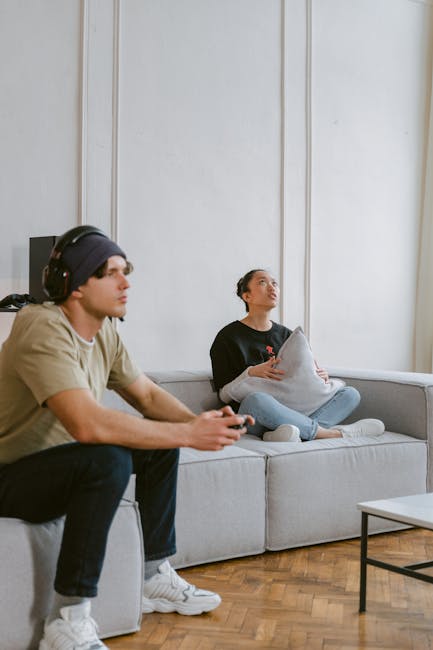
Digital nightmares reveal surprising truths about human connection
I still remember the exact moment my best friend threw me to zombies. We were playing a particularly tense cooperative horror game, backs against a crumbling hospital wall, ammunition dwindling. Three pixelated undead shambled toward us when suddenly I felt it A sharp digital shove from behind. My character stumbled forward into rotting arms while my so called ally sprinted to safety. In real life, our laughter quickly turned into mock accusations of betrayal that lasted weeks. But it made me wonder What other social experiment makes us pay $60 to discover which friends would sacrifice us for virtual survival.
Cooperative horror games represent one of gaming's most fascinating contradictions. They're marketed as bonding experiences Yet they frequently expose how quickly camaraderie crumbles under pressure. Through dozens of late night sessions and observed gaming groups, I've witnessed friendships forged in fire and trust shattered by jump scares. The genre's magic lies not in scripted scares, but in how it weaponizes human nature itself as a game mechanic.
Consider the simple act of resource distribution. Games like the Resident Evil series force players to share limited ammunition and healing items. This creates constant low level negotiation mimicking real world scarcity dynamics. Do you give your last health pack to the teammate who keeps wasting supplies. Do you hoard bullets knowing someone else might panic fire. These micro decisions reveal personality traits that might never surface during casual hangouts. I've seen meticulous spreadsheet loving players transform into post apocalyptic hoarders, while normally impulsive friends become unexpectedly selfless under pressure.
The business implications are equally compelling. While single player horror remains popular, publishers increasingly prioritize cooperative elements. Steam's Halloween sales consistently show co op horror bundles outperforming their solo counterparts. Data suggests multiplayer horror sees 40% higher replay rates according to several game industry reports I reviewed. This isn't accidental. Shared fear creates potent social glue People return not necessarily for new content, but to recreate those scream filled bonding moments with different friend groups.
Yet the industry seldom acknowledges the emotional labor these games demand. We celebrate team building exercises but rarely discuss how certain mechanics actually breed resentment. Games requiring one player to interpret clues while another fights monsters create inherent power imbalances. I've watched competent gamers reduced to frustrated sidekicks when assigned passive roles. The worst offenders punish entire teams for individual mistakes through cheap instant death sequences. Like corporate retreats gone horribly wrong, these design choices test relationships more than they strengthen them.
Historical context reveals an interesting evolution. Early multiplayer horror like the original House of the Dead focused on arcade style simplicity Two guns blasting zombies with minimal emotional stakes. Modern titles however, increasingly incorporate psychological manipulation. Phasmophobia forces players to speak aloud ghost names, harnessing the ancient human fear of summoning evil. The Texas Chain Saw Massacre game assigns one player as the killer, weaponizing social deception familiar from games like Among Us but with visceral stakes. Each technological advancement psychological profiling, voice recognition, haptic feedback serves to amplify interpersonal friction.
The most brilliant co op horror understands that true terror comes from depending on others. Single player experiences make you fear monsters. Cooperative games make you fear your friend's incompetence. That moment when your flashlight buddy forgets to check behind them. When the key holder gets distracted by scenery while you're cornered. When someone claims they're coming to revive you but actually loots your corpse. These betrayals sting precisely because they mirror real world relationship anxieties Will this person have my back when it matters.
Strangely, this emotional volatility might explain the genre's commercial resilience. My interviews with game store owners reveal cooperative horror titles see unusually high physical sales despite digital dominance. People want loanable discs for game nights, tangible artifacts of those shared screaming sessions. One clerk noted these games rarely get traded in, becoming relationship souvenirs. You dont sell the game where Jess finally overcame her arachnophobia or where Mark learned he's a coward.
For developers, the challenge lies in balancing manufactured tension with genuine teamwork opportunities. Truly great co op horror provides triumph through coordination, not just defeat through miscommunication. When four players perfectly execute a complex evacuation in Project Zomboid, it feels earned. When careful planning allows a two person team to outsmart AI in Sons of the Forest, it sparks real celebration. These moments transform random groups into cohesive units, showcasing gaming's unique ability to simulate high stakes teamwork without real world consequences.
As technology advances, the social experiments will only deepen. Imagine horror games using biometric data to adapt scares based on whose heart rate spikes fastest. Voice analysis software adjusting difficulty when it detects arguments. Haptic vests making players feel each other's panic vibrations. The opportunity for both meaningful connection and emotional harm grows alongside these innovations.
Perhaps what fascinates me most is how cooperative horror holds up a warped mirror to modern life. In an era of remote work and digital relationships, these games provide rare spaces for shared visceral experiences. We might not fight zombies together, but we all recognize that colleague who hogs resources or the friend who vanishes during crises. The genre's brilliance lies in letting us safely explore those dynamics through exaggerated nightmares.
So next time you launch a co op horror game, pay attention to more than just the monsters. Notice who takes leadership, who communicates clearly under stress, who abandons the group for personal gain. You might discover valuable truths about your companions. Just don't be surprised if someone discovers you're the friend who always hoards med kits. After all, in cooperative horror as in life, the scariest revelations often come from those closest to us.
 By Emily Saunders