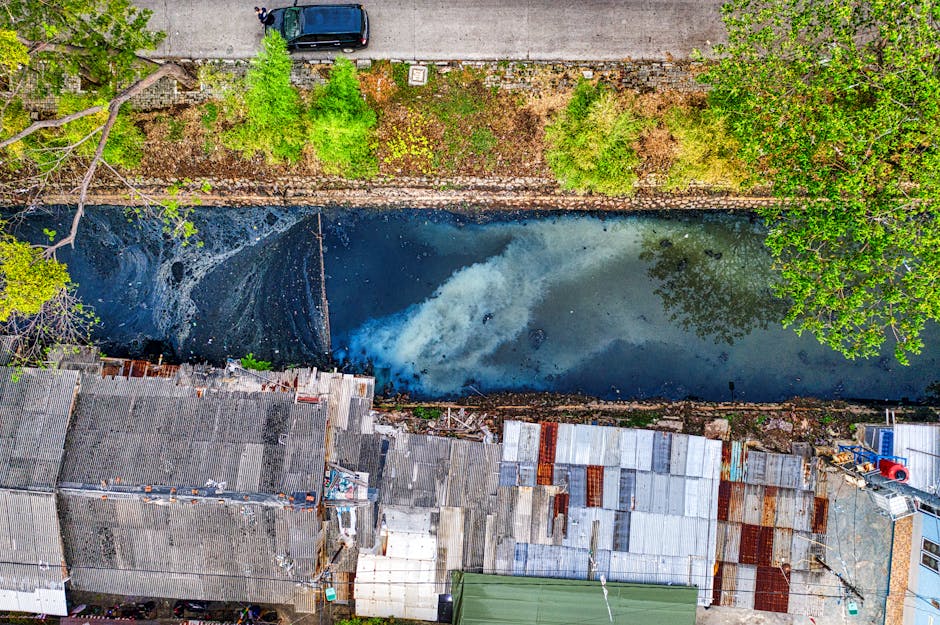
Drowning in hypocrisy while floating environmental promises
Let us begin with an inconvenient truth nobody wants to smell over their morning tea. England's water industry has become a masterclass in financial alchemy, transforming raw sewage into something even more toxic reputational derivatives sold as environmental solutions. A recent analysis reveals these privatised utilities have issued £10.5 billion in so called green bonds since 2017. This occurred not alongside environmental improvement, but while pollution incidents increased and infrastructure crumbled faster than Victorian pipework.
Thames Water, currently drowning in £15 billion debt while begging regulators for leniency on pollution targets, somehow convinced investors to swallow £3.1 billion of these instruments. Anglian Water topped the charts with £3.5 billion raised. Both now rank among Britain’s largest corporate green bond issuers. One might call this achievement remarkable if it weren’t so thoroughly nauseating.
The mechanics of this confidence trick deserve dissection. Green bonds allow companies to borrow at marginally cheaper rates by pledging proceeds to environmental benefits. Water companies need only point to basic sewage treatment operations that should have been modernised decades ago. The financial irony bites deeper still. These bonds effectively reward chronic underinvestment. Decades of shareholders extracting £72 billion in dividends created the infrastructure crisis now being monetised through sustainability themed debt instruments.
Regulatory theatre deserves equal billing in this farce. The Environment Agency’s own data shows water company environmental performance declining for four consecutive years. Raw sewage discharges increased 54% between 2022 and 2023 alone. Yet despite this accelerating rot, no issuer faced meaningful consequences for missing self reported green bond targets. When Thames Water stopped publishing impact reports entirely for two years employees clearly understood accountability theatre had intermission hours.
Investors willingly suspended disbelief, drawn by the siren song of ethical returns. Pension funds and ESG focused asset managers lap up these instruments, their due diligence apparently ending where marketing materials begin. The circular logic defies parody. Water firms secured cheaper capital precisely because regulators, raters, and financiers accepted pollution as an unavoidable baseline rather than a disqualifying condition.
The human cost remains conveniently abstract in financial disclosures. Private water monopolies service 25 million English households. Consumers face 45% real term bill increases by 2030 to fund infrastructure repairs while simultaneously paying through environmental degradation. Coastal communities endure beaches soiled by effluent releases that would make a Victorian industrialist blush. Yet boardrooms remain insulated, their financial engineering lauded in ESG reports while frontline consequences stay off balance sheet.
New financial architectures emerge to prop up this broken model. Specialist infrastructure funds now promote water company bonds as low volatility, inflation linked investments. The pitch? Essential services cannot fail, making them crisis proof assets. This perverse incentive structure encourages lenders to keep dysfunctional operators on life support through ever more creative financing instruments while basic service delivery deteriorates.
Political failures complete this perfect storm. Successive governments declined to mandate proper green bond verification, relying instead on voluntary industry frameworks as porous as ageing sewer networks. Ofwat, the water regulator, still measures performance through murky metrics like ‘customer satisfaction’ while ignoring systemic financial engineering risks. The Environment Agency issues limp fines representing fractions of executive bonuses, their enforcement budgets gutted by austerity.
Industry apologists will counter that billions must be raised somewhere for infrastructure upgrades. A compelling argument, were it evidenced in outcomes. Major projects progress glacially while basic maintenance gets rebranded as sustainability initiatives. Thames Water’s infamous Tideway Tunnel, marketed as London’s environmental saviour remains years behind schedule and billions over budget. Meanwhile, their green bond proceeds disappear into general corporate purposes with accountability thinner than treatment plant membranes.
The final insult arrives via accounting magic. Water companies structure debts against future customer bill payments through regulated asset base financing. The very green bonds discussed effectively mortgage household utility bills for decades to come. Regulators approve these schemes under the guise of affordability, though ultimate repayment falls to captive consumers through prices fixed by the same regulators beholden to political cycles.
Corporate financing now mirrors the industry’s physical infrastructure. Just as sewage pipes were designed for populations half England’s current size, financial systems strain beneath complex debt structures never stress tested for climate change, population growth, or regulatory reform. These bonds represent merely the upper layers of sediment in a system where reported numbers reveal less about corporate health than submerged liabilities.
None should feign surprise. Since privatisation, the water sector perfected extracting value while externalising consequences. Financialisation didn’t corrupt an otherwise functional system it evolved as its natural end state. Green bonds simply represent the latest tool for dressing extraction in progressive clothing. Their growing popularity signals not environmental progress, but how effectively corporations repackage business as usual under the sustainability banner.
Investors chase these instruments precisely because water companies remain too systemically important to fail. The bonds promise modest returns with implied government backing, whatever environmental targets get missed. Such distortions reveal deeper truths about modern capitalism. Ethical investing frequently equates to morally laundered rent seeking. True sustainability would demand uncomfortable reboots to ownership models, regulation, and corporate accountability that neither Westminster nor the City appear willing to stomach.
The tragedy extends beyond corporate hypocrisy. Properly structured green bonds could fund revolutionary water recycling systems or cross regional stormwater management. Yet in practice they bankroll marginal improvements to creaking systems, perpetuating unsustainable consumption patterns. Financial innovation becomes not catalyst but impediment to meaningful change, allowing gradual degradation to continue indefinitely through tactical rebranding.
Several unpalatable realities emerge from this mess. First, current environmental reporting remains voluntary theatre staged for gullible investors. Second, regulatory capture remains endemic in essential utilities oversight. Third, financial markets will reliably exploit any measurable to game systems, regardless of real world outcomes. Finally, no financial instrument can substitute for political will in holding monopolies accountable.
Britain’s sewage stained rivers mirror its polluted financial innovation. Green bonds float atop both, promising purification while obscuring what flows beneath. Extracting value from crisis becomes the only consistent business strategy, with regulation trailing several corporate lifetimes behind. For water companies, environmental commitments remain fluid assets, easily diluted when accountability dries up. Investors willing to swallow that deserve every drop of reputational contamination coming their way.
 By Edward Clarke