A comet's last dance and one nerd's mission to catch it before it's gone forever
Let me paint you a picture: It's 4:37 AM in New York City. I'm half dressed, balancing two soup can sized telescopes on a windowsill narrower than my attention span during a quantum physics lecture, whispering sweet nothings to an app crashing more than my last relationship. Why? Because somewhere beyond the light pollution and my neighbor's suspiciously bright Christmas decorations, there's a cosmic snowball named 3I/ATLAS making its one and only appearance in human history before yeeting itself into the void forever.
This isn't just any space rock, folks. Our icy VIP guest came from another star system entirely. Astronomers detected it back in July like, Oh hey, weird new dot moving funny. Math happened. Eyebrows were raised. Turns out this bad boy's been cruising through the Milky Way longer than subway rats have inhabited the MTA, possibly since before Earth was a twinkle in the solar system's eye. And now it's swinging by our cosmic neighborhood like your estranged cousin showing up unannounced before moving to Antarctica.
What makes this whole situation equal parts awesome and panic inducing? This comet's on what scientists call a hyperbolic trajectory. Translation: It's not orbiting our sun on repeat like those basic solar system comets you learned about in third grade. Nah, this is a one way ticket scenic route drive by. Closest approach was December 19th. After January? Peace out. Gone like my motivation to exercise after New Year's.
Here's where my personal descent into astronomy induced sleep deprivation begins. Armed with two smart telescopes smaller than my cat's self esteem, I became a nocturnal comet paparazzo. The DwarfLab Dwarf 3 and ZWO Seestar S30 these unassuming little gadgets look like someone crossed a thermos with a Roomba, but they're basically point and shoot cameras for the cosmos. They connect to my iPad, promise simple operation, and might actually be judging my technological incompetence.
Now, chasing interstellar objects from an NYC apartment is like trying to taste fine wine while chewing gum. Between skyscrapers, light pollution, and mysterious window gunk of unknown origin, conditions are less than ideal. Early attempts involved more cursing than a Quentin Tarantino script. Apps crashed. Focus failed. At one point I swear my Seestar thought 3I was a pigeon. But then magic happened.
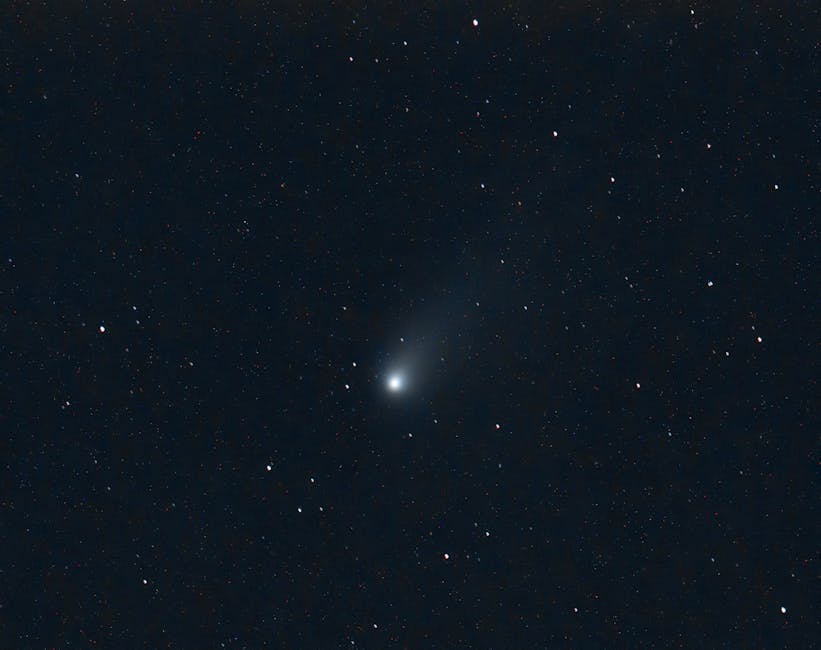
The first time I actually captured it streaks across my screen, my coffee deprived brain short circuited. There it was a fuzzy greenish blob with the worst hair in the solar system (astronomers call this the coma, I call it bed head). Context matters though. That blob traveled light years across interstellar space. For maybe the first time ever, light bouncing off its icy surface landed in my dorky little device, on my grimy windowsill, in a city that never sleeps but definitely shouldn't stargaze.
What's wild is how accessible this whole experience was. For under $600 and more stubbornness than common sense, any schmuck with a window can now detect interstellar visitors. This isn't your grandpa's astronomy. No giant telescopes with eyepieces that give you neck cramps. These gadgets automatically find, track, and photograph celestial objects while you question life choices at 5 AM. It's like Uber Eats for cosmic eye candy.
Of course, the universe loves trolling us. Just as I perfected my comet chasing routine, 3I started pulling the ultimate fade. Each morning, its brightness dipped like my willpower at a bakery. The coma grew more diffuse. The tail? Barely visible on my app, like the dark mode version of a comet. It's the astronomical equivalent of your favorite band leaving stage during their encore. Yet still I persisted, because missing its final bow felt cosmically rude.
Now let's address the alien spacecraft conspiracy theories. Sorry X Files fans, but 3I's composition checked out as space ice with extra weirdness sprinkles. Scientifically, this makes sense. A comet forming around another star would have different chemistry than our local flavor, like comparing bourbon to vodka. The real kicker? We don't even know which star it came from. This thing could be older than Earth's continents. Let that sink in while you feel ancient because you remember dial up internet.
Here's what fascinates me beyond the pretty space pictures. We're living through a revolution in cosmic discovery. ATLAS, the system that spotted our icy nomad, is basically a celestial security camera scanning for Earth crossing asteroids. But while doing its day job, it bagged an interstellar traveler as a side hustle. More importantly, technology now lets random humans like me participate in ways previously reserved for PhDs with mountain top observatories.
The human angle here hits deep. This January, when 3I becomes too faint for even my gadget enhanced eyes, something profound disappears. Not just ice and dust, but an artifact from another star's construction site. We'll never see it again. Future civilizations might study our images of it like we examine cave paintings. That's heavy stuff, right? Yet all I want to do is crack jokes about its terrible posture in my photos.
So here's my sleep deprived plea, nestled between coffee stains on my keyboard. If you have any interest in space or own one of these smart scopes set an alarm. Open whatever window faces southeast before dawn. The comet hangs out near Venus now, brighter than your aunt's holiday sweater but fading fast. You don't need my gear or location. People have spotted it with binoculars from suburban backyards. Don't wait. Unlike Halley's comet planning its 2061 comeback tour, this visitor doesn't do encores.
In conclusion, my two months of bizarre comet courtship taught me three things. First, the universe delights in making beautiful things temporary. Second, smart telescopes turn ordinary humans into cosmic paparazzi. Third, nothing beats that moment when celestial mechanics and stubbornness collide, capturing light from another star's backyard on a device smaller than a toaster. Also, coffee consumption should be measured in liters, not cups.
So go look up, you magnificent space monkeys. Our solar system's hosting the greatest one night stand in galactic history, and you've got front row seats until the cosmic lights come on.
 By Georgia Blake