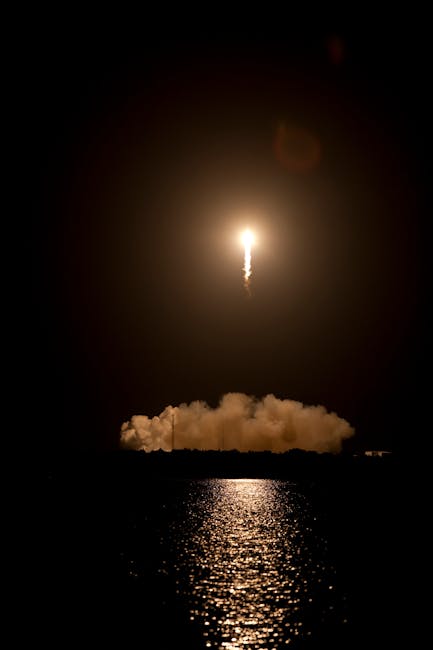
How one improbable touchdown rewrote the rules of spaceflight and challenged everything we thought we knew about ambition.
I remember exactly where I was on December 21, 2015, though I wasn’t at Cape Canaveral. Like millions worldwide, I watched grainy livestream footage of a rocket booster falling from the sky after delivering satellites to orbit. It shouldn’t have worked. Conventional wisdom said rockets were disposable fireworks, burning brightly before becoming million dollar garbage in the ocean. But that night, against all odds, SpaceX’s Falcon 9 didn’t just return to Earth. It stuck the landing with balletic precision, pivoting from explosive failure just months earlier to one of engineering’s greatest second acts.
What most people miss about that moment isn’t the technical wizardry, impressive as it was. It’s the profound cultural shift it forced upon us. Suddenly, the unfathomable became routine. Reusable rockets went from “impossible” to “why wouldn’t we?” almost overnight. But this transformation didn’t happen in a vacuum. It revealed three uncomfortable truths about technological progress that still shape our world today.
First, failure isn’t just acceptable, it’s essential. Everyone remembers SpaceX’s triumphant landing, fewer recall the fiery Falcon 9 explosion six months earlier that nearly shattered the company. Watching cargo destined for the International Space Station rain into the Atlantic, even true believers questioned Musk’s vision. Congressional critics pounced, suggesting private companies couldn’t be trusted with spaceflight. Six months later, those same skeptics watched dumbstruck as a rocket designed by “amateurs” achieved what NASA hadn’t seriously attempted in decades. The lesson? Modern innovation moves too fast for perfectionism. SpaceX’s willingness to fail publicly, learn dramatically, and iterate relentlessly became their superpower.
Second, we’re terrible judges of impractical ideas until they work. Before 2015, reusing rocket boosters seemed about as sensible as retrieving bullets after firing them. The math appeared clear. Between added weight for landing gear, fuel reserves for descent, and refurbishment costs, experts calculated reuse would actually increase expenses. SpaceX proved them spectacularly wrong. Like doubting early airplanes because “trains work fine,” we underestimated how reusability would create compounding returns. Today’s Falcon boosters fly over 20 missions each, dropping launch costs 40 fold. Crucially, this pricing revolution wasn’t just about SpaceX beating competitors. It enabled entirely new industries. Would we have satellite broadband constellations like Starlink funding moon missions if each launch still cost $150 million? Probably not. Disruptive ideas often look foolish until they rewrite the rules.
Third, and most importantly, private space innovation exposed our collective hypocrisy about risk. After SpaceX’s 2015 failure, congressmen lamented commercial space’s unreliability. Never mind that NASA lost two shuttles and 14 astronauts. When governments fail, we call it tragedy. When companies stumble, we call it incompetence. This double standard persists today. Jeff Bezos’ Blue Origin faces endless mockery for slow progress while NASA’s equally delayed SLS rocket escapes similar scrutiny. We venerate Apollo era risk taking but bristle when private ventures emulate that daring.
The ripple effects of that December night extend far beyond rockets. Consider how SpaceX’s landing software influenced autonomous systems everywhere. Guiding a 15 story booster onto a bobbing drone ship required AI powered precision now seen in self driving cars and drone deliveries. Or ponder the supply chain revolutions. Traditional aerospace relied on thousands of specialized suppliers, creating brittle, expensive networks. SpaceX’s vertical integration manufacturing everything from rocket engines to microchips proved resilient and sparked imitators from electric cars to consumer tech.
Consumer implications already touch nearly everyone reading this. Without plummeting launch costs, your weather app wouldn’t get hyperlocal storm predictions from orbiting microsatellites. Rural video calls would stutter without Starlink’s constellation. Future applications look even wilder. Asteroid mining companies actually pencil out business models when orbital access stops costing millions per kilogram. Lunar tourism transitions from billionaire joyrides to potential middle class vacations within decades.
Politically, SpaceX’s success created strange bedfellows. National security agencies love reliable, low cost access to space. Environmentalists grudgingly acknowledge reusable rockets’ reduced space debris. Developing nations now launch satellites for fractions of traditional budgets. Yet regulatory frameworks stagger to keep pace. The FAA’s launch licensing process creaks under thousands more projected flights. International treaties about space resource ownership remain hopelessly outdated. Just wait until lunar ice mining starts in earnest and arguments erupt over whether moon water belongs to extractors or humanity collectively.
Historically, we’ve seen similar inflection points. The steam engine’s efficiency leap in the 1700s didn’t merely improve factories. It redefined economic geography, political power, and daily life. Reusable rockets represent our generation’s steam engine moment for space. Suddenly, activities we relegated to governments and sci fi novels enter commerce’s domain. Within our lifetimes, we’ll likely see everything from off world manufacturing to Mars research bases. None happen without first cracking reusability.
My boldest prediction? Among today’s children are future lunar hoteliers, orbital farmers, and asteroid prospectors who’ll date the beginning of their industries not to Apollo’s flags and footprints, but to that flickering livestream in 2015. The moment rockets stopped being disposable marked our first real step toward becoming a multiplanetary species. Imperfect, risky, frequently explosive steps, yes. But progress has always been messy. The next time someone dismisses an audacious idea as unrealistic, remember the rocket that came back from the dead, and the grave. Then double down on the impractical.
 By Emily Saunders