When streaming emperors dress their conquests as friendly field trips, creators should pack their resumes.
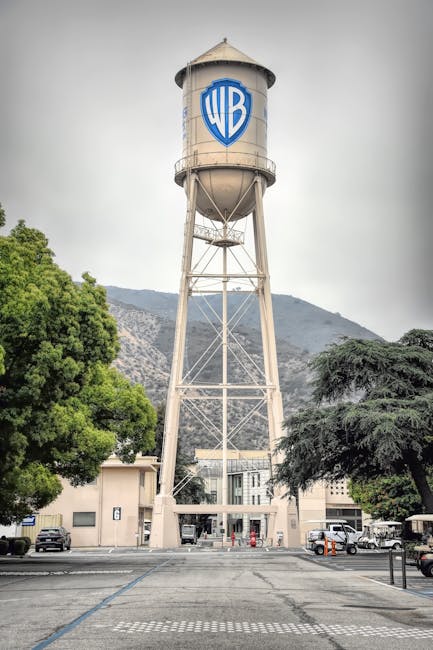
I remember when studio tours meant something entirely different. Back when Michael Eisner would stroll Disney’s backlots, he wasn’t conducting due diligence for corporate raiders but checking how Mickey’s giant float was holding up for the 3pm parade. So when photos surfaced this week of Netflix’s Ted Sarandos and Greg Peters playing tourist at Warner Bros’ iconic water tower alongside David Zaslav, I nearly sprayed my morning coffee across three months worth of streaming trend reports.
The optics reeked of performative corporate theater, like watching vultures politely admire the architecture before dismantling the scaffolding. Here we have the same Netflix leadership that spent a decade gleefully dynamiting Hollywood’s business models suddenly embracing theatrical windows with the fervor of a convert at a tent revival. Sarandos might as well have worn a T shirt reading ‘Why Yes, I DID Discover Movies’ while hugging the Bugs Bunny statue.
Let’s address the $82.7 billion pink elephant in the soundstage. Netflix’s sudden affection for traditional release strategies isn’t born of artistic awakening but cynical necessity. They never needed theaters when chasing subscriber growth through content volume. But owning Warner Bros’ library and franchises? That requires maintaining IP value through box office performance. I’ve seen this play before when Amazon bought MGM and suddenly remembered James Bond movies played better in multiplexes than sandwiched between toilet paper ads.
What fascinates me isn’t Netflix’s predictable pivot, but the breathtaking speed at which Zaslav is burning bridges with Paramount while rolling out literal red carpets for Los Gatos’ finest. When an executive famous for shelving $90 million movies for tax credits starts hosting celebratory lot tours before shareholders vote, you know this isn’t about fiduciary responsibility. This feels personal, like watching a divorcee introduce their new trophy spouse before the ink dries on the separation papers.
The human cost gets lost faster than a development deal at a cancelled streamer. Warner Bros’ animation teams still remember the Batgirl purge, DC Comics creators eye their royalty statements nervously, and every mid level executive from Burbank to Brooklyn Heights updates LinkedIn profiles prophylactically. I’ve witnessed three mega mergers this decade, each promising synergistic bliss while delivering pink slips in designer envelopes. When AT&T acquired Time Warner in 2018, they swore creative autonomy would flourish, then fired 1,000 employees before spinning it off.
Meanwhile, Paramount’s rejected bid sparks uncomfortable flashbacks. Two years ago, Wall Street crowed about the ViacomCBS reunion being visionary. Now Shari Redstone gets treated like someone auctioning old silverware at an estate sale. Whether Paramount’$108 billion offer was serious or desperate posturing matters less than the signal it sends. Mid tier studios are becoming extinct, caught between tech giants and niche players. Remember when Lionsgate meant something beyond feeding Hunger Games reruns to Starz?
Creatively, the implications could rewrite industry grammar. Netflix already dominates the on demand script, but owning Warner Bros DC Universe, Harry Potter, and HBO’s prestige catalog would position them as cultural arbiters in ways Disney hasn’t managed since buying Fox. Imagine the algorithmic gymnastics required to simultaneously promote political documentaries while servicing Zack Snyder fans who still salty about Justice League edits.
Exhibitors should be terrified despite Sarandos’ mollifying words. When Netflix tested wide releases for Glass Onion and Gray Man, they treated theatrical partners like inconvenient beta testers. Now they’ll control distribution pipelines from development to Dolby Cinema screens. I’ve spoken with cinema owners who remember when studios maintained symbiotic theater relationships before pandemic era day and date experiments nearly destroyed them. Trust doesn’t rebuild because Sarandos holds a rubber wand at Harry Potter World.
For investors drunk on merger speculation, let me pour some cold brew reality. Netflix’s vaunted $82.7 billion might look tempting compared to Paramount’s lower bid, but someone should ask how many subscribers it takes to justify that valuation. At current ARPU, you’d need roughly 680 million perpetual subscribers just to service the interest, assuming they halt original programming tomorrow. This isn’t acquisitions, it’s financial alchemy with Goldman Sachs playing court wizard.
Ultimately, the tragedy isn’t corporate consolidation. That’s capitalism’s favorite bedtime story. It’s the absurd gaslighting that these seismic shifts benefit anyone except C suite bonuses and activist investors. When Zaslav brags about rejecting Paramount’&s security risks while gambling Warner Bros’ century old legacy on a streaming service yet to turn consistent profits, we’re witnessing performance art disguised as business strategy.
If I sound cynical, credit twenty years watching media conglomerates merge and splinter like badly scripted soap operas. The Warner Bros water tower witnessed Jack Warner shouting at James Dean, Kubrick demanding retakes, Nolan shooting Imax sequences. Under Netflix’ algorithm first approach, how long until some MBA suggests replacing dated film sets with volumetric capture stages while pitching library deepfakes as content?
A final prediction. Should this deal clear regulators who probably think MAX refers to HBO Max trials, not anti trust principles, within eighteen months we’ll hear self congratulatory earnings calls about scaling back theatrical windows to optimize content monetization across verticals. Sarandos will call it pioneering. Zaslav will cash his golden parachute. And another generation of storytellers will mourn while Wall Street applauds. Silicon Valley wins when content becomes commodity, and Netflix just placed the biggest bulk order in entertainment history.
 By Daniel Hart