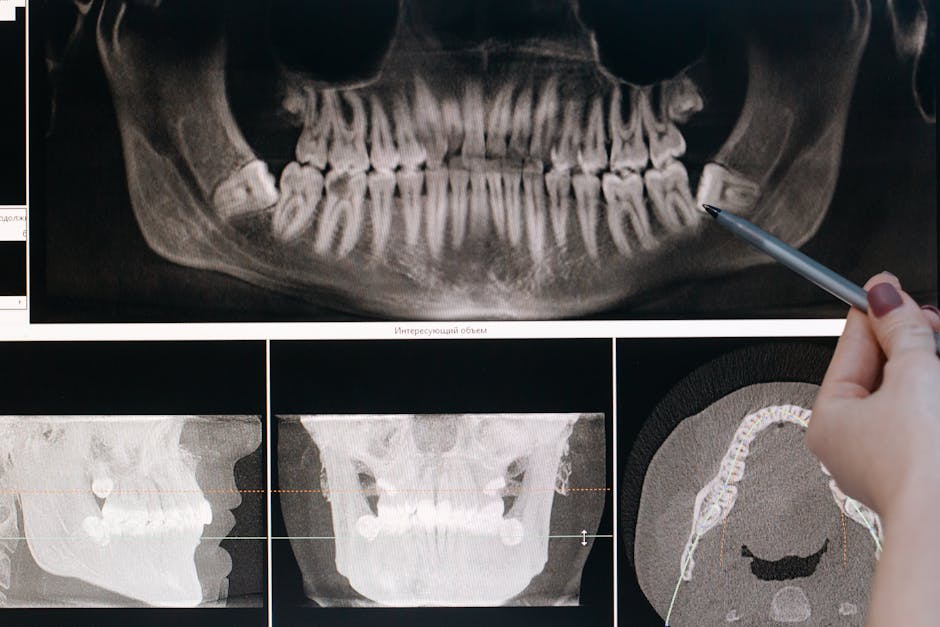
The painful truth behind England's toothless dental reforms
Imagine needing to pull out your own tooth because you can't get a dental appointment. This isn't a scene from a Dickens novel, but Britain in 2025. The government's latest solution? Paying dentists slightly more for emergency treatments while insisting this isn't just rearranging deck chairs on the Titanic. Teeth are falling overboard regardless.
Let me paint you a picture with numbers that would make any dentist wince. Forty one percent of British adults now show obvious tooth decay, levels not seen since the Spice Girls were topping charts. We've engineered 'dental deserts' where finding an NHS dentist requires Indiana Jones level determination. Somewhere along the line, oral healthcare became less accessible than a Taylor Swift concert ticket.
Now enter our heroic government with their revolutionary plan: paying dentists better for emergencies. Health Minister Stephen Kinnock calls this 'the first step towards a new era for NHS dentistry'. This would be uplifting if the British Dental Association hadn't immediately pointed out the emperor has no teeth. Their response? This offer comes with 'no new money behind it'. So we're not actually solving the funding crisis, just shuffling existing pennies between different dental procedures.
The policy's fatal flaw becomes clear when you understand the current system. Dentists receive set NHS fees that often don't cover their costs for complex procedures. Imagine running a bakery where making croissants loses you money but baguettes break even. Eventually you'd stop selling croissants. Now replace pastries with root canals and you've got our dental crisis. The government's tweak? Paying slightly more for emergency baguettes while ignoring the croissant deficit.
Meanwhile, real people are living with medieval level dental horror stories. The patient watchdog reported people removing their own teeth with pliers. Others brew clove oil concoctions worthy of a Tudor apothecary. These aren't eccentric hobbyists but citizens failed by a system that equates dental care with luxury rather than healthcare.
The 'innovative' single treatment package for complex cases does sound promising until you realize it's solving inefficiencies created by the previous inefficient system. It's like your plumber charging extra to fix the leak he caused last visit, then expecting gratitude when he finally brings the right wrench.
Let's address the elephant in the surgery. NHS dentistry has been rotting for years under successive governments. Calling these changes 'the most significant modernisation in years' is like claiming a new coat of paint transforms a decaying house. Without major funding reform, NHS dentistry will remain the healthcare equivalent of trying to fix a cavity with chewing gum.
And about those emergency appointments. The government vaguely promises 'making it easier' to get urgent care but can't demonstrate how many actual appointments this will create. It's like announcing free ice cream for all without owning a freezer truck. Until we see concrete numbers beyond theoretical savings, consider me sceptical.
The British Dental Association deserves credit for calling this what it is: 'the biggest tweaks this failed contract has seen in its history'. Note they said tweaks, not fixes. This is the healthcare equivalent of using a toothpaste cap to bail out a sinking ship.
Here's what no politician will admit: Modern dentistry costs money. Dentists aren't magicians who can materialize fillings from goodwill. Materials cost money. Surgeries cost money. Training costs money. Yet somehow, we expect dental care to defy economic reality through some mystical combination of NHS spirit and British stiff upper lips.
As an unexpected side effect, Britain might be pioneering a novel approach to pain management: the threat of dental costs. Severe toothache disappears faster than you can say 'private consultation fee'. Survival instincts override decay, apparently.
The patient watchdog sums it up perfectly: 'Short term tweaks have failed to make major progress'. We're trapped in Groundhog Day dental policy. Each government makes minor adjustments while tooth decay levels remain stubbornly 1990s retro. At this rate, frosted tips and NHS waiting times might make a coordinated comeback.
Perhaps the most telling detail lies buried in official statistics. While modern dentistry has advanced lightyears since the 90s, public oral health hasn't improved. All our technological progress means nothing if people can't access basic care. It's like developing fighter jets while forgetting how to build bicycles.
What makes this particularly galling is dentistry's preventative power. Early dental care prevents expensive emergency treatments later. But our system operates like refusing to pay for smoke alarms while budgeting elaborately for fire engines.
The 'dental desert' metaphor needs updating. Deserts at least have majestic vistas and survival lessons. What we've created feels more like dental minefields where citizens stumble between expensive private care and suffering in silence. It's a national health scandal hiding in plain sight every time someone smiles.
Kinnock insists these changes 'give patients faith in NHS dentistry'. But faith belongs in churches, not healthcare systems. People need appointments, not pep talks. You can't pray away an abscess, no matter how spiritual your insurance coverage.
Amidst the policy fog, let's remember actual dentists face impossible choices daily. Imagine training for years to help people only to face a system where doing the right thing bankrupts your practice. We're not just failing patients but the professionals who want to serve them.
Here's my radical suggestion: Maybe somehow, perhaps miraculously, dentistry should be properly funded as essential healthcare. Revolutionary concept, I know. Let's release dentists from financial handcuffs so they can focus on oral health rather than business calculus.
Until then, keep those pliers sterilised, Britain. And hope your next dental emergency aligns neatly with whatever procedures our overlords decide to subsidise this fiscal quarter. May the odds be ever in your molars.
 By George Thompson