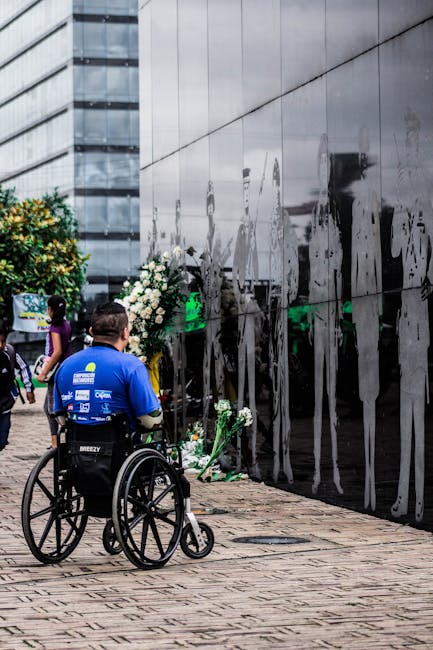
The COLA increase means survival math for vets, cocktail napkin math for politicians.
I remember sitting in a VA waiting room eight years ago, watching a decorated Marine Corps sergeant shuffle toward the check in desk. His left shoe dragged slightly, his right arm hung stiff, and I watched him consider the elevator versus two flights of stairs the way a mountaineer eyes Everest. When the receptionist told him his disability increase request would take "another 90 working days minimum," he simply nodded. No outrage. No demand to see a supervisor. Just the quiet resignation of someone who'd fought real wars and now found himself losing the paperwork war.
This memory flooded back when I saw the newly announced 2.8% cost of living adjustment for 2026 disability payments. On paper, it looks almost noble, a recognition of inflation's toll on those who served. Then you run the numbers.
Take that 100% disabled veteran receiving $3,831 monthly now. Their $107 raise sounds grand until you realize Congress just approved a 23% budget increase for VIP jet upgrades. Our broken policy math means fighter pilots get stealth technology while wheelchair bound vets debate whether their transit van qualifies for grocery delivery tax breaks.
The hypocrisy here isn't just about dollar amounts. It's in how we calculate "cost of living" adjustments versus actual veteran costs. Senators love touting COLA increases pegged to the Consumer Price Index. But what veteran's life looks like the average consumer basket? Few civilians budget for prosthetic maintenance, adaptive vehicle modifications, or the premium pricing of prepared meals when cooking becomes physically impossible.
Consider housing costs, typically 25-35% of CPI calculations. Veterans with mobility challenges or PTSD triggers can't just rent any apartment. They need accessible units in safe, quiet neighborhoods near VA facilities. In cities like San Diego or Seattle, appropriate housing often costs double local averages. That $49 monthly raise for a 70% disabled vet might cover 0.2% of their actual rent adjustment.
Then there's the Kafkaesque rating system determining these payments. The VA assigns disability percentages in 10% increments as if human suffering follows tidy decimal points. I once interviewed a triple amputee whose traumatic brain injury initially earned a 40% rating. It took four appeals, two senators' interventions, and thirteen months before common sense prevailed at 100%.
Here's what these clinical percentages conceal. A 30% versus 40% rating means $222 more monthly. To cross that threshold, veterans must endure months long assessments requiring detailed medical records, personal statements, and buddy letters. Many hire legal advocates. All lose time better spent on rehabilitation or family. It's death by a thousand papercuts for people already missing literal limbs.
The timing of these adjustments stings like salt in a shrapnel wound. Notice payments increase effective December 1, 2025. Just early enough for politicians to campaign on "supporting our troops" during midterm elections. Just late enough that vets face six more months of 2026 living costs with 2025 purchasing power. Meanwhile, Congress members receive automatic raises adjusted quarterly.
This isn't theoretical. During the 2008 financial crisis, disabled vets watched bank bailouts distribute billions overnight while their modest COLA increase got "delayed for evaluation." In 2021, veterans struggling with COVID shortages saw their 1.3% adjustment dwarfed by a 17% spike in insulin prices. Nearly half of VA rated veterans under 65 report delaying medical care due to costs despite supposedly having coverage.
What baffles me most is our collective denial about scale. The entire veterans disability budget runs around $120 billion annually. Apple generates more profit in five weeks. We somehow accept that prosthetic limbs should be economized while corporate tax loopholes bleed billions. We tolerate means testing for combat wounded while greenlighting unlimited PPP loan forgiveness.
The human impact hides behind cheerful COLA announcements. Maria, an Army medic I spoke with, now 80% disabled from IED related injuries, breaks down her monthly math. Her $2,102 post adjustment payment must cover a $1,750 wheelchair adapted apartment, $327 in copays for pain medications, and $45 for bus fare to VA appointments. "The trick," she says tiredly, "is eating every other day until my food stamps renew."
The solution isn't complex, just politically inconvenient. Bench COLA adjustments against veteran specific inflation indexes. Fast track rating appeals through AI document analysis. Stop pretending microscopic increases offset systemic market failures. We found trillions for pandemic stimulus and corporate subsidies. We can manage basic dignity for those sent into harm's way.
Until then, that 2.8% raise feels less like support than professional class gaslighting. To any senator oozing self congratulatory press releases about "honoring our heroes," I propose a simple reality check. Survive one month on a 100% disability payment in your district. Ride the bus to VA appointments. Navigate pharmacies with TBI induced migraines. Then tell me with TV ready sincerity that $3,938 represents adequate compensation for dissolving your body in service to policy mistakes made by better fed men in air conditioned rooms.
War, Clemenceau famously observed, is too important to leave to generals. Veteran care, it seems, is too expensive to leave to accountants pretending compassion adds up on spreadsheets.
 By Daniel Hart