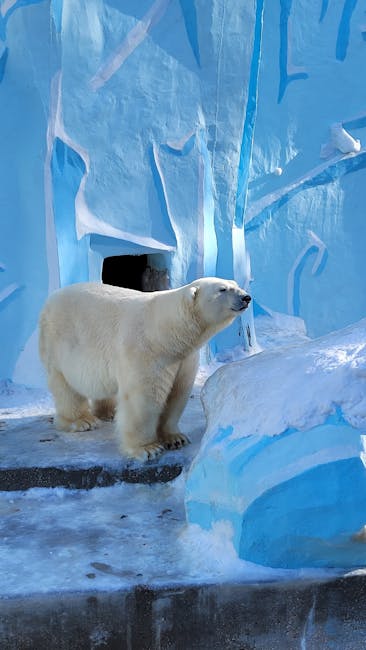
A sky high miscalculation almost turned two paragliders into polar bear popcorn.
The universe has a peculiar sense of humor. Picture this: two humans strapped to oversized kites and lawnmower engines, drifting through Staffordshire skies like confused migratory birds. Below them, two polar bears named Nanook and Nori blinked upward, contemplating whether the universe had finally invented Uber Eats for apex predators.
Recent events at Peak Wildlife Park prove truth remains infinitely stranger than fiction. Our would be Icaruses weren’t aiming for ursine interaction, just as polar bears don’t typically shop for airborne appetizers. Yet gravity and poor planning aligned in cosmic comedy when motorized paragliders descended toward the enclosure like malfunctioning dinner bells.
Park staff observed the unfolding chaos with the escalating dread of someone watching a bowling ball teeter toward priceless vases. One imagines frantic radio calls between zookeepers:
Carl, bring the noise cannons.
Paula, grab the industrial air horns.
Dave, cancel lunch plans. We may have impromptu bear enrichment activities.
Meanwhile, Nanook and Nori likely engaged in philosophical debate. Does human taste better with motor oil seasoning? Should one begrudge food that literally falls from the sky? Their internal monologues remain tragically unrecorded.
The gliders’ last second course correction spared everyone an awkward explanation to next of kin. The human participants get bonus points for their frantic engine cuts and frantic swerving, proving adrenaline remains nature’s finest autopilot.
Let’s examine this ecological near miss through three lenses, like scientists studying a particularly improbable lava lamp.
First, flight technology versus predator biology. Motorized paragliders belong in the same category as jetpacks and hoverboards: transportation for people who enjoy life’s spice through near death experiences. Polar bears, conversely, evolved during Pleistocene winters, developing paws the size of dinner plates and metabolisms powered by seal blubber. They represent apex predator perfection, tracking scents from miles away at speeds topping 25 miles per hour. Not ideal neighbors for anyone descending at grape from the sky velocity.
Second, the surreal adaptation challenges facing modern zoos. These institutions increasingly serve as arks for species displaced by habitat loss, tasked with making Siberian carnivores content in English countryside. Creating enclosures that simulate wild habitats while preventing unscheduled hiker ingestion requires engineering brilliance. Engineers erect cliffs and water features that say homey whilst deterring aerial food deliveries.
Which brings us to point three: the accelerating collisions between recreation and conservation zones. The same landscapes that support sensitive species often beckon adventurers like sirens singing to doomed sailors. This week’s near impalement on polar bear claws suggests Staffordshire might need no fly zones over carnivore exhibits.
All this underlines a biological truth we often forget: human curiosity remains evolution’s most dangerous trait. Our distant ancestors spread across continents pursuing the universal question hey, what’s over there? Built within us is an itch to explore, sometimes manifesting as questionable aerial maneuvers above gigantic furry land sharks.
Modern technology complicates these primal urges. Our Stone Age forebears faced woolly mammoths on foot, armed with sharpened sticks. Today’s adventurers can buzz megafauna at 500 feet thanks to affordable flying contraptions purchased online. Progress remains delightfully absurd.
Resilient zookeepers faced with airborne snacks demonstrate another evolutionary marvel: human adaptability. Within minutes, they deployed nonlethal deterrents and emergency protocols. Their response showcased professionalism worthy of Olympic medalists in the “Keep Idiots Alive” event.
Polar bear psychology warrants consideration. To Nanook and Nori, the event likely registered as cosmic trolling. Imagine your favorite snack descending gloriously from the heavens, tauntingly close yet maddeningly inaccessible. The aerial steak dangled before vanishing. The emotional whiplash rivaled seeing holiday displays appear in September.
This incident’s humor belies serious scientific discussions. Wildlife sanctuaries continuously balance public outreach with safety protocols. Visitors shouldn’t require full peril awareness classes, but perhaps airports shouldn’t border tiger exhibits either. Location trumps even the most elegantly crafted emergency procedures.
The hopeful twist appears in the near miss itself. No pancakes were served, no parachutes shredded into dental floss between enormous molars. Humans and bears left the encounter richer in life lessons and perhaps new fears to discuss with therapists.
Solutions emerge like crocuses through frozen ground. Parks could install conspicuous aerial markers, like those inflatable dancing tube men repurposed as wind socks of warning. Alternatively, paramotor enthusiasts might download apps highlighting local wildlife hazards alongside weather alerts and coffee shop locations. Imagine push notifications: critical caution, approaching polar airspace.
Scientists develop fascinating collision avoidance systems based on bat sonar and insect compound eyes. Perhaps future recreational aircraft will feature animal detection algorithms alongside altitude sensors. When they detect polar bears, elephants, or cow pastures during sensitive digestive phases, automated alarms could blare bear right! hard starboard!
Conservation benefits from every absurd cautionary tale. This one offers dual morals: don’t drop in unannounced where meat lovers await, and perhaps reconsider motorized descents near anything with claws longer than bread knives. The paragliders’ survival instincts kicked in just in time. Bravo to panic sharpened reflexes and luck blessed dismounts.
The skies over England grow more crowded daily delivery drones, electric air taxis, hobbyists dressed as airborne bananas. Zoos represent crucial refuges where wildness persists despite humanity’s relentless encroachment. That two species’ evolutionary paths nearly collided in such spectacular fashion reminds us to compartmentalize our playgrounds.
One envisions future signage outside animal sanctuaries: Warning. Thermals may contain bears. No free meals inside drops allowed.
 By Nancy Reynolds