When Volcanoes Destroy and Algorithms Rebuild: Pompeii's Digital Resurrection
Imagine vacationing in ancient Pompeii, dodging donkeys on cobblestone streets while squinting at rooftop towers that blocked your view of Vesuvius. Congratulations, you might have experienced one of history's first documented cases of wealthy neighbors ruining everyone's skyline. Few realized those obstructing towers would become the ultimate I told you so when the mountain erupted in AD 79.
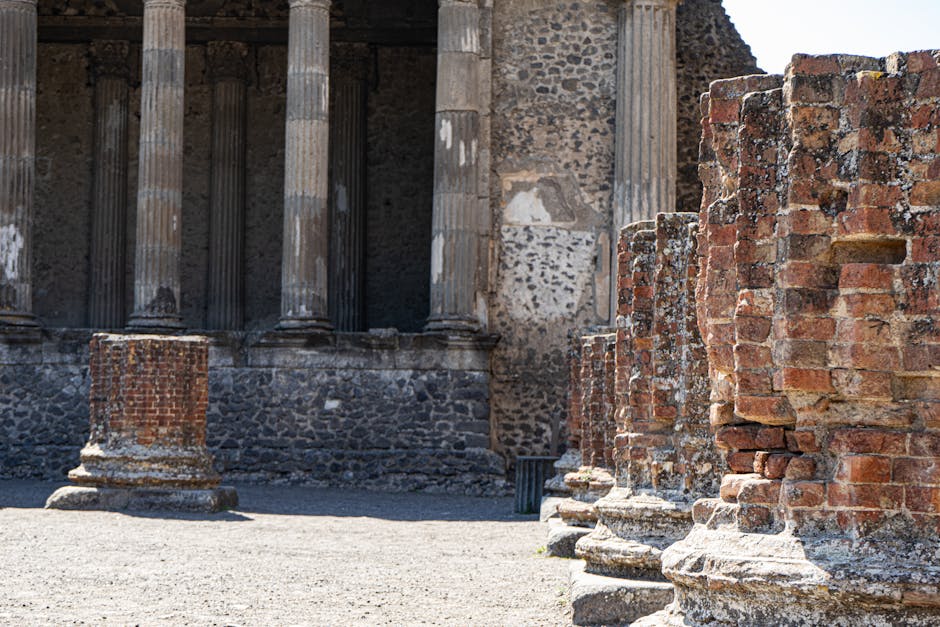
Recent digital archaeology now confirms what scholars long suspected but couldn't prove. Pompeii was not merely a flat expanse of villas and bakeries. Its skyline bristled with private towers, status symbols for affluent Romans who apparently believed volcanic views weren't worth preserving for the plebs below. Using lasers and computational models, researchers have mapped these lost structures through subtle cues like support holes in surviving walls and stress patterns in remaining masonry.
The irony deserves appreciation. A city flash frozen by disaster still keeps secrets through the very destruction that preserved it. Those hollow spaces where wooden beams rotted away after the eruption now serve as digital fingerprints for reconstructing three story towers that once dominated neighborhoods. Modern technology reveals past hubris by analyzing voids. There's a philosophical essay lurking there about how we define existence, but we'll leave that to tenured academics.
What emerges isn't merely architectural showmanship. These tower homes reveal socioeconomic tensions in a resort town where elites constructed vertical monuments to their importance, blocking sunlight and sightlines much like modern luxury condos obscure waterfronts. The difference being, of course, that Vesuvius didn't care about property values when it erupted.
This digital resurrection relies on LiDAR, the same pulsed laser technology that maps rainforest canopies and autonomous vehicle routes. Mounted on drones, these instruments scan ruins to micron level precision. Combine this with photogrammetry photographs taken from multiple angles, and suddenly archaeologists can spot tool marks on stones or subtle erosion patterns invisible to human eyes. It's less Indiana Jones and more data science with occasional dust.
The real marvel lies in interpreting these digital breadcrumbs. When researchers identified unusual stress fractures along a surviving wall, software simulations suggested they originated from the weight of a now vanished upper floor. Missing beam sockets implied support structures for projecting balconies. Even discoloration in volcanic ash layers hinted where plastered facades once stood before collapsing. Each detail feeds algorithms that generate probable reconstructions, creating ghost architectures visible only through VR headsets.
Here lies the tools practical application. Pompeii's physical remains face accelerating decay from climate change driven weather extremes. Increased rainfall erodes ancient mortar. Temperature swings crack frescoes. Even tourist humidity from daily visitors creates microclimates damaging to artifacts. Digital preservation offers an insurance policy, capturing structures in their current state before further degradation. Future historians may study Pompeii through interactive holograms because the originals crumbled under anthropogenic forces. There's progress for you.
But beyond preservation, the technology rewrites historical narratives. For centuries, interpretations of Pompeii relied on the best preserved structures unearthed by excavations that prioritized grand villas over modest dwellings. Digital reconstruction flattens this bias by letting researchers examine less glamorous ruins non invasively. A collapsed bakery or crumbled apartment block can be digitally reassembled without potentially damaging physical intervention.
Moreover, the virtual approach reveals evolution over time. Those towers eyed skeptically by jealous neighbors weren't all built at Pompeii's peak. Some appeared during rebuilding efforts after a major earthquake seventeen years before Vesuvius finished the job. This resilience suggests a complex social fabric where displaying wealth through architecture mattered more than seismic risks. Humans repeating questionable decisions across millennia remains sociology's most reliable constant.
The implications ripple outward. If Roman towers functioned like modern McMansions physical assertions of status independent of practicality then our understanding of ancient urban dynamics needs recalibration. Social stratification wasn't merely horizontal, segregated into wealthy districts and slums, but vertically stacked. The higher your floors, the lower your regard for sunlight deprived neighbors. Even more telling, these towers clustered near public spaces like baths and forums, maximizing visibility for their owners’ vanity. The Colosseum might have hosted gladiators, but daily displays of power occurred in residential architecture.
Critics might dismiss this as speculative. After all, pixels don't equal proof. But that misunderstands computational archaeology's rigor. Each virtual reconstruction undergoes stress tests, matching digital models against known physics of Roman construction materials and techniques. If a proposed tower design would collapse under its own weight using period appropriate materials, the model gets revised. It's historical reverse engineering with error correction loops.
This methodology's elegance lies in its neutrality. Excavations prioritize sites deemed historically valuable or conveniently accessible. Helicopter mounted LiDAR can scan entire regions indiscriminately, revealing patterns invisible to ground based observers. Imagine applying similar tech to Maya ruins swallowed by jungles or Egyptian sites buried under shifting sands. Archaeology enters an era where discovery happens not just through shovels, but through processing power.
Yet for all its promise, the technology raises prickly questions about authenticity. Physical reconstructions at Pompeii have historically sparked debates about when preservation becomes fabrication. Digital recreations risk similar criticisms in virtual space. Does seeing a tower through a VR headset create false confidence about historical accuracy? The answer hinges on transparent methodologies and peer reviewed validation. Wisely, the Pompeii Reset project publishes its models with granular data annotations, allowing others to challenge assumptions.
Ultimately, this work underscores archaeology's evolving nature. We've progressed from treasure hunting antiquarians to scientists parsing pollen grains in soil layers. Now, terabytes and algorithms join trowels and brushes as essential tools. The goal remains unchanged understanding how past societies lived, why they thrived or failed, and what echoes of their existence resonate today. That some answers now come from analyzing digital ghosts in long cooled volcanic ash seems poetically appropriate for Pompeii. A city that cheated time through sudden petrification now reveals new secrets through calculated bits and photons.
Perhaps the greatest lesson mirrors the city's own fate. Pompeii's residents who rebuilt opulent towers after one natural disaster only to be caught by another might recognize our current climate dilemmas. Modern humanity keeps constructing metaphorical towers in floodplains while technology devises new ways to document the approaching deluge. The hope this time is that digital foresight might spur physical action before everything ends up preserved for future archaeologists, real or virtual, to ponder.
 By Tracey Curl