Creatures with better real estate strategies than most millennials
The ocean remains humanity's most accomplished magician. While we exhaustively document every square inch of land suitable for real estate development and lithium mining, it casually produces twenty brand new lifeforms from depths most humans will never visit. These organisms didn't ask for names, patents, or Instagram followers. They simply existed in crushing darkness, waiting for someone with enough compressed air tanks to notice them.
The California Academy of Sciences recently deployed monitoring devices to reefs below 300 feet around Guam. These contraptions function rather like submarine Airbnbs for crustaceans. Leave them sitting long enough and something with too many legs will move in. When retrieved, these devices revealed creatures science had never formally introduced itself to. At least twenty. Possibly more, pending the slow bureaucratic process of genetic sequencing and academic peer review. Government grants rarely account for the existential thrill of naming something that looks like a cross between a spider and a kitchen sponge.
Among the discoveries was a hermit crab demonstrating evolutionary real estate genius. While its shallow water cousins fight over secondhand snail shells, this specimen settled for repurposing a clamshell. There is something deeply relatable about an organism that looks at the housing market and thinks, Fine, I'll modify a bivalve. This is the marine equivalent of converting a Volkswagen bus into a tiny home. Extreme environments produce either extinction or creativity. The crab chose creativity.
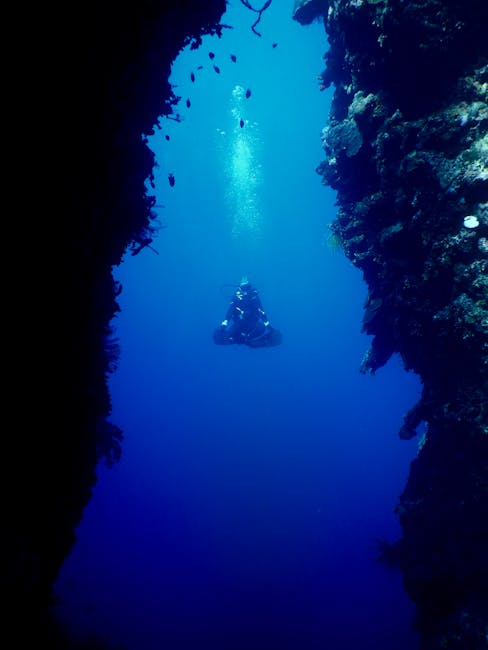
The technical term for this oceanic neighborhood is the mesopelagic zone, but researchers prefer the poetic branding of twilight zone. Sunlight here is as scarce as coherent policy discussions in a presidential debate. The pressure could flatten submarines not designed by engineers with sufficient caffeine addictions. Exploring this layer requires diving gear resembling astronaut suits and nerves resistant to existential dread. Brilliant minds devote entire careers to identifying creatures in a place where everything looks like it sustains itself by eating lost fishing nets.
What makes this discovery significant isn't merely the existence of unknown species, though novelty always sells better at scientific conferences than incremental data. The revelation is that biodiversity thrives where human attention spans flicker out. We've mapped Mars more thoroughly than our own ocean floors. The surface of the moon has higher resolution photography than continental shelves sustaining entire marine ecosystems. Humanity sends billion dollar robots to collect space rocks. Meanwhile, practical scientists lower plywood contraptions into the abyss hoping something sticks to them.
The hypocrisy here isn't malicious, just depressingly human. Political speeches overflow with platitudes about environmental stewardship. Corporate reports pledge allegiance to sustainable development goals. Yet basic exploration of Earth's own ecosystems remains chronically underfunded. Discovering twenty new species shouldn't be accidental collateral from reef monitoring. It should be policy. Half of Earth's oxygen comes from marine photosynthesis. We are essentially breathing byproducts of plankton labor. Perhaps more citizens would demand research funding if informed their next breath depends on proper plankton healthcare.
Protection efforts face disheartening realities. There is no viral hashtag for #SaveMesopelagicCrabs. Legislators struggle to allocate resources to invisible ecosystems with negligible tourist appeal. Until these species develop lobbyists or threatening venom, their conservation status hangs by threads of scientific advocacy. This is where human impact becomes a tangible concern. Deep coral reefs do not merely house exotic organisms. They function as carbon sinks, pharmaceutical research libraries, and early warning systems for oceanic health. Every undiscovered species represents biological strategies for surviving conditions humans consider uninhabitable. What survives there may hold solutions to medical or engineering challenges we haven't thought to confront.
The economic argument remains weakest yet most persuasive in congressional budget meetings. Tourism won't fund submersible expeditions. Pharmaceutical companies won't prospect for microbes until intellectual property laws are clarified for creatures found beyond national waters. The practical solution may involve reframing biodiversity. These species are oceanic infrastructure. Vital services rendered include carbon sequestration, nitrogen cycling, and being living lessons in material science. Sponges don't pay taxes, but neither do highways. Society maintains roads. Perhaps it could consider maintaining ecosystems with similar pragmatism.
Scientists implicitly understand this. Their monitoring device recovery missions now expand across the Pacific, installing more underwater observation posts than any crab association requested. Each retrieval is a data download from a world as alien as fictional planets in science fiction novels, just with more brine and less convenient gravity. Technology for deep dives improves like everything else, through trial, error, and not drowning researchers too often. The fact that a team can deploy tools at 330 feet depths and retrieve viable specimens underscores engineering progress worth celebrating. Submarine ecosystems won't protect themselves. Humans must build the tools to understand them first.
For the general public, these discoveries should spark curiosity rather than guilt. Outrage accomplishes little. Awe opens wallets for research grants. Every unidentified sea squirt or ten legged invertebrate represents a teaching moment about nature's stubborn persistence. Observant humans might note that organisms surviving at oceanic depths represent triumph over darkness, pressure, and scarcity. Resources aren't hoarded there. They're repurposed with ruthless efficiency. An elbowed shrimp doesn't care if its shell is fashionable. It cares if the shell works. This mindset might serve surface dwelling humans well.
Now, about naming rights. Scientific tradition dictates that discoverers can christen new species. You will not be consulted. If previous naming conventions hold, expect something mixing Latin terminology with inside jokes best appreciated by marine biologists hoisting craft beers after peer reviews. The hermit crab deserves more dignity. Call it something reflecting its housing adaptability. Anyone living in cities with compromised leases has solidarity with crustaceans squeezing into repurposed clamshells.
The primary takeaway should not be that scientists found interesting animals. It should be that twenty unknown creatures were there to find. Human knowledge remains astoundingly incomplete regarding its own planet. This isn't failure. It's motivation. Fifty years ago, hydrothermal vent ecosystems were undiscovered. Thirty years ago, extremophiles redefined possibilities for life. Today, creatures in the twilight zone demonstrate life proceeds whether scientists are watching or not. Funding exploration isn't charity. It's enrollment in ongoing education. Life is more inventive than reality television producers. We simply have to look deeper.
 By Tracey Curl