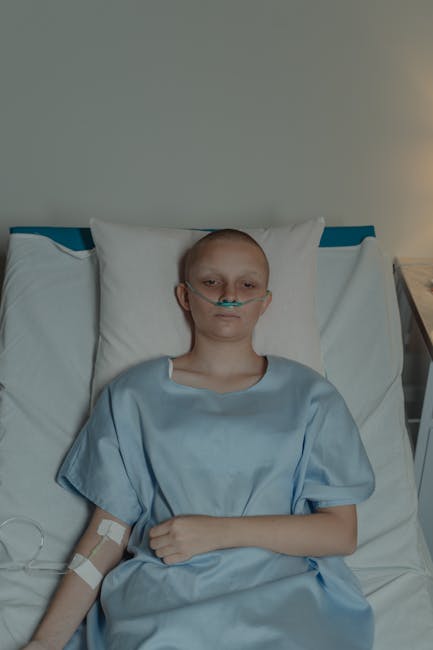
One teenager's journey from flu symptoms to chemo wards exposes the cracks in how we recognize youth cancer
The human body speaks in whispers before it screams. For Sophie Claxton, the whispers came disguised as ordinary flu. A skyrocketing temperature. Exhaustion so profound her teenage limbs refused to lift her from bed. Symptoms so unremarkable in a British winter that even her GP initially suspected nothing more sinister than sepsis. What followed was the sort of medical whiplash that redefines lives. Within days, the 16 year old college student found herself in an acute leukemia ward, her youth suddenly measured in blood counts rather than birthday candles.
This is not merely another cancer survival story, though Sophie's eventual ringing of the treatment completion bell deserves celebration. It is an indictment of how routinely the healthcare system dismisses the vulnerability of adolescents. Acute lymphoblastic leukemia, the very diagnosis that upended Sophie's life, is the most common childhood cancer. Yet in teenagers, its symptoms fatigue, fever, bone pain often masquerade as growing pains or common viruses. The consequences of this masquerade are measured in delayed diagnoses, more aggressive treatments, and futures mortgaged to mitigate treatment side effects.
Sophie's trajectory from presumed flu patient to critical care reveals a particularly cruel irony. Adolescents inhabit a medical no man's land, too old for paediatric intuition, too young for adult oncology protocols. Where a younger child displaying her symptoms might have triggered immediate blood tests, Sophie navigated a system ill equipped to parse teenage malaise. The results left her body ravaged by seven weeks of intensive chemotherapy, her weight plunging to that of a small child, her hair lost, her fertility potentially compromised before she could consent to egg preservation. All before her seventeenth birthday.
There is legitimate anger here, though not necessarily at individual clinicians. Our collective failure runs deeper. Funding for teenage and young adult cancer units remains fragmented. Research into the distinct biological behaviors of adolescent cancers lags. Diagnostic tools still calibrated primarily for either prepubescent or fully mature bodies miss critical warning signs. The statistics are stark patients aged 15 24 face longer diagnostic intervals than any other age group. Each day of delay can alter survival odds.
Yet Sophie’s ordeal exposes another rarely discussed truth. When we speak of treatment side effects in youth, we often focus on hair loss or nausea. The real costs are measured in stolen time. A year of college abandoned. The university experience flavored not by newfound independence but by maintenance chemotherapy. A twenty year old awaiting fertility tests instead of planning a career. The psychological toll compounds quietly. Her mother’s confession of perpetual anxiety over every cough mirrors research showing families of adolescent cancer survivors live in suspended fear.
Herein lies the hypocrisy we must confront. We celebrate child cancer charities with telethons while underfunding transitional care programs for teens. We design hospitals with cheerful pediatric wards and somber adult units, leaving adolescents stranded in architectural limbo. We pride ourselves on cancer survival rates without allocating resources to protect survivors’ futures. Sophie’s inability to preserve her eggs beforehand wasn’t mere bad timing. It was policy failure. Why should any teenager face potential infertility because systems didn’t accommodate urgent fertility preservation?
Her beloved dog Bonnie offers an unintended metaphor. Animals instinctively remain near ailing companions. Our healthcare systems lack that instinct for adolescents. Sophie’s nomination for Cancer Research UK’s Star Awards touches upon this. Every child deserves recognition, true. But recognition alone doesn’t reform diagnostic protocols or fund young adult survivorship clinics. Applause rings hollow when the encore includes navigating adulthood with treatment induced chronic conditions.
There are hopeful signs. Institutions like Manchester’s Christie Hospital, where Sophie received care, pioneer adolescent specific oncology programs. Emerging technologies from liquid biopsies to AI symptom checkers show promise in flagging ambiguous cases earlier. Advocacy groups pressure policymakers to close the fertility preservation gap. But progress remains uneven. Rural patients like Sophie face additional barriers, from transportation to specialist access, exacerbating urban rural healthcare disparities.
Perhaps the most profound lesson lies in Sophie’s own words about still processing her ordeal. We mistake surviving for healing. Surviving gets you home. Healing requires rebuilding a life around treatment scars and truncated possibilities. For teenagers, this rebuilding coincides with the already tumultuous work of becoming. University, first loves, career dreams all filtered through the lingering what ifs. Sophie’s criminology studies now carry new meaning. She seeks justice in a system that nearly failed her.
Her story isn’t isolated. It echoes in oncology wards nationwide where teens arrive after prolonged diagnostic odysseys. The solution demands more than awareness campaigns. It requires embedding adolescent medicine training in medical schools. Funding research into biomarkers for early teen cancer detection. Legislating fertility preservation coverage. Building bridges between pediatric and adult oncology services.
As Sophie adjusts to Manchester Metropolitan University, her resilience shines. But survivor grit should not be prerequisite for systemic change. Every teenager showing up at A E with stubborn flu like symptoms deserves clinicians whose minds harbor the possibility of a deeper darkness. Every young cancer patient deserves reproductive autonomy. Every survivor deserves follow up care tailored to their life stage.
Let Sophie’s experience not be reduced to inspiring anecdote. Let it be the pebble that starts the avalanche. Adolescent health can no longer be medicine’s neglected middle child. The stakes are measured in futures like Sophie’s teetering between thriving and merely enduring. When it comes to our youth’s health, we must learn to hear the whispers before they become screams.
 By Helen Parker