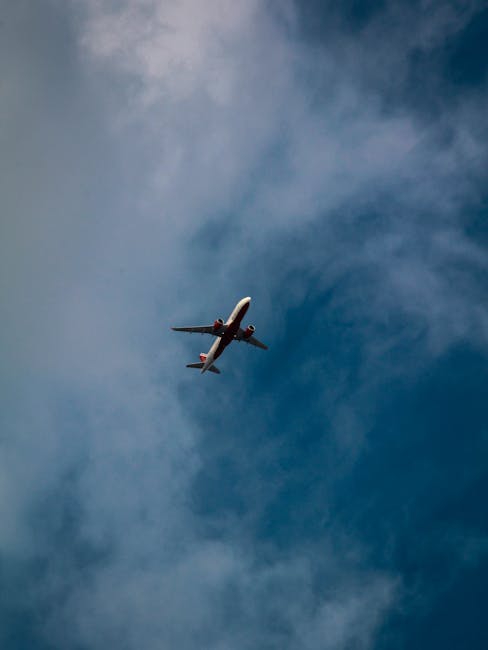
The official narrative of the Air India crash raises more questions than answers.
The preliminary report on the Air India Flight 171 crash reads as predictably as a regulatory document can. It confirms what data recorders already indicated: the fuel switches were cut off three seconds after takeoff. It notes that one pilot questioned the other, suggesting confusion rather than immediate recognition of a mechanical failure. It states the lack of evidence for a bird strike or engine malfunction. It does not conclude. It does not resolve. It positions the actions of the pilots as the most plausible focal point for further inquiry. This is how these reports are designed. They outline facts without drawing lines between them.
What the report does not say, and what civil aviation investigative bodies rarely volunteer, is how thoroughly systemic pressures influence these early findings. The structure of the industry demands that blame must first be allocated where it is least disruptive to manufacturers, regulators, and insurers. The report does not explore why no mechanical failure was found, only that none was found. It does not question whether Boeing’s maintenance protocols, an airline’s operational pressures, or a regulatory body’s oversight gaps could have contributed to the sequence of events. The absence of evidence is not treated as a deficiency in the investigative process, but as an exoneration of the machine.
The Air India crash is the first hull loss of a Boeing 787 Dreamliner since its service debut in 2011. That statistic had been a point of pride for Boeing, an aircraft that overcame battery fires, production delays, and regulatory skepticism to achieve a relatively strong safety record. The inevitability of a catastrophic failure was never a matter of if, but when. Now that it has happened, the institutional response follows a familiar playbook. The aircraft’s configuration was correct. The takeoff was normal. The switches, not the plane, determined the outcome. The implied subtext is that human error remains aviation’s persistent weak point, not the complexity of automation or the opacity of modern aircraft systems.
The Indian investigative bureau’s report is careful to list the sequence of events without suggesting causation. It notes that after the fuel cutoff, one engine was able to relight and produce partial thrust, implying that the aircraft was not entirely without power as it descended. It records the pilots’ verbal exchange without interpreting whether it signals miscommunication, mechanical misunderstanding, or an unrecognized system override. It does not mention whether the switches could have been affected by firmware anomalies, electrical faults, or physical obstructions. These omissions are not necessarily oversights. They reflect a system structured to minimize liability until absolutely forced to acknowledge it.
The aviation industry’s handling of crashes follows a predictable rhythm. Initial reports focus on immediate operational factors while deferring deeper technical scrutiny. Regulators emphasize compliance with existing standards rather than questioning whether those standards are sufficient. Manufacturers reiterate confidence in their designs while awaiting full investigative conclusions. Airlines express condolences while deferring to official findings. None of this is new. It is how institutions protect themselves in the aftermath of disaster.
The financial and legal consequences of this crash will unfold slowly. Boeing’s 787 program, already strained by pandemic related delivery backlogs and supplier issues, now faces renewed scrutiny. Air India, recently reprivatized and struggling to rebuild its operational reputation, must navigate a public relations nightmare. Insurers and lessors will dissect contractual obligations and liability caps. None of these entities will move faster than the investigation compels them to. The system is designed to absorb shocks incrementally.
The sole survivor of the crash, seated in 11A, walked away from the wreckage. The report does not speculate on why his seat was an outlier in structural survival. There is no analysis of cabin integrity, evacuation pathways, or impact dynamics. Those details may emerge in later filings. For now, the report serves its primary function: to acknowledge the event without assigning definitive responsibility. The deeper mechanics of the disaster remain untouched, waiting for litigation, leaks, or whistleblowers to force them into public view.
 By Tracey Wild