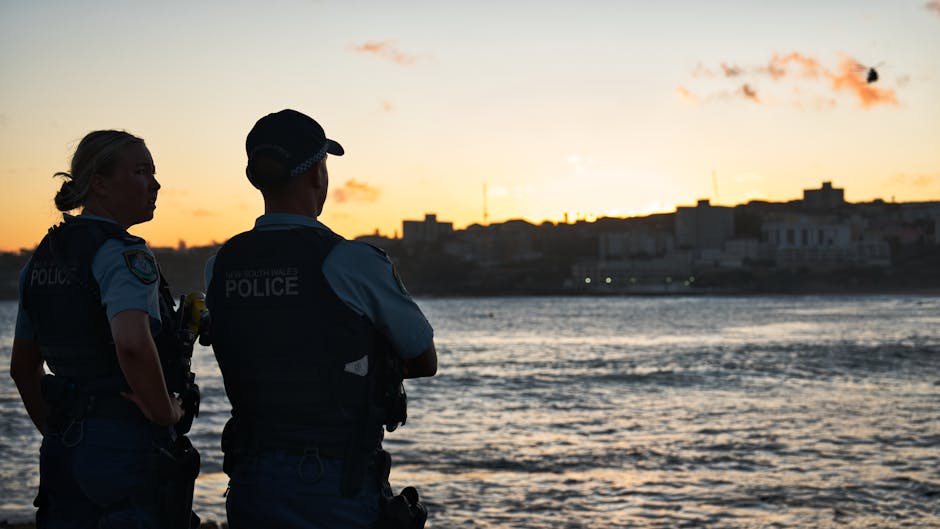
Sunshine, surf, and sorrow collide where policy meets pavement
Imagine you're constructing the perfect Australian postcard. Azure waves lick golden sand. Sun kissed surfers carve liquid emerald. Laughter rises above the hiss of foam. Then a rifle crack shatters the symphony. Suddenly Bondi Beach isn't advertising paradise but hosting nightmares. This week's carnage during Hanukkah celebrations reminded the world that even utopias have exit wounds.
Fifteen human beings including a child won't finish their holiday shopping. Dozens more remain hospitalized, their lives partitioned into before and after segments. Drone footage captures the clinical horror: a gunman methodically firing from a parking structure bridge like some deranged toll collector demanding payment in flesh. We've seen this film before. Different continent. Different weapon. Same carnage archaeology.
Australia theoretically solved its mass shooting problem decades ago when it banned rapid fire firearms following the Port Arthur massacre. Yet here we are. Cockroaches of violence always find cracks in the foundation. One wonders if political leaders across Western democracies share the same playbook written in invisible ink. Page one: Express condolences. Page two: Light candles. Page three: Commission a report that gathers dust beside last season's tax reform proposals.
Consider the technological twist. Authorities deployed surveillance drones not as preventative sentinels but as airborne coroners documenting tragedy after ignition. There's something dystopian about watching terror unfold through the detached perspective of buzzing quadcopters while civilians scramble below like ants under a magnifying glass. Our tools grow sharper while our solutions remain blunt instruments.
Three thoughts bob in the wake of this bloodshed. First, the international illusion of Australia as a carefree coastal playground persists despite mounting evidence to the contrary. Between raging wildfires, temperamental reef systems, and now recurring public space violence, the continent increasingly resembles a canary in humanity's coal mine. World leaders might consider glancing southward for predictive analytics.
Second, multicultural tensions often simmer beneath polished pronouncements about diversity. The targeting of Jewish celebrants during Hanukkah suggests ancient hatreds imported like invasive species. Authorities now face competing priorities: protecting vulnerable identities while preventing retributive backlash. It's a high wire act performed without nets over shark infested waters.
Third, contemporary policing resembles a disorganized lifeguard attempting to rescue swimmers while tsunamis approach. Officers arrive heroically after villains depart tragically. Drone fleets and facial recognition systems create potent investigation tools but remain poor crystal balls. Security budgets balloon while prevention resembles amateur meteorology: everyone analyzes storms but nobody stops the rain.
Economic consequences ripple outward like concentric circles in a billabong. Tourism operators nervously monitor booking cancellations. Nearby businesses erect psychological barriers alongside physical ones. Insurance premiums perform gymnastic leaps. Governments redirect infrastructure funds toward surveillance upgrades. Violent incidents don't merely cost lives, they tax civilization' marrow.
History recalls Australia's last major firearm overhaul as a signature policy triumph. Yet evolution favors organisms that adapt. Black market entrepreneurs and makeshift arsenals bypass legislative dams. Crafting effective countermeasures requires understanding modern illicit networks move faster than parliamentary procedures. Regulatory success demands perpetual motion, not trophy cabinets displaying past victories.
Globally, liberal democracies wrestle with similar demons. Security versus privacy. Freedom versus protection. Unity versus fractiousness. These tradeoffs aren't spreadsheet calculations but existential puzzles. Leaders face populations yearning for both perfect safety and absolute liberty, incompatible desires that political alchemists must somehow reconcile.
The human element remains paramount. Beyond statistics about casualties lie ruptured narratives. A child who won't blow out birthday candles. Parents who won't attend graduations. Communities that celebrate holidays with absent chairs at tables. Policy discussions often sanitize these realities beneath bureaucratic jargon. Trauma doesn't file tidy reports.
Ironically, moments of horror occasionally birth unanticipated unity. Strangers become lifelines. First responders renew civic faith. Ordinary people perform extraordinary feats. These flashes of collective humanity suggest our better angels haven't fully absconded. Perhaps governmental innovation lies in cultivating these spontaneous networks rather than exclusively fortifying brittle institutions.
Australia faces defining questions. Does it double down on Port Arthur era solutions recognizing they require updates like smartphone software? Does it pioneer novel approaches blending technology with grassroots cooperation? Or does it succumb to fatalism, accepting periodic bloodshed as unavoidable friction in free societies?
For now, Bondi's sands will scrub clean. Waves erase biological traces. Tourists cautiously return. But neural imprints linger like phantom limbs. The world watches, wondering if this island continent can balance paradise and peril while teaching others by example. After all, koalas might look cuddly, but those claws evolved for survival.
As any surfer knows, wipeouts teach more than perfect rides. Australia just caught a monumental wave crashing onto sharp political reefs. How leaders navigate these choppy waters might determine whether future postcards feature beachgoers or barricades. The answer blows in the southern winds, whispering through eucalyptus leaves and bullet holes alike.
 By Margaret Sullivan