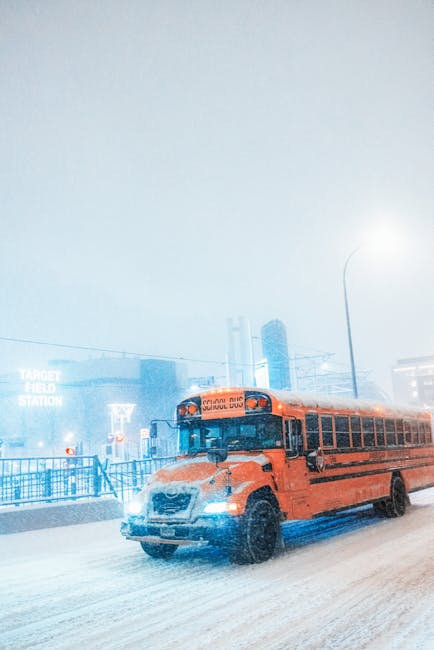
Beneath the snowflakes lie roads that speak in silent warnings
There exists a peculiar physics to Minnesota winters that escapes most weather reports. When temperatures plunge like stones dropped through thin ice, ordinary things transform. Salt scattered across asphalt loses its melting power below negative six degrees Celsius. Ice crystals reorganize their molecular structure to form invisible skins on blacktop. Wind sculpts snow into hardened waves that trap vehicles like arctic shipwrecks. This is not merely weather, but a masterclass in delicate balances.
Outside my window now, snowflakes descend with deceptive gentleness. Each carries geometric secrets formed during their kilometer long descent from cloud to earth. Scientists at the University of Utah once calculated that a typical winter storm distributes snowfall equivalent to 275 billion gallons of water across Minnesota. Yet no two flakes share identical crystalline patterns. There's mathematical poetry in this contradiction, boundless variety born from simple atmospheric ingredients.
The real story unfolding tonight isn't about closed highways or delayed school buses, though those realities pinch sharply for families navigating this white chaos. It's about recognizing how fragile our engineered world becomes when nature flexes its colder muscles. Modern transportation networks designed for efficiency crumble under snow loads measured in inches rather than feet. We built assuming temperature ranges that climate history warns us are transient.
Minnesota's indigenous Dakota people have words for weather phenomena that English lacks. Their winter lexicon includes terms describing specific types of blowing snow and ice formations our road crews grapple with today. Before weather radar existed, generations watched how deer altered grazing patterns before blizzards. Rabbits dug burrows facing southeast to avoid prevailing winds. Contemporary meteorology often rediscovers what traditional knowledge preserved through oral histories.
Consider now the stretch of Highway 10 near Motley, where visibility has shrunk to zero despite only three inches of snowfall. Wind matters more than accumulation here. Gusts over 35 miles per hour can loft fallen snow back into the air, creating what engineers call horizontal precipitation. Transportation department plows fight uselessly against this airborne army recapturing cleared lanes before drivers blink frozen lashes.
Freeway signs flashing "e;Road Closed"e; feel like thermodynamic admissions of defeat. They taunt our assumptions about control. How paradoxical that automobiles, symbols of human autonomy, become helpless metal cocoons stranded by microscopic ice buildup on fuel lines. Mechanics know cold reveals vehicles' true age through stiffened belts and battery weaknesses. Winter strips away pretense from machines and people alike.
Something fascinating happens psychologically during these storms. Motorists initially treat snowy roads with exaggerated caution. Then adaptation breeds complacency. Drivers forget each flake subtly alters friction coefficients. By afternoon, speedometers creep upward even as glaze ice thickens beneath tires. Studies analyzing Minnesota crash data consistently show most weather related accidents occur at moderate speeds, when drivers feel falsely secure rather than during peak danger periods.
Deeper still lies an economic tale few discuss. Minnesota spends over eighty million dollars annually on winter road maintenance. Salt is mined five hundred feet below Detroit in sprawling limestone caverns, then transported by train and truck across the Midwest. Each winter storm activates this hidden supply chain while simultaneously exposing its limitations. When roads ice below the eutectic point where salt becomes ineffective, municipalities switch to beet juice blends and cheese brine, strange organic solutions for inorganic problems.
Teachers cancelled classes today not solely for student safety, but because diesel school buses behave unpredictably on icy hills. The physics is unforgiving. A twenty ton bus sliding sideways on glare ice requires dozens of feet to stop even with locked brakes. Children bouncing in rear seats become projectiles during sudden deceleration. School administrators understand these calculations instinctively, their closure decisions calibrated against unseen risk equations.
Peel back another layer and we confront infrastructure's aging bones. Last summer's potholes, patched temporarily with hot asphalt mix, reopen like wounds under winter's freeze thaw cycles. Bridges weep through concrete pores as rebar rusts beneath surfaces. Cold magnifies structural vulnerabilities like hypothermia weakening a living body. Communities often ignore these flaws until snowpack forces acknowledgment.
In homeless shelters east of Minneapolis, volunteers report unusual arrivals. Men who normally avoid institutional spaces emerge clutching thin jackets against twenty below wind chills. Their presence unveils winter's unequal impact. While suburban families admire snowfall through double paned windows, others calculate survival in exposed bus shelters. Weather strips society bare like birch trees shedding summer leaves.
Environment Canada researchers made an intriguing discovery while studying prairie blizzards. Cattle facing approaching storms instinctively turn perpendicular to wind direction, reducing heat loss from flattened fur. Humans lack such elegant adaptations, relying instead on layered technology from thermal underwear to heated steering wheels. We compensate for biological shortcomings through ingenuity and shared knowledge passed along like hands warming around cocoa mugs.
Minnesota's storm offers one final lesson about interconnectedness. The freezing drizzle currently coating St Paul originated weeks ago as Pacific Ocean evaporation. Winds carried moisture eastward until Arctic air sculpted it into snow. Our cleared driveway leads backward to ocean temperatures and forward to watersheds nourished by spring melt. Nothing stands separate in nature's complex choreography.
Emergency rooms brace tonight for predictable admissions. Orthopedic surgeons call winter fracture season, when icy sidewalks transform routine steps into disaster. Radiologists recognize the telltale greenstick fractures in children who slipped while playing. These clinical observations remind us human bodies resist forces weaker than what buckles asphalt and steel.
Before electricity simplified existence, Minnesotans read weather through animal behavior and sky coloration. Elders taught that pinecones closing tightly predicted incoming storms, their scales responding to humidity changes. Aching joints became natural barometers. Red sunrises carried different warnings than red sunsets. Western settlers recorded these insights as folklore before rediscovering their accuracy through modern meteorology.
Consider too the silence. Six inches of fresh snow absorbs sound frequencies like an acoustic sponge. Streets tonight feel uncannily muted, car noises swallowed by the same snowbanks that trap vehicles. This quietness humbles our noisy species. Winter reminds us nature holds reserves of power no technology can shout down. Sometimes survival means listening rather than inventing.
Meteorologists emphasize that climate remains distinct from daily weather. But patterns emerge when viewing Minnesota winters through broader lenses. The state has warmed nearly three degrees Fahrenheit since 1895, shortening pond hockey seasons while amplifying precipitation intensity. Warmer air holds more moisture, meaning snowfalls grow heavier even as annual totals fluctuate unpredictably. Snowplows face wetter, denser loads than previous generations ever handled.
Scientists at the National Center for Atmospheric Research recently calculated that snowflake formation involves approximately one hundred million water molecules arranging into over thirty five possible crystalline structures. Each configuration depends on minute temperature and humidity variations during descent. This staggering complexity arises countless times nightly across Minnesota, unnoticed except when aggregated into disruptive blankets.
Tomorrow brings another revealing moment unmentioned in typical forecasts. As plows scrape roads down to bare pavement, salt residue mixes with meltwater into brackish streams flowing toward storm drains. Eventually, this brine enters watersheds, altering aquatic ecosystems through chloride concentrations. Our temporary safety solution creates slow unfolding consequences for rivers and lakes. Few drivers consider this trade off while applauding cleared commutes.
Winter storms ultimately ask what constitutes preparedness in uncertain times. Minnesotans bury emergency kits in car trunks, pack blankets beneath seat cushions. They do this because history teaches that self reliance and community cooperation become lifelines when systems falter. The neighbor who clears your driveway with a snowblower expects nothing beyond eventual reciprocation. Blizzards distill society to practical kindnesses.
Tonight, engineers monitor bridge expansion joints contracting in extreme cold. Veterinarians treat livestock suffering frostbitten udders. Parents improvise indoor games for stir crazy children. Each responds differently to winter's challenge, threads in a communal tapestry woven tighter by shared adversity. The storm strips away nonessentials, revealing who we become when warmth and mobility cannot be assumed.
After this blizzard passes, charts will quantify snowfall totals and economic impacts. But the deeper story survives in kindergarten drawings of snow forts, in restaurants donating excess food before power fails, in strangers pushing stuck cars while eyelashes freeze together. Science explains how snowflakes form, why engines stall, when salt fails. Human resilience determines what happens next.
If you listen closely tonight, between wind gusts, Minnesota's frozen roads whisper questions about our assumptions of control. What adaptations must we make as climate patterns shift imperceptibly beneath seasonal storms. How might traditional wisdom enhance technological solutions to winter threats. When does progress become vulnerability masked as convenience. These queries linger longer than any road closure, inviting contemplation long after spring thaw arrives.
 By David Coleman