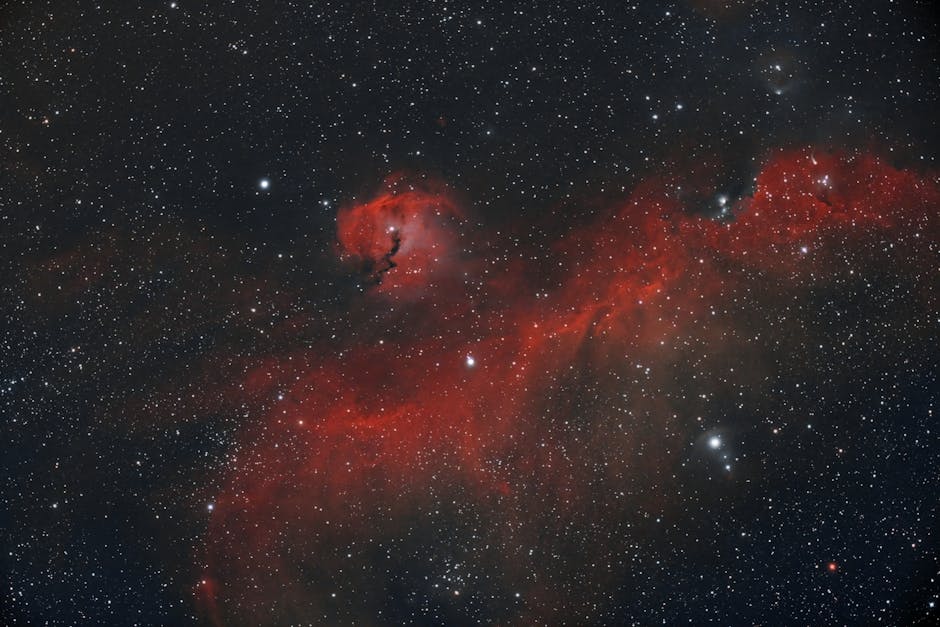
Flirting with galactic visitors while reality quietly takes notes.
On Friday, humanity will have its closest encounter with an object that has traveled farther than most minds can reasonably comprehend. Comet 3I/ATLAS, a cosmic nomad from beyond our solar system, will glide through the interstellar void at a perfectly safe distance of 168 million miles from Earth. Researchers will adjust their instruments. Scientific journals will publish preliminary findings. And inevitably, someone on social media will insist its trajectory proves intelligent design.
The comet's discovery in July 2025 by Chilean telescopes sparked immediate fascination, partly because of its pedigree. It's only the third confirmed interstellar object to visit our neighborhood, following 2017's enigmatic Oumuamua and 2019's less mysterious Borisov. Each arrival prompts a familiar cycle of scientific inquiry peppered with breathless speculation about alien origins.
This predictable pattern says more about humanity than it does about comets. We inhabit a species that can calculate orbital mechanics with astonishing precision while simultaneously asking whether extraterrestrials might enjoy disguising probes as space rocks. The cognitive dissonance would be amusing if it weren't so persistent.
Astronomers have observed comet 3I/ATLAS extensively ever since its detection. Hubble Space Telescope secured multiple views, comparing its structure and behavior to Borisov. The data suggests similarities to solar system comets, with volatiles sublimating as it approached our sun. Ground based observatories tracked its path, confirming both its interstellar origin and entirely natural behavior.
None of this stops the internet from periodically erupting with theories about alien spacecraft. The tendency isn't new. From the canals of Mars to Oumuamua's puzzling acceleration, we consistently prefer tantalizing fiction over quantifiable truth when reality feels insufficiently cinematic.
The scientific community bears partial responsibility for this phenomenon. Press releases emphasizing a comet's weirdness often generate more attention, and thus more funding opportunities. Every interstellar visitor gets labeled historic, extraordinary, unprecedented. These descriptors aren't technically false, given their rarity, but they set unreasonable expectations among non specialists.
Meanwhile, actual researchers continue their quiet work. Comet 3I/ATLAS offers astrophysicists a unique opportunity to study material formed around another star. By analyzing its composition through spectroscopy, they can compare its chemistry to our solar system's comets. The isotope ratios alone could reshape existing theories about galactic chemical uniformity.
There's poetic symmetry in such studies. Every comet holds information about the primordial cloud that birthed its home system. Interstellar versions serve as cosmic postcards from stellar nurseries we'll never directly observe. The scientific value comes not from flashy revelations, but from incremental adjustments to cosmological models.
Public engagement efforts complicate matters. Events like Friday'stelescope viewing sessions, while educationally valuable, unintentionally imply celestial spectacles needing immediate witnesses. In reality, 3I/ATLAS appears as little more than a faint blur even through professional optics. Amateur astronomers might glimpse it with sophisticated equipment, but the average citizen won't see anything resembling media depictions.
This reality gap feeds persistent misunderstandings about space science. Non experts equate astronomical distances with terrestrial intuition, not grasping that 168 million miles renders any visual impact negligible. The comet wasn't, as some online commentators genuinely asked, visible to the naked eye last Tuesday while walking their dog. Those particularly susceptible to suggestion probably mistook Venus for an alien probe.
The interstellar object hype cycle follows predictable phases. Discovery prompts excitement, followed by alien speculation refuted by scientists. Media outlets report both the facts and the fantasies in the name of balance. Scientific papers later confirm the object's natural origins long after public attention has waned.
Lost in this circus lies genuine significance. Each interstellar visitor improves our statistical understanding of galactic matter distribution. Before Oumuamua, theoretical models suggested such objects should pass through regularly. Observations now confirm their frequency, helping refine estimates about planetary system formation and ejection rates.
Consider the numbers. Current models suggest approximately seven interstellar objects traverse the solar system within Neptune's orbit annually. Most remain undetected due to size and brightness limitations. Improved telescopes like the Vera Rubin Observatory, expected to become operational within this decade, should allow astronomers to spot dozens yearly.
This prospect excites astrophysicists far more than remote alien visitation fantasies. More data points mean better constraints on theories about how planetary systems form and interact. Some researchers speculate interstellar objects might even transport life bearing materials between stars, though evidence remains purely theoretical.
The present scientific consensus views 3I/ATLAS as an unusually large example of common galactic detritus. Its hyperbolic trajectory and chemical signatures all point toward natural origins. The only exceptional aspect involves humanity's technological capacity to detect and analyze such objects, a capability developed only within the past decade.
Yet even this technological triumph gets overshadowed by misguided narratives. Online forums buzz with conspiracy theories about NASA hiding alien transmissions. Articles from questionable outlets invent nonexistent features in Hubble images. An entire cottage industry thrives on distorting astronomical discoveries into evidence for extraterrestrial intelligence.
Perhaps the most telling aspect involves the disappointment some express upon learning the comet isn't artificial. This reaction reveals a profound cosmic loneliness. Humans have sought company among the stars for millennia, hoping to find reassurance that we aren't the universe's sole conscious inhabitants.
This psychological need explains why those comet based alien theories persist despite overwhelming contrary evidence. They represent optimism masked as observation. The possibility of intelligent neighbors offers comfort in a galaxy that appears terrifyingly empty.
Meanwhile, actual science pursues more substantive questions. Who will develop the first space mission capable of intercepting an interstellar object weeks after detection. How might we analyze such visitors up close before they leave our solar system forever. What technologies could reliably distinguish space rocks from hypothetical alien artifacts without relying on wishful thinking.
Practical solutions already exist in prototype. The European Space Agency's Comet Interceptor mission, slated for launch next decade, will park a spacecraft at Earth's Lagrange point until astronomers spot a suitable target. It could theoretically chase another interstellar object if detected early enough. Engineers have proposed solar sail designs specifically for fast reaction missions to such cosmic visitors.
These projects receive far less publicity than alien speculation for obvious reasons. They involve meticulous planning, budget debates, and delayed gratification. No flashy headlines emerge from committee meetings about spectrometer specifications.
Here lies the core tension. Scientific discovery operates on timelines incompatible with viral content cycles. A single comet's flyby provides months of observation time but yields conclusions years later. Media attention spans rarely exceed weeks.
The tragedy isn't that alien theories persist. It's that they distract from genuine marvels. The fact we can track an ice ball moving at 100,000 miles per hour from another star system deserves wonder on its own merit. No hypothetical aliens need apply.
Comet 3I/ATLAS will exit our cosmic neighborhood by mid 2026, continuing a voyage that began long before humans walked upright. Future civilizations might intercept another interstellar visitor with more advanced tools. Whatever they learn, it likely won't confirm our fondest sci fi dreams. But it might explain how galaxies build planets, and whether Earth's ingredients are galactic standards or cosmic anomalies.
That knowledge may lack sexy headlines, but it fundamentally alters humanity's place among the stars. And who knows, maybe someday we'll intercept an object that actually contains alien technology. Against astronomical odds, it's technically possible. Until then, sober science trumps wishful thinking every time. The universe teems with wonders without requiring imaginary embellishments.
Meanwhile, professional and amateur astronomers alike will enjoy Friday's symbolic close approach. And the most observant might notice something truly remarkable, if not particularly flashy. Clouds have disrupted data collection recently, making new observations particularly crucial for ongoing studies. Multiple telescopes worldwide will coordinate observations during the closest approach to assemble a compositional map.
The resulting papers will cite Friday's data for decades. Few outside scientific circles will read them. But incremental progress isn't designed for viral moments. It accumulates quietly, like distant comets traversing solar systems.
 By Tracey Curl