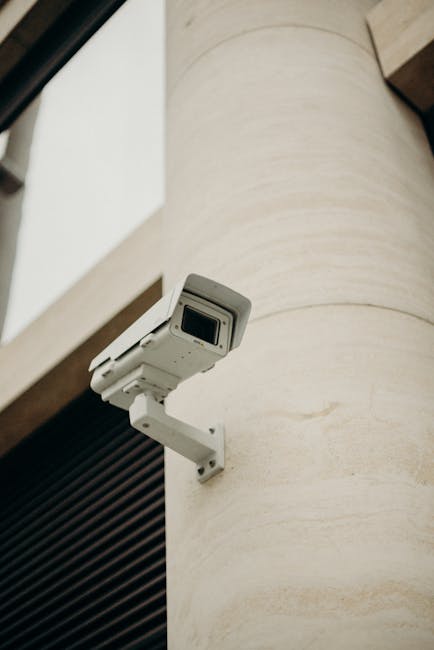
Digital bloodhounds now hunt us all, predator and prey alike.
Let me tell you about the invisible web we\u0027ve woven across our cities. It happened again last Sunday, though this time draped in Hollywood tragedy. Parents dead, a son vanished, and within hours, an arrest made not through shoe leather detective work but through the silent testimony of devices we all carry. Phones pinging cell towers. Cameras recording license plates. Apps whispering coordinates to servers. This isn\u0027t future fiction. It\u0027s Monday morning in America.
I\u0027ve covered technology long enough to recognize watershed moments. What chilled me wasn\u0027t merely that police used these tools. It\u0027s how casually we accept their existence. Think about your day. That fitness tracker counts your steps. Your smart thermostat knows when you\u0027re home. Traffic cameras log your commute. We\u0027re building panopticons brick by digital brick, cheering convenience while dismissing consequence. This case merely revealed the scaffolding.
There\u0027s a fundamental hypocrisy gnawing at our techno optimism. Silicon Valley sells us encryption as privacy armor while building billion dollar businesses on location data. Politicians scream about Big Tech overreach with one hand while funding surveillance networks with the other. And the billionaire parents sacrificed immunity, their wealth no shield against the tracking grid built for \u0027public safety.\u0027 We\u0027re all test subjects now.
Consider the practical erosion. Law enforcement didn\u0027t need warrants for most data used here. Your phone carrier keeps records of everywhere you\u0027ve been for years. Private companies aggregate camera feeds into searchable databases. We\u0027ve outsourced surveillance to corporations immune to Fourth Amendment scrutiny. When did we vote on this? I\u0027ll tell you when. Every time you clicked \u0027agree\u0027 on 87 pages of unread terms.
Twenty years ago, finding a suspect meant knocking on doors. Now it means subpoenaing Google\u0027s Sensorvault. The infrastructure exists not because cops demanded it, but because we funded it through $1,200 smartphones and Alexa devices that record our kitchens. We\u0027re the unpaid laborers building our own prison of convenience. And when the state wants access? That\u0027s not a privacy violation. That\u0027s just good policing.
Don\u0027t mistake this for Luddite fear. I carry the same devices. I\u0027m glued to the same grid. But having covered China\u0027s social credit system, I recognize the blueprint. First, make tracking effortless. Second, normalize its use for \u0027good\u0027 causes like finding missing children or catching killers. Third, expand applications until challenging surveillance becomes synonymous with endorsing crime.
The human cost hides in plain sight. Domestic violence survivors discovered through subpoenaed Lyft receipts. Protestors identified via license plate readers. Journalists tracked through cell tower triangulation. When we enable architectures of observation, they don\u0027t discriminate between villain and victim. The same technology that located this suspect could tomorrow harass his sister, monitor his lawyer, or intimidate a witness.
Corporate interests muddy these waters further. Forensic tools like Cellebrite and Fog Reveal often operate without judicial oversight. Fusion centers buy data from apps you thought were private. Surveillance capitalism\u0027s greatest trick was convincing citizens to pay for their own wiretaps. Your weather app didn\u0027t need geolocation. Your pizza tracker doesn\u0027t require live movements. But they collect it anyway, building the dossier sold to whoever pays.
Legal frameworks crumble at digital speed. Supreme Court rulings like Carpenter v. United States tried limiting warrantless cell data collection, but loopholes yawn wide enough for data brokers. The current Congress debates banning TikTok over data fears while ignoring homegrown surveillance markets. Even when agencies lose access to certain streams, parallel construction lets them recreate evidence trails using \u0027legitimate\u0027 commercial sources. It\u0027s due process theater.
Solutions exist if we care to implement them. Warrant requirements for all location data. Strict limitations on surveillance tech acquisition. Audits of predictive policing algorithms. Hardware kill switches on consumer devices. But meaningful change requires something tech executives and politicians fear most, an educated public demanding constraints on tools they now consider inevitable.
Here\u0027s what keeps me awake. This case made headlines because of famous names. Most deployments happen quietly, against people without platforms or resources to push back. Last month in Phoenix, police used facial recognition to identify a shoplifter based on a security camera still. His defense attorney only discovered the tech\u0027s involvement by accident. The judge deemed it irrelevant. This normalization terrifies me more than any dystopian fiction.
We\u0027ve reached the event horizon of surveillance capitalism. Like lobsters in warming water, we\u0027ve acclimated to disappearing privacy. This tragedy simply turned up the heat. What comes next? Ethical boundaries drawn in law rather than corporate white papers. Public accountability for surveillance networks masquerading as civic infrastructure. Or continued complacency until the only free people are those who live completely off grid. I suggest we choose wisely.
 By Robert Anderson