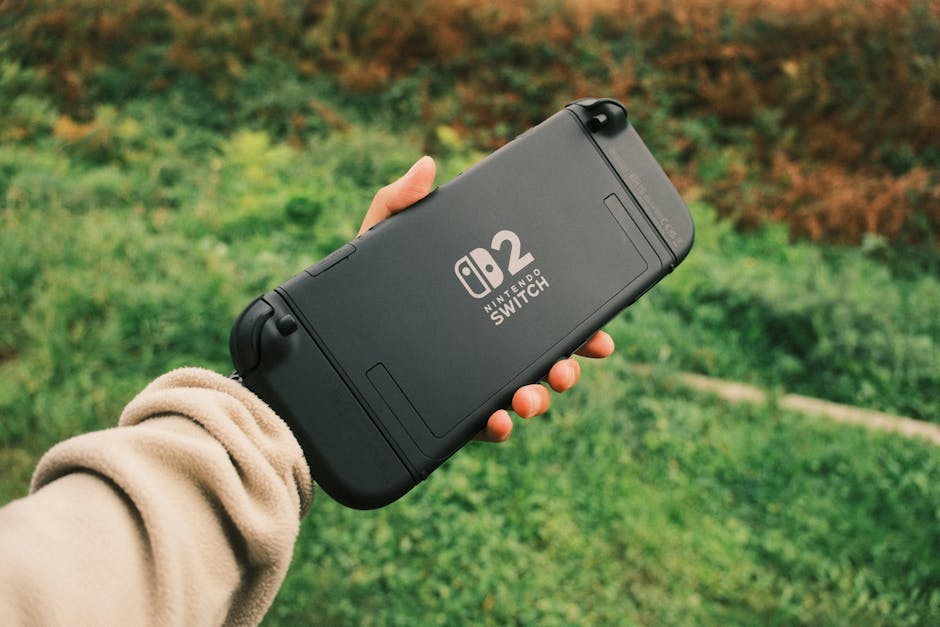
Gaming’s latest attempt to force incompatible hardware relationships while pretending it’s true love
Let’s talk about toxic relationships. Not the kind where your roommate microwaves fish at 3 AM or the kind where your ex still texts you horoscope memes. No, I mean the special flavor of dysfunction that happens when game publishers try to force incompatible hardware relationships while pretending it’s true love.
The latest rumor suggests Bethesda’s massive space RPG Starfield, a game that chugs like a frat brother on a home console, might be destined for Nintendo’s Switch 2. Yes, the same Starfield that made high end gaming PCs wheeze like asthmatic marathon runners. The same Starfield that currently requires 125GB of storage and the patience of a saint to navigate its loading screen simulator gameplay. That Starfield. On a handheld device. Because nothing says immersive space exploration like squinting at a 7 inch screen while your battery life ticks down like a doomsday clock.
Here’s what’s fascinating about this rumor, beyond the technical absurdity. This would mark Microsoft’s third major Bethesda title abandoning Xbox exclusivity for Switch 2, following Indiana Jones and that immortal cash cow Skyrim (now available on every device except your smart fridge, though give it time). Remember when Microsoft spent $7.5 billion to acquire Bethesda and promised exclusive titles to boost Xbox sales? That lasted about as long as a New Year’s resolution. The industry’s sudden multiplatform pivot over the past year feels less like strategic evolution and more like corporate panic set to music.
Which brings me to the first fresh angle you won’t hear in boardrooms: this isn’t about giving players choice. It’s about covering financial bleeding. AAA development costs have ballooned so wildly that even Microsoft can’t afford exclusives anymore. When Starfield reportedly cost $200 million plus another $100 million in marketing, selling 10 million copies becomes the break even line dancing on a razor’s edge. Suddenly, porting to every conceivable platform looks less like betrayal and more like survival instinct. Expect this trend to accelerate when GTA 6 drops and resets everyone’s revenue expectations.
Now let’s address the Switch 2 elephant in the room. Nintendo’s next gen device remains shrouded in mystery, but even the rosiest leaks suggest it’ll sit somewhere between a PS4 and PS4 Pro in raw power. Fine for Mario Kart X. Less fine for a game where one Bethesda developer famously begged players to upgrade their PCs just to handle an asteroid field. Porting Starfield to Switch 2 will require cuts so deep they might as well rebrand it Starfield Lite: Now With 60% Fewer Stars.
This leads us to our second new perspective: the great handheld delusion. Gamers love the idea of triple A experiences on portable devices. See the Steam Deck’s cult following. But Starfield exposes the ugly math behind this fantasy. To run on Switch 2, developers must slash texture resolution, cap framerates at slideshow levels, disable physics systems, and shrink draw distances until planets appear as pixelated tennis balls. What you get isn’t Starfield, but a grotesque parody traveling under its brand name. Yet companies keep pursuing these ports because the market punishes honesty. Nobody wants to hear that their favorite gadget can’t handle cutting edge software, even when it’s painfully true.
The human toll here gets overlooked. When Switch gamers bought Skyrim Anniversary Edition last month expecting a polished experience, they got a stuttery mess with controller lag so bad it made combat feel like underwater ballet. And who eats the cost when these compromised ports disappoint? Gamers who spent $70 expecting parity. Retail workers fielding return requests. Support teams drowning in bug reports. But the executives? They’ve already cashed the revenue check before the Metacritic scores drop.
My third original angle hits at governance. Regulators worldwide scrutinized Microsoft’s Bethesda acquisition over fears they’d withhold games from rival platforms. Now that they’re doing the opposite, where’s the accountability? Sony just saw Microsoft’s PlayStation pivot and upped their PC porting efforts, all while still charging $70 for live service slop. This industry desperately needs consumer protections around performance parity and refund policies for objectively broken ports.
History offers sobering parallels. Remember when CD Projekt Red promised Cyberpunk 2077 would work flawlessly on base PS4s? Or when Bioware insisted Mass Effect Andromeda’s facial animations were intentional? Gamers have every right to view Starfield’s Switch 2 rumors with nuclear skepticism. Bethesda’s track record for polished launches makes the Hindenburg look like a minor transportation hiccup.
The existential question here is whether gaming’s platform wars even matter anymore. If Microsoft can’t justify Xbox exclusives after spending billions buying publishers, what stops Sony from putting The Last of Us Part 3 on Xbox? Steam already thrives as platform agnostic haven. Streaming promises device independence. Meanwhile, Nintendo keeps printing money by ignoring these fights entirely.
In the end, Starfield’s potential Switch 2 port symbolizes our messy industry moment desperate revenue grabs disguised as player friendly choices, technical compromises sold as innovation, and executives whistling past the graveyard of broken hardware promises. Will it actually happen? Maybe. Should you preorder it? Unless you enjoy playing slideshow simulators at 15 fps, hard pass. Here’s hoping Bethesda at least throws in a free magnifying glass with each copy. You’ll need it.
 By Thomas Reynolds