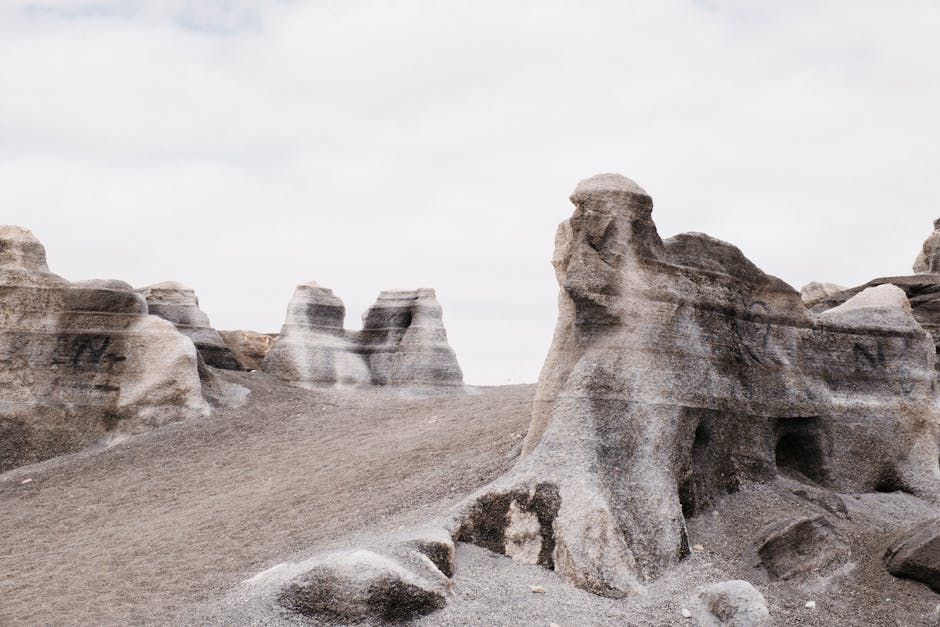
White cliffs, white lies, and the inconvenient truths DNA unlocks.
Imagine telling a stranger their life story based solely on their shoe size. Absurd as that sounds, physical anthropologists have spent centuries doing something remarkably similar with human skulls. The recent case of Beachy Head Woman offers a deliciously awkward example of why we should stop judging books by their cranial covers.
Discovered in 1959 near England's iconic chalk cliffs, this Roman era skeleton spent decades misfiled in a cardboard box before emerging in 2012 as a media darling. Initial forensic facial reconstructions based on skull morphology suggested African ancestry. Cue headlines declaring Britain's first black resident, educational materials being rewritten, and a warm fuzzy consensus about ancient diversity. There was just one snag, the science was about as solid as the crumbling cliffs she was found under.
Fast forward through two rounds of genetic testing revealing an ever more local heritage. The latest high resolution DNA analysis from London's Natural History Museum confirms what the skeleton's isotopes had whispered all along. This woman was born and raised in Britain during Roman occupation. Her genes suggest blue eyes, light brown hair, and skin pigmentation between pale and olive. Not exactly the African queen the press had coronated.
This isn't just another academic spat over methodology. It's a revealing case study in how confirmation bias intertwines with scientific practice and media sensationalism. Every step followed standard protocols. Morphological analysis classically categorizes skulls into racial types, a practice tracing back to 19th century phrenology. Media outlets instinctively pounce on narratives about race and history that resonate with contemporary identity politics. Researchers enjoy the spotlight when their discoveries make headlines. Everyone was playing their part flawlessly in this symphony of inaccuracy.
At the heart of this comedy of errors lies a persistent misunderstanding of human variation. Racial categories are modern social constructs, not biological realities. Skin pigmentation developed as latitude adaptive traits, changing within dozens of generations when populations migrate. Cranial measurements used to determine ancestry have been statistically debunked since the 1970s. Yet forensic anthropologists still default to these pseudoscientific classifications because museums and police departments demand clear cut answers. When all you have is a racial hammer, every skeleton becomes a confirmation nail.
The consequences ripple beyond academic journals. Schoolchildren learned an incorrect version of British history. Anti racist activists lost a compelling exhibit A about ancient diversity. Museums developed displays around inaccurate facial reconstructions. All because scientific hubris assumed bones tell simpler stories than genes ever could.
Technology plays the hero in this farce. Recent improvements in ancient DNA extraction allowed sequencing from Beachy Head Woman's remarkably preserved petrous bone. Beyond ancestry, genomic markers reveal biological traits invisible to osteologists. We can now track population movements through shared mutations rather than speculative skull measurements. Like switching from smoke signals to satellite imaging, these tools expose migrations and mixing events that would leave no skeletal trace.
Archaeogenetics increasingly reveals how even stable appearing populations churn below the surface. Britain before and after Roman occupation saw successive waves of migrants from continental Europe. The Viking era brought Scandinavian settlers, while medieval records show African individuals in royal courts. This woman represents neither the beginning nor end of Britain's diversity story, just one ordinary resident among countless others whose tales aren't preserved in bone.
What makes this case particularly rich is its timing. Beachy Head Woman's African identification went viral during peak Black Lives Matter protests in 2017. The narrative neatly aligned with progressive efforts to decolonize history. Science communicators face constant tension between reporting tentative findings and amplifying useful stories. Here, the latter impulse clearly overruled caution. The same institutions now correcting the record face criticism from those who argue anti racist messaging matters more than scientific accuracy. This dangerous equivalence threatens to return us to a pre Enlightenment era where facts bow to ideology.
Ironically, Beachy Head Woman excels better as a cautionary symbol than as a diversity icon. Her saga illustrates why we must separate multicultural aspirations from historical reality. Noble intentions can't reprogram our genomes or resurrect fictional ancestors. True inclusivity requires grappling with genuine complexities, not retrofitting feel good caricatures onto poorly understood remains.
There's poetic justice in modern science turning this woman into an emblem of epistemic humility. She spent her first archaeological afterlife as a boxed curiosity, then became a celebrated anomaly, and now serves as a monument to methodological improvement. Her bones stubbornly refuse to fit contemporary political agendas, revealing more about our interpretive follies than her actual life.
Biological anthropology must confront why nineteenth century racial paradigms still influence modern research. DNA sequencing provides exit routes from this taxonomic labyrinth. International projects like the Ancient DNA Atlas offer population level insights that diminish reliance on individual speculation. New guidelines suggest reporting pigmentation probabilities instead of racial categories. These advances make Beachy Head Woman one of the last prominent skeletons to suffer from outdated analysis.
Science journalism bears equal responsibility. Covering preliminary findings demands clearer caveats about uncertainty. Rewards flow to flashy single study coverage rather than careful longitudinal reporting. But as this case proves, yesterday's bold proclamation becomes today's embarrassing footnote. Outlets that ran the original black Briton claim now quietly omit corrections, an information ecosystem failure with real educational consequences.
Crucially, none of this negates Britain's authentic ancient diversity. First century AD inscriptions mention African soldiers stationed at Hadrian's Wall. The Ivory Bangle Lady from York shows verified North African ancestry. Beachy Head Woman simply wasn't part of that cohort. Accuracy strengthens anti racist arguments more than exaggerated claims ever could.
The story's resolution validates science's self correcting nature, albeit awkwardly. It took three technological iterations to extract this truth from her teeth and ear bones. Each analysis narrowed the margin of error, replacing probability with precision. That tedious process lacks the romance of an archaeologist dramatically brushing dirt off a skull, but it prevents civilization from sliding back into phrenology and folklore.
Ultimately, Beachy Head Woman triumphs not as a racial pioneer but as a scientific collaborator across two millennia. Her DNA provides another puzzle piece in Britain's population history. Her skull reminds us how easily sensory observations mislead. And her media journey teaches humility about our appetite for simple stories in a complex past. Future archaeologists studying our digital remains may chuckle at how desperately 21st century society projected itself onto anonymous bones. Let's hope they credit our eventual progress toward letting genes speak louder than assumptions.
 By Tracey Curl