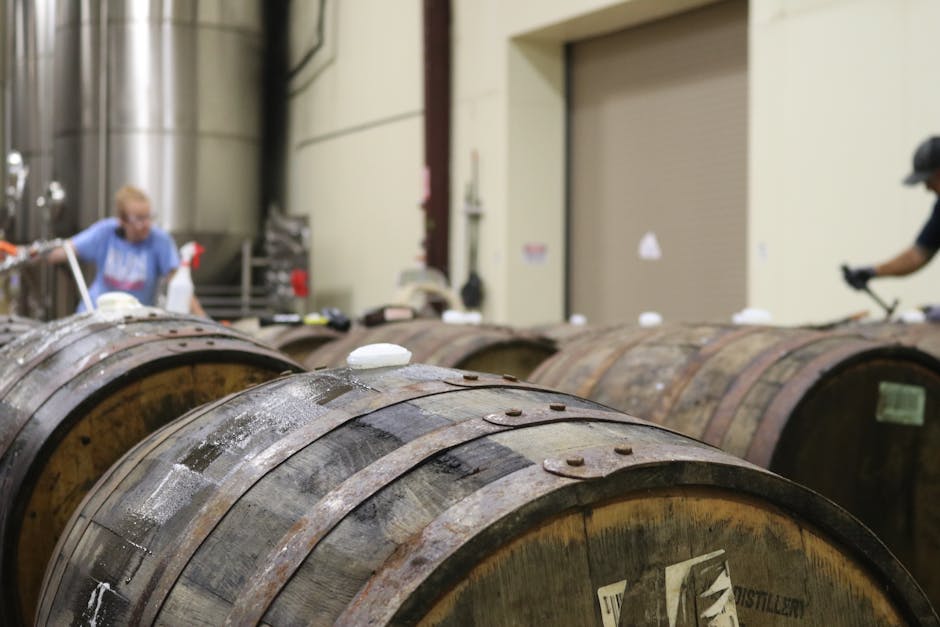
From crude oil to whiskey waste: Scotland's industrial revolution smells suspiciously like a distillery's back room.
Let me tell you about industrial reinventions. They always start with press releases full of words like 'just transition' and 'sustainable hubs,' delivered by politicians wearing hard hats they clearly borrowed five minutes before the photo op. This week's installment comes from Grangemouth, Scotland, where they're swapping oil barrels for algae farms and congratulating themselves for saving the planet one fish supplement at a time. And honestly, I've seen less chaotic career shifts at a toddler's tea party.
Picture this: a hundred year old oil refinery shutters its doors, laying off hundreds. Then, faster than you can say 'emergency election talking points,' two biotech firms materialize bearing government cash and promises of 460 new green jobs. MiAlgae wants to convert whiskey production leftovers into omega 3 supplements, because nothing says 'nutrition' like repurposing the sludge from alcohol manufacturing. Meanwhile, Celtic Renewables plans to turn agricultural waste into industrial chemicals. Depending on who you ask, this is either brilliant industrial evolution or a Hail Mary pass disguised as environmental policy.
Here's what governments won't put in their glossy brochures: bio refineries smell worse than a frat house dumpster on Sunday morning. Ask anyone who's lived near ethanol production. They'll tell you about odors so potent they make expired durian fruit seem like Febreze. Now imagine being a former oil rig worker retraining to babysit whiskey dregs fermenting in vats. One minute you're calculating pipeline pressures, the next you're monitoring the pH levels of what's essentially posh pond scum. The learning curve isn't just steep, it's vertical.
The human whiplash here fascinates me. Ministers talk about 'high quality green jobs' like they're handing out Nobel prizes. Realistically, these positions will range from lab coats shuffling test tubes to factory floor crews shoveling organic waste. Both vital, neither particularly glamorous. But try telling that to Ian, who operated cracking units for 20 years before being handed a pamphlet on algae nutrition. Or Mary, whose pension calculations assumed she'd retire from the refinery, not from decanting fermented barley runoff. These aren't just career changes. They're entire professional identities being rewritten by legislative fiat.
Watching Scotland simultaneously save its fishing industry and repent for fossil fuels through whiskey byproducts feels like watching someone solve a Rubik's Cube blindfolded. While drunk. The math looks something like: surplus grain + fermentation tanks = sustainable aquaculture feed. Skip the fact that most Scots associate whiskey waste with hangovers, not halibut farms. Nobody asked whether omega 3 supplements made from distillery leftovers will actually sell, or if this is just scientific virtue signaling with $6 million in taxpayer backing.
Meanwhile, the phrase 'priority interviews for displaced workers' deserves its own comedy award. Imagine being 58 years old, laid off from your refinery job, and now 'guaranteed' an interview to discuss microbial lipid extraction. It's like guaranteeing a leopard gecko an interview for a zookeeper position. Technically possible, biologically improbable. Retraining programs sound noble until you realize they often involve explaining Excel pivot tables to people who haven't touched a computer since the Reagan administration.
The broader hypocrisy sticks in my craw like bad haggis. Governments desperate to hit carbon targets will fund anything with 'bio' or 'green' in the title, consequences be damned. Nobody's asking whether bio based acetone factories might produce different environmental headaches than their petroleum cousins. Or whether Scotland even needs more nail polish remover. Wonder why? Because nothing derails a good press conference faster than practical questions.
Speaking of accountability, let's discuss Project Willow. Not an actual willow tree, disappointingly, but a $1.5 million study declaring these bio refineries viable based on, and I quote, 'pre construction work.' Translation: PowerPoint slides with optimistic pie charts. Feasibility studies are the tech world's equivalent of a teenager promising to clean their room eventually. Possible? Sure. Likely? Ask again after nap time.
Consumer reactions to all this are surprisingly muted, probably because nobody understands what 'circular bio economy' actually means. Will shoppers pay premium prices for salmon fed whiskey algae? Will eco conscious homemakers embrace cleaning products brewed from potato peels? Maybe, but only if marketing departments work overtime to make sludge sound sexy. Current trends suggest they'll slap 'blockchain verified' or 'NFT tagged' on the labels and call it innovation.
Historically, forced industrial transitions go one of two ways: Pittsburgh's steel collapse left economic scars for decades, while Germany's Ruhr Valley mining transition is still studied in policy textbooks. What determines success isn't funding announcements, but whether the new jobs actually match the old ones in wages, stability, and community pride. Grangemouth replacing fossil fuels with fermentation might work... or become Scotland's version of Detroit swapping cars for crypto (hint: those crypto jobs never materialized).
Legally, these projects could face hilarious hurdles. Imagine the zoning meeting where Celtic Renewables explains their bio refinery. Neighbors: 'Will it smell?' Lawyers: 'Define smell.' Regulators: 'Does converting whiskey waste into acetone count as food production or chemical manufacturing?' Attorneys everywhere just felt their billing rates spike. Also possible: whiskey brands suing over byproduct licensing, fishing unions protesting algae based feeds, or Greenpeace picketing bio factories for not being bio enough. Modern environmentalism means there's always somebody angrier than you.
Where's this headed? Best case, Grangemouth becomes the Silicon Valley of sustainable sludge. Tour buses will line up to see where whiskey waste becomes fish food. Worst case, the refineries become expensive white elephants, memorialized in future BBC articles titled 'Why Government Funded Bio Hubs Fail.' Either way, 2025 marks the year Scotland bet its industrial future on two things the world will never run out of: whiskey leftovers and bureaucratic optimism.
Final thoughts: maybe this moonshot works. Maybe algae fuels and bio chemicals revolutionize sustainability. Or maybe decades from now, some wide eyed tech columnist will write about Grangemouth's abandoned fermentation tanks while analyzing Scotland's pivot to asteroid mining or sentient AI oat farming. Industrial reinvention used to take generations. Now we pivot faster than a TikTok dancer. Let's just hope the workers don't get whiplash.
 By Thomas Reynolds