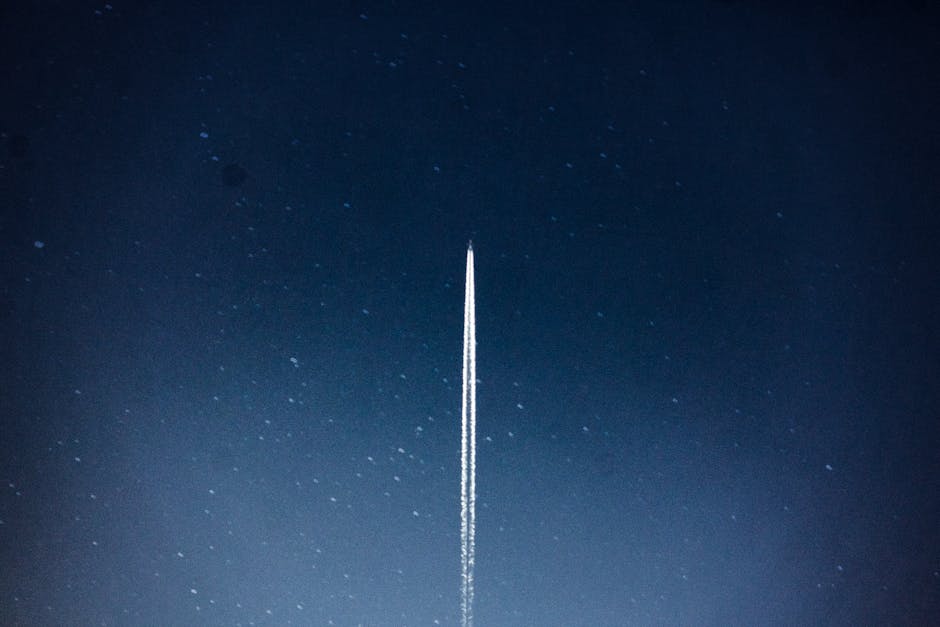
The sky isn't falling, but your coffee might spill when private rockets shake your roof
I was drinking coffee in my backyard yesterday when the windows started rattling. For a split second, I thought we were having an earthquake, or maybe my neighbor had cranked his bass speakers to an unreasonable volume again. Then I remembered. Right on schedule, SpaceX had launched another rocket from the Space Coast, sending vibrations rolling across Central Florida like an angry god thumping a dinner table.
Actually, what I heard wasn't the launch itself. It was the Falcon 9 booster returning to Earth eight minutes later, slamming through the atmosphere fast enough to create those now familiar sonic booms. They sound different than military jets breaking the sound barrier. Deeper, somehow more consequential. You feel it in your chest before you hear it properly. And based on reports from friends across four counties, everyone's experience varies depending on cloud cover and where you're standing when it hits.
Space exploration has always been noisy. What's changed is how frequently that noise interrupts ordinary lives far from launch pads. When Apollo rockets shook Florida in the 1960s, launches were rare events met with patriotic awe. These days, thanks to SpaceX's rapid turnaround reusable boosters, sonic booms have become as routine as afternoon thunderstorms for Space Coast residents. Tuesday's launch marked the company's eleventh national security mission this year alone. Let that sink in. We're averaging nearly one classified payload delivery to orbit every month, funded by taxpayer dollars but operated by a private corporation.
This brings me to my first uncomfortable observation. We're witnessing the birth of a military industrial complex 2.0, where national security agencies no longer develop their own rockets but instead become premium customers of billionaire led space ventures. There's undeniable logic here. Privatization drove launch costs down by nearly 90% compared to the space shuttle era. But when you see a classified National Reconnaissance Office satellite riding atop a booster emblazoned with a corporate logo, you start wondering where the line between public interest and private ambition truly lies.
SpaceX sells itself as humanity's bridge to the stars, with Mars colonization posters adorning conference rooms and Starlink promising global internet access. Yet this soaring rhetoric coexists with lucrative government contracts for missions whose purposes the public can't scrutinize. The NROL 77 payload launched this week remains completely opaque to civilians beyond its existence. We're effectively subsidizing a dual use space architecture where technology developed for one purpose could easily serve another. Imagine if Lockheed Martin built interstate highways but reserved the best lanes for Pentagon convoys hidden under tarps.
My second concern hits closer to home, literally. As launch frequency increases, so do community disruptions. The sonic booms aren't damaging, just startling. But every time we accept them as normal, we acquiesce to tech companies fundamentally altering our acoustic environment for their convenience. Consider the contrast with airport noise regulations. When commercial jets approach residential areas, they must follow strict altitude rules and noise abatement procedures. Yet when a returning rocket booster crosses Florida's densely populated corridor, the conversation frames the booms as exciting novelties rather than impositions.
What frustrates me most is how this imbalance mirrors broader tech industry patterns. Platform companies reshape urban transportation despite local taxi regulations. Social media algorithms optimize engagement regardless of societal polarization. And now space firms condition us to accept recurring disturbances as the price of progress. It happens incrementally, until one day you realize your neighborhood has become collateral damage in someone else's moonshot.
Beyond noise complaints, we're not properly accounting for environmental impacts either. Each Falcon 9 launch burns approximately 200 metric tons of refined kerosene and liquid oxygen. That's cleaner than old solid rocket boosters but still emits over 300 tons of CO2 per launch, equivalent to 70 passenger cars driving for a year. Multiply that by dozens of annual launches across various providers, and spaceflight emissions could become non trivial within a decade. Yet we never hear about carbon offsets for rocket launches, nor environmental impact studies addressing stratospheric particulates from recurrent space traffic.
We're also seeing a geographic consolidation of space infrastructure that disproportionately burdens Florida communities. While other states court launch facilities, the Space Coast remains America's busiest orbital gateway. This creates fascinating economic opportunities but concentrates all associated disruptions. The math is simple. If California processed all US air freight, their airport noise would be unbearable. Until we distribute spaceport operations more equitably, Floridians bear an outsized share of price for America's space dominance.
For residents caught between pride and annoyance, reactions to Tuesday's launch typify our conflicted era. Some families gathered on patios with launch tracker apps open, cheering the fiery ascent visible from backyards. Others complained online about startled pets or rattled dishes. These responses reveal space technology's transition from extraordinary to ordinary, and from purely governmental to partially commercial. Remember when seeing a SpaceX landing felt miraculous. Now it's Tuesday.
Looking ahead, matters will only intensify. SpaceX plans over 140 launches next year across all missions. Competitors like Blue Origin and Rocket Lab will add dozens more. The FAA predicts annual US launches could exceed 300 by 2030. At that point, sonic booms become more than occasional surprises. They become background noise, quite literally. We'll need new regulatory frameworks balancing operational efficiency with community welfare, potentially requiring quieter reentry profiles or shifting flight paths offshore. Space companies won't volunteer these constraints absent public pressure.
This leads to my final point about access and equity. You don't need NASA credentials anymore to appreciate spaceflight, thanks to livestreams and visual spectacle. But actual participation remains limited to wealthy governments and even wealthier entrepreneurs. Earlier this week, Blue Origin flew its seventh tourist crew, including a former Air France pilot who reportedly paid millions for his seat. While inspiring, such joyrides underscore how commercial space currently serves privileged customers before solving terrestrial problems. Maybe that's why some community reactions to SpaceX launches have turned ambivalent amidst Florida's affordable housing crisis and eroding coastlines.
Don't misunderstand me. I still gaze skyward during launches, awestruck by what human ingenuity can achieve. My criticism stems not from opposing space exploration, but wanting it conducted with greater transparency and civic consideration. Since Sputnik, space programs faced minimal public oversight by default of their government origins. Now that corporations dominate launch infrastructure, we can't extend that same deference.
Here's what needs to happen. First, greater mission disclosure on national security launches, allowing basic public accountability without compromising secrets. Second, federal noise standards for rocket operations, akin to aviation rules, developed with community input. Third, environmental fees funding coastal preservation, ensuring spaceport regions benefit beyond just job creation. Lastly, an earnest dialogue about democratizing space access beyond militarized and commercial priorities.
Otherwise, twenty years from now, our grandchildren might ask why we accepted corporate rockets shaking homes as normal while public schools lacked funding for planetarium field trips. The sound barrier can be broken gracefully. The trust barrier requires more delicate handling.
 By Emily Saunders