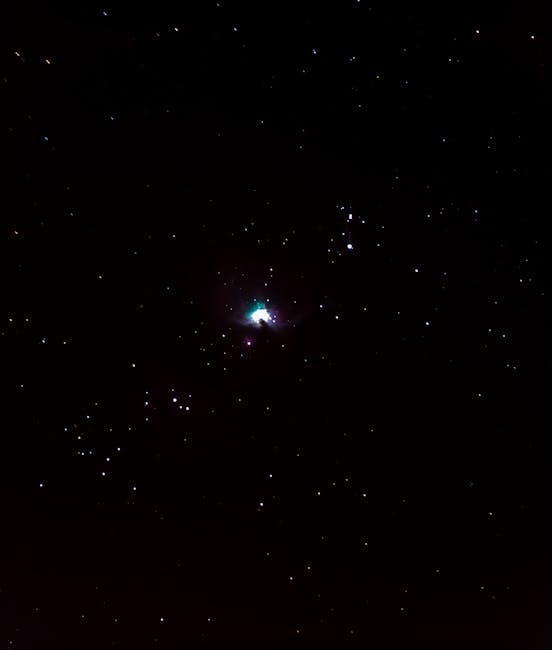
A celestial wanderer teaches us to embrace cosmic mysteries without inventing little green men
In the hushed darkness of Hawaii's volcanic peaks, telescopes trace the arc of an unexpected guest. A shimmering speck carving through the emptiness between stars, comet 3I/ATLAS glides toward our solar neighborhood. As its trajectory confirms an origin beyond our sun's influence, an old human reflex emerges. Could this be deliberate, some ask with hopeful chins tilted skyward. Perhaps it carries greetings from distant minds.
We have been here before. In 2017, the cigar shaped visitor named 'Oumuamua inspired similar murmurs. Now eight years later, another traveler arrives, and our collective imagination resurrects the same tired question. These moments reveal less about space than about ourselves, about how we yearn for connection across the void. What we often miss amid the blurry YouTube documentaries and breathless headlines is the genuinely astonishing truth. These cosmic messengers deliver something far more profound than alien daydreams. They bring us tangible pieces of distant solar systems, laboratories crafted by foreign suns.
Consider the chemistry locked within this icy wanderer. While earthbound telescopes cannot yet taste comet 3I's gases directly, we know from earlier interstellar visitors that their ice contains molecular ratios distinct from our local comets. The deuterium to hydrogen levels in water ice particularly science detectives. Studies of the comet 2I/Borisov revealed water asymmetries suggesting it formed around a cool red dwarf star rather than a sunlike star. By comparing this new visitor's composition, we essentially compare childhood environments of sibling planets growing around different stellar parents.
Those chemical whispers contain teaching moments that rocket beyond mere biology. Sunlight reflecting from 3I's coma reveals spectral fingerprints of carbon monoxide at unexpectedly high levels, according to preliminary reports from Chile's Very Large Telescope. This tells us about the thermal conditions within its original planetary nursery, whether it spent eons exposed to harsh stellar winds or emerged from a protective cocoon of dust. Each observation acts like a dictionary helping us translate alien solar system histories written in the language of light.
Yet we fixate on hypothetical civilizations rather than these tangible revelations. Here lies a curious tension between scientific possibility and emotional longing. Our brains evolved to seek intention in shadows, agency in random events. The rustling grass must be a predator. The shooting star must be a sign. This instinct serves less well when analyzing cosmic gravel drifting through gravitational tides. Still, that instinct is beautiful in its way. It speaks of loneliness. Of a single intelligent species gazing upward from a pale blue dot, aching to know if others dance beneath different stars.
Scientific literacy asks us to hold two thoughts at once. We must embrace our wonder while tempering it with probabilistic evidence. There exists no credible reason to suspect this comet as engineered. Its orbit behaves exactly as gravity dictates. Its luminosity follows predictable curves as solar heating vaporizes surface ices. But dismissing the alien speculation entirely misses why these moments matter. They represent portals through which ordinary people engage with astrophysical realities. The challenge is nurturing that curiosity toward deeper understanding, not snuffing it with patronizing lectures.
Imagine teenage minds sparking because someone mentioned aliens on TikTok. Imagine them digging further, discovering that all carbon in their bodies originated from stardust. Learning that complex organic molecules like ethanol and formaldehyde ride upon such comets, seeding nascent planets with life's building blocks. This offers transcendent perspective. We are not isolated beings. We are the universe becoming conscious of itself through chemistry and light.
Ground based observatories have barely a month to study 3I/ATLAS before it fades beyond observational range. Teams worldwide coordinated effortlessly for this brief window. Astronomers in the Canary Islands calibrate instruments to measure isotope ratios in evaporating gases. Hawaiian telescopes track rotational spin and possible fragmentation. Radio antennas probe for magnetic field interactions. Ironically, the international coordination behind these observations reflects a planetary unity more significant than any false alien visitation narrative.
Still, behind the rigorous data collection lies romance. Picture graduate students huddled predawn over flickering screens in Mauna Kea's thin air. Their breath visible in headlamp beams as they guide billion dollar optics toward a dim visitor racing toward the outer dark. They know this transient speck might carry answers to childhood questions. How common are planets like ours. How unique, or ordinary, Earth's recipe for life. There is poetry in using antivibration tables and quantum efficiency detectors to pursue such primal wonder.
The comet contains no monuments, no inscribed golden records. Its revelations lie in ratios of nitrogen isotopes, in delicate gradations of temperature preserved from its birth among foreign constellations. Here is another overlooked truth. By studying these travelers, we gain knowledge impossible through telescope observation alone. We could never resolve the atmospheric composition of an exoplanet around Proxima Centauri directly. But if a transplanted comet arrives here bearing ices from that system's icy outer debris, suddenly we hold a Rosetta stone for unraveling distant solar system formation.
This underscores everything about scientific exploration. Breakthroughs often arrive sideways and unexpected. The backyard stargazer recording a new light trail. The algorithm processing telescope data flagging an anomalous trajectory. These discoveries emerge not from dogged pursuit of scheduled milestones but from embracing curiosity and happenstance. The uncomfortable reality modern science must confront is how discovery increasingly relies on broad participation. Data flows exceed any single institution's digestion capacity.
People mock alien fixation, yet within it sparkles something essential. When someone asks whether 3I/ATLAS might be artificial, they articulate a profound human capacity to imagine beyond known horizons. Our task is honoring that impulse while gently redirecting its energy toward testable truths. Flawed as it was, the Galileo Project's analysis of 'Oumuamua's light curve illustrates this redirected curiosity. That open effort to disprove alien origins generated valuable methodologies for studying fast moving solar system interlopers.
Future scientific revolutions hide between these extremes. Between outright dismissal and uncritical belief. As this comet whirls silently sunward before looping back into interstellar exile, its real gift isn't alien revelations but a mirror reflecting our own curiosity, fragmented and searching against the cosmic backdrop. We scan the skies for visitors because deep down, we still wish to welcome travelers to our fire. Someday, perhaps we will. Today, among these frozen wanderers from distant stars, we practice extending cosmic hospitality, offering nothing but open eyes and delighted minds.
 By David Coleman