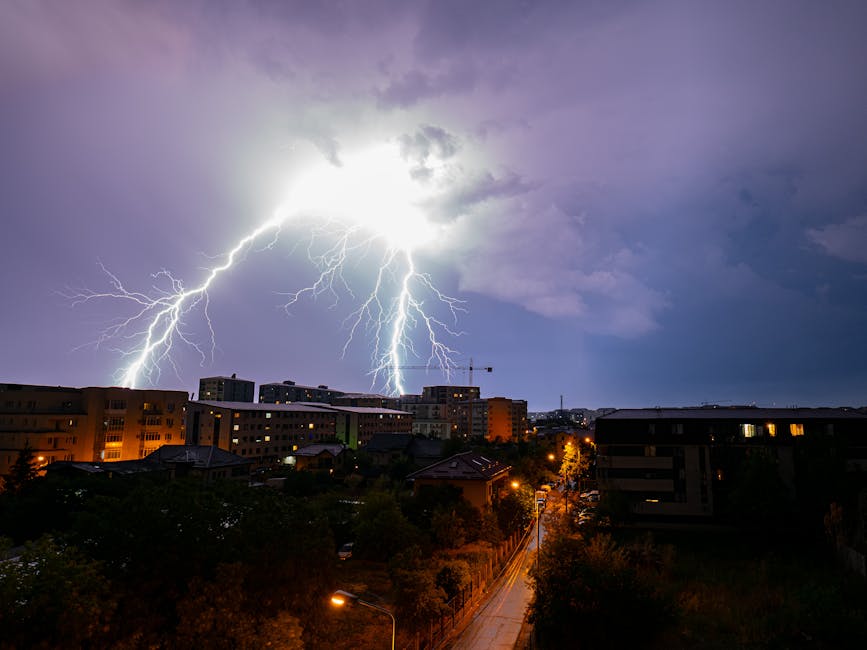
Meteorological alphabet soup meets real world consequences
Picture this. Meteorological agencies across Europe gather to name storms, like parents choosing baby names after three bottles of wine. They agree on an orderly alphabetical system, then promptly ignore it when inconvenient. The result. A storm named Bram follows Claudia, skipping six letters with the casual disregard of a toddler eating alphabet soup. It's charming, really, this illusion that we can impose order on atmospheric chaos through proper labeling.
This week's visit from Storm Bram offered textbook December weather. Torrential rain. Winds strong enough to redecorate your garden without consent. Flooded streets transforming commutes into impromptu kayak adventures. The UK saw rail lines submerged, bridges closed, and lamp posts deemed so dangerously unstable that officials had to remove them mid storm. One wonders what inspection regime approves infrastructure that cannot survive a predictable seasonal event.
Power cuts left thousands in the dark during the year's shortest days. Schools dismissed students early based on forecasts they clearly trusted more than their own heating systems. Ferry routes canceled sailings while airport terminals displayed more cancellations than arrivals. All remarkably standard stuff for a modern industrial nation facing completely normal weather patterns.
The real entertainment lies in the numbers. Temperatures reached 16 degrees Celsius in places, nearly double the typical December average. Dartmoor received almost a month's worth of rain within 48 hours, proving that British weather remains committed to inefficient drip feeding when it could simply schedule proper downpours. The River Dart did what rivers do when excessive water arrives. It expanded its real estate portfolio into people's living rooms.
Transportation networks responded with characteristic flexibility. Railways suspended service where tracks became canals. A train in Wales encountered a tree that had enthusiastically embraced its new career as a railway obstruction. The M48 Severn Bridge closed entirely, while its replacement bridge shut down for emergency removal of lamp posts that apparently hadn't read their job descriptions about withstanding wind.
Now to the naming controversy that absolutely matters more than flooded homes or canceled surgeries. Meteorologists reportedly went back to the letter B for Bram because Ireland's weather service initiated the naming this time. The storm naming coalition UK Met Office, Ireland's Met ireann, and the Netherlands KNMI operates like a multinational committee designing a coffee cup. Compromise ensures no one gets what they actually want. The orderly alphabetical sequence we were promised now resembles the alphabet song sung by someone who skipped kindergarten.
Of course, naming protocols matter for public awareness. Consistency helps people gauge severity. But let's acknowledge the dark irony when institutions project orderly communication while physical infrastructure crumbles. One imagines a government minister earnestly explaining prioritization. We can fix the storm naming system by Wednesday, but the flood defenses will need another decade of consultations.
The human impacts here deserve more than weather presenters shouting over gale force winds. Workers stranded overnight when trains halted. Small businesses losing holiday revenue during critical trading days. Parents missing work to collect children from abruptly closed schools. Elderly residents huddled in cooling homes during power outages. Each consequence reveals systems operating exactly as designed. Designed for 20th century weather patterns.
Consider this. The storm caused relatively mild disruption by modern standards. No mass casualties. No cities entirely cut off. But normalization of such events carries its own costs. A few thousand without power for a day barely registers now. Railway companies smoothly deploy the weather delay playbook written thirty years ago. Society develops collective amnesia between each weather crisis, like goldfish traumatized by an overly aggressive aquarium pump.
That unseasonable warmth accompanying Bram provides counterintuitive comfort. Who wouldn't appreciate balmier December days. It's just weather, people will say. Until you recognize that warmer air carries more moisture, potentially fueling more intense precipitation events. Meteorologists must now thread a needle. Communicate changing risks without inducing fatalism. Inform preparations while avoiding Cassandra complex accusations.
Solutions exist. Flood resilient architecture. Distributed renewable energy grids less prone to centralized failure. Maintenance schedules that treat infrastructure like ongoing necessities rather than inconvenient costs. Weather monitoring systems leveraging artificial intelligence to provide localized impact predictions. None particularly revolutionary. All requiring investment and coordination that political cycles presently discourage.
Perhaps we should rename future storms after the infrastructure they expose. Storm Substandard Drainage. Storm Underfunded Grid. Train naming rights could fund repairs. The Arriva Delayed Due to Rain Service has a certain ring. One doubts mayors would appreciate ribbon cutting ceremonies for upgraded sewer systems, though they are arguably more vital than most vanity projects.
People adapt. Homeowners stack sandbags with practiced efficiency. Commuters check weather apps alongside traffic updates. Emergency services refine response protocols with each event. Adaptation provides resilience, but only to a point. When does repeating stop gap solutions become collective delusion. You can bail out your basement every winter indefinitely, or install a pump system and elevated foundations. The pump option seems wise after the third flooded sofa.
Climate models suggest a fascinating future. Warmer winters with more frequent intense rainfall. Drier summers punctuated by occasional monsoons disrupting crops and water supplies. Society will either adapt intelligently through planned investment, or through chaotic improvisation during each crisis. The latter approach certainly provides more employment opportunities for disaster response firms and underwater cinematographers.
In the storm naming debate, let's remember what truly matters. Whether we call it Bram, Boudica, or Bob the Atmospheric Tantrum changes little. Preparedness determines outcomes. Communication clarity aids preparedness. Infrastructure integrity enables continuity. Those lamp posts needing emergency removal during Bram likely had known weaknesses. Their failure represents not weather's caprice, but predictable neglect.
The genuine scandal isn't inconsistent naming conventions. It's the persistent funding shortfalls for essential upgrades. The discounting of scientific projections. The theatrical surprise when entirely forecasted weather causes entirely predictable problems. One might call it Storm Groundhog Day. Time will tell if lessons crystallize before the next deluge.
 By Tracey Curl