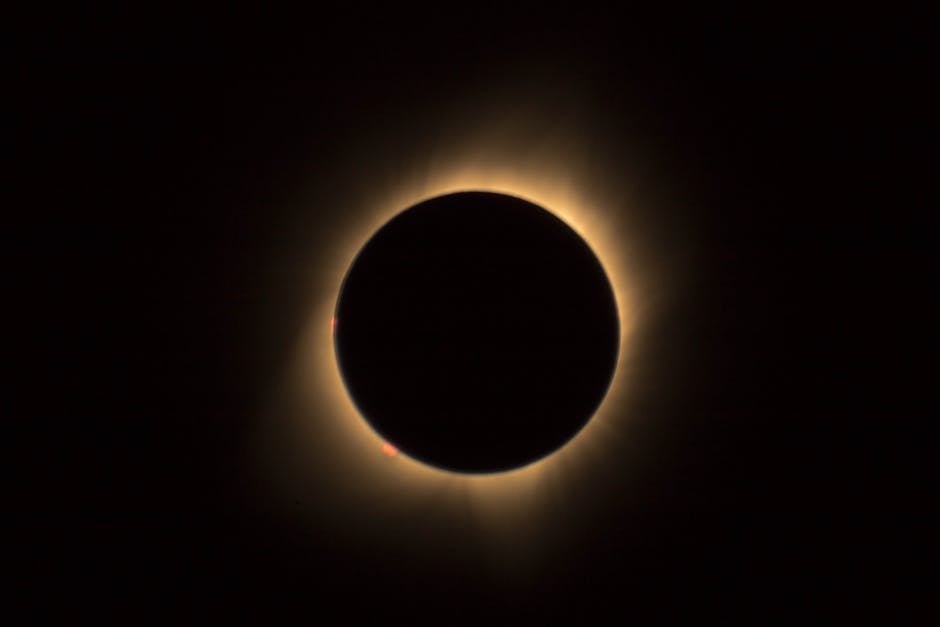
Basking in the glow of solar revelations while dodging space storm shrapnel
Imagine trying to understand a hurricane by peering through a soda straw during thirty second intervals. That's essentially how scientists have studied solar wind for decades, patching together fragmented data from disparate instruments while cross referencing ground based observatories. Then comes NASA's PUNCH mission, essentially trading the soda straw for an IMAX dome that never blinks. The first continuous tracking of solar material from Sun surface to deep space reveals cosmic processes with startling clarity, proving yet again that truth outpaces even the boldest science fiction.
The Southwest Research Institute led effort deploys four suitcase sized satellites in precise formation, functioning like a single gargantuan telescope. Dubbed PUNCH (Polarimeter to Unify the Corona and Heliosphere because NASA loves awkward acronyms), this mission fills an observational void between two critical regions. Existing solar telescopes zoom in on the corona's intricate magnetic dances, while others gaze outward at solar wind behavior millions of miles away. The gap between these perspectives, where solar wind transforms from eruptive chaos into structured streams, remained frustratingly opaque. Until now.
PUNCH's breakthrough lies in capturing the corona and heliosphere as a contiguous system rather than disjointed phenomena. Visualizing this transition zone shows solar wind acceleration in real time, as superheated plasma escapes the Sun's gravity and becomes the medium through which solar storms travel. Principal investigator Craig DeForest's golden fishbowl analogy perfectly conveys the immersive, wrap around perspective. Think VR headset for heliophysicists, but with consequences far beyond academic curiosity.
Space weather forecasting traditionally relies on interpreting solar surface activity and extrapolating downstream effects, much like predicting a tornado's path after seeing storm clouds form. PUNCH cuts through this guesswork by directly imaging coronal mass ejections as they barrel through space. These billion ton plasma clouds, traveling over a million miles per hour, interact unpredictably with solar wind streams and planetary magnetic fields. Seeing CMEs evolve in transit offers forecasters precious extra hours to protect vulnerable infrastructure.
The practical ramifications span orbital to terrestrial realms. Modern civilization floats on a sea of electrons managed by exceptionally fragile systems. A direct hit from a strong CME could induce geomagnetic currents overloading power grids, causing continent scale blackouts. Satellites, lacking atmospheric protection, risk fried electronics or literal drag from ionosphere swelling. Astronauts exposed outside Earth's magnetic bubble face radiation spikes exceeding annual limits in minutes. Without adequate warning, mitigation options evaporate faster than ice in a solar flare.
Oddly enough, some mission capabilities emerged from accidental discovery. While optimized for solar observation, PUNCH's ultra sensitive imagers detected unexpected stowaways. Interstellar comet 3I/ATLAS, an icy wanderer from another star system, slipped past conventional telescopes blinded by solar glare. But PUNCH spotted it crossing the inner solar system like a cosmic tourist snapping photos. Beyond novelty, this demonstrates an uncanny ability to track faint objects usually lost in the Sun's brilliance, opening opportunities for comet research and monitoring potentially hazardous asteroids hiding in solar blind spots.
Humanity spends billions annually shielding technology from solar outbursts, employing everything radiation hardened satellites to grid voltage regulation. PUNCH provides something uniquely valuable within this ecosystem, continuous situational awareness of invisible threats. Think of meteorologists without weather satellites trying to forecast hurricanes using only barometer readings and seabird flight patterns. Prior solar missions offered barometers, PUNCH delivers the satellite view.
Long overlooked in disaster preparedness discussions, space weather ranks alongside pandemics and cyberattacks as a global catastrophic risk. Not due to existential threat to Earth itself, but to the technological web enabling eight billion humans to coexist without starvation or societal collapse. As electrical grids tether together across larger regions for efficiency, their interconnectedness becomes an Achilles heel. The infamous 1859 Carrington Event, strongest recorded geomagnetic storm, caused telegraph systems to spark and operators to receive shocks. A modern equivalent could collapse grids for months while frying thousands of satellites.
Improving forecast lead time windows fundamentally changes the risk equation. Utilities could temporarily shut down transformers to avoid geomagnetically induced currents, protecting billion dollar hardware from irreversible damage. Satellite operators might safe mode instruments and rotors vehicles to minimize exposure. ISS astronauts could shelter in radiation shielded compartments. Crucially, accurate tracking prevents crying wolf, as unnecessary shutdowns carry significant economic costs. Balancing caution with pragmatism requires precise forecasts previously impossible.
Beyond immediate applications, PUNCH data accelerates fundamental understanding of stellar physics. Other stars exhibit superflares that make our Sun's outbursts look like warm Champagne corks popping. Observing exactly how magnetic reconnection events accelerate particles contributes to models predicting habitability around other stars, deciding whether exoplanets enjoy quiet orbits or get regularly sterilized by stellar tantrums. Solar wind behavior also influences planetary atmosphere retention, a critical factor for long term surface liquid water and biotic potential.
However, this mission underscores a persistent gap between scientific discovery and societal readiness. Humanity now possesses unprecedented space weather warning capacity without commensurate policy frameworks for coordinated international response. Unlike terrestrial disasters where agencies like FEMA or UNOCHA mobilize response, no equivalent exists for continent scale solar EMP events crossing national borders in milliseconds. Satellite operators compete rather than collaborate in configuring spacecraft defenses. Power grid operators balance actuarial decisions about buying protective hardware largely in isolation. Integrating PUNCH's forecasts into actionable protocols demands bureaucratic ingenuity matching the mission's engineering brilliance.
The Sun hasn't fundamentally changed its behavior. Humans replaced analog infrastructure with hypersensitive digital systems inside an electromagnetic shooting gallery. Missions like PUNCH represent the overdue recognition that space isn't some abstract vacuum between planets, but a dynamic environment shaping biological and technological evolution. Our collective challenge involves converting gorgeous solar imagery into resilient systems ensuring lights stay on during the next angry outburst from that fusion reactor we politely call home.
 By Tracey Curl